▶ Stage 3 — Experience
Things to Do in Iwate: 7 Trips Out from Morioka
Koiwai Farm is about 35 minutes by bus from in front of Morioka Station; Hiraizumi, home of Chuson-ji, is 43 minutes by bullet train to Ichinoseki plus a 9-minute ride after changing trains; Miyako on the Sanriku coast is about 1 hour 40 minutes by limited express bus. Starting from Morioka, I have put together Iwate’s farm, hot springs, temple, cave and coast, with the travel times for getting there.
This page contains promotions. If you book or sign up through the links (Klook, Sakura Mobile), I may receive a referral fee.
The sights in the city of Morioka are on the Morioka page. This article goes beyond the city. Iwate is a large prefecture, and the station or bus you take changes with each destination. Each section, except Hachimantai, explains how to get there.
- Koiwai Farm: One Character from Each of 3 Family Names
- Hachimantai: Hot Springs at 1,400 m and Japan’s First Geothermal Power Station
- Hanamaki Onsen Area and the Miyazawa Kenji Memorial Museum
- Hiraizumi and Chuson-ji, and Geibikei Gorge in Ichinoseki
- Ryusendo Cave: One of Japan’s Three Great Limestone Caves
- The Rias Coast of Sanriku: South from Miyako
- Baseball Players from Iwate: Shohei Ohtani and Roki Sasaki
- Things to Do in Iwate: FAQ
Koiwai Farm: One Character from Each of 3 Family Names
A farm in Shizukuishi, opened by the father of Japan’s railways and Mitsubishi
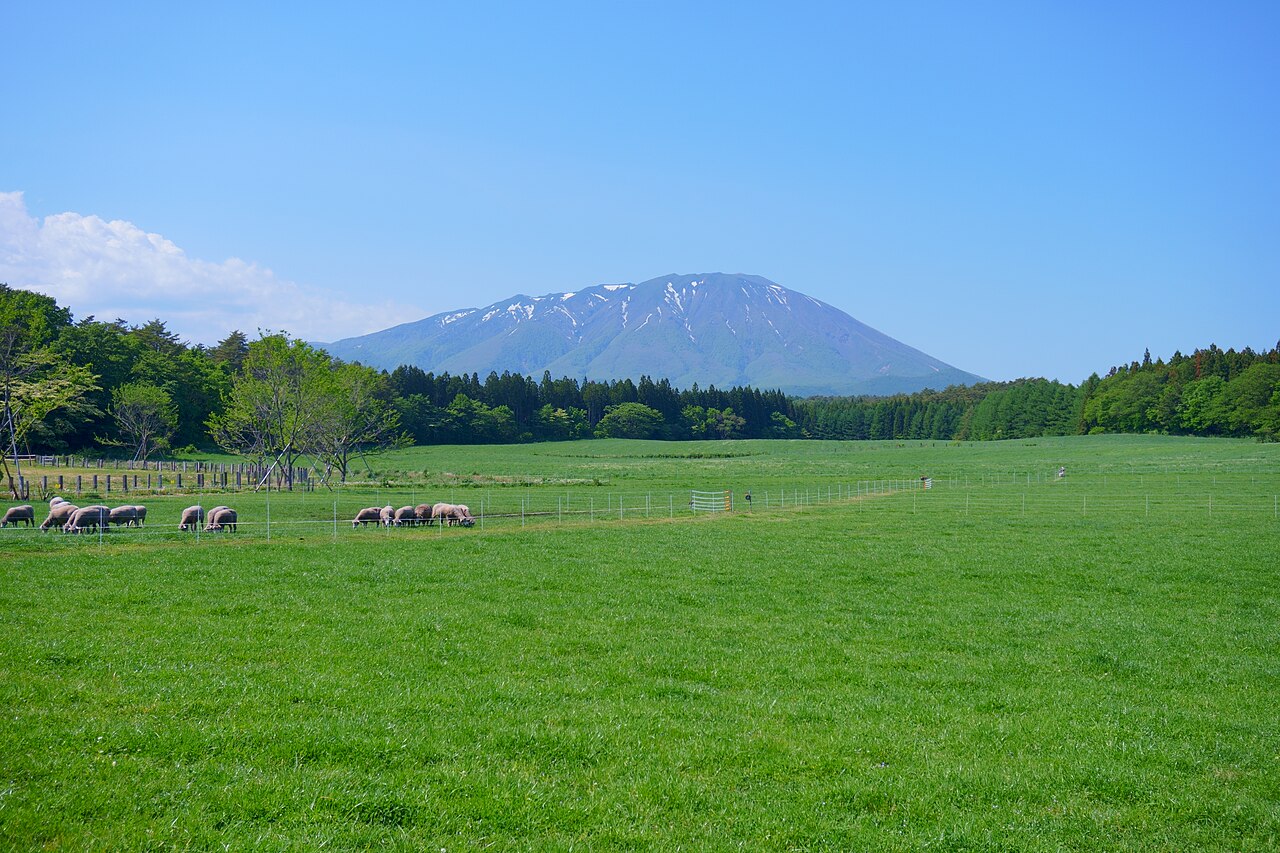
On June 12, 1888 (Meiji 21), Inoue Masaru, head of the Railway Agency, was in Morioka to see the extension work on the Tohoku Main Line. Looking out over the volcanic-ash wasteland at the southern foot of Mt. Iwate, he decided to open a large farm there. Inoue is known as the “father of Japan’s railways,” and his motive is said to have been regret for the beautiful paddies and fields destroyed every time a railway was laid.
Inoue consulted Ono Gishin (vice president of Nippon Railway), who supported Mitsubishi, and Ono introduced him to Iwasaki Yanosuke, Mitsubishi’s second president. Yanosuke decided on the spot to fund it. The farm opened on January 1, 1891 (Meiji 24), and was named “Koiwai” by taking one character from each of the family names Ono, Iwasaki and Inoue.
After Iwasaki Hisaya Took Over
The land was not productive, and the business was still struggling years later. In 1899 (Meiji 32), management passed from Inoue to the Iwasaki family. It was led by Iwasaki Hisaya, third president of Mitsubishi and eldest son of its founder, Iwasaki Yataro. Hisaya brought in dairy breeding bulls from the Netherlands and elsewhere to begin improving the breed, and sent breeding stock to farms across Japan.
After the war, the farm gave up about 1,000 hectares under the GHQ occupation policy and also ended its horse-breeding business.
Today the total area is about 3,000 hectares, two-thirds of it forest. The central 40 hectares are the visitor area, Makiba-en, where admission is ¥800 for adults (in Japanese yen, checked 2026/11/15). Its 21 historic buildings are nationally designated Important Cultural Properties. Koiwai Dairy Products, the dairy company, was established on June 1, 1976, and its shareholders are Kirin Holdings and Koiwai Farm, Ltd.
Getting there: about 35 minutes (about 17 km) on the bus bound for “Koiwai Farm Makiba-en” from stop no. 10 in front of JR Morioka Station. By car, about 15 minutes from the Morioka IC on the Tohoku Expressway.
-
-
Things to Do in Tohoku: Geibikei, Oirase and Matsushima
GO JAPAN NOW Contents Things to Do in Tohoku: Pick by Answering Questions1. Where do you want to go? …
続きを見る
Hachimantai: Hot Springs at 1,400 m and Japan’s First Geothermal Power Station
Toshichi Onsen and Matsukawa Geothermal Power Station (Hachimantai City)
Toshichi Onsen Saiunso in Hachimantai is a lone inn at 1,400 m above sea level, which the inn describes as the “highest in Tohoku” hot spring. It is open from late April to late October (months 4–10), with day-use bathing 8:00–17:00. When I opened the official site on 2026/11/15, it showed a notice that the season had ended for the year.
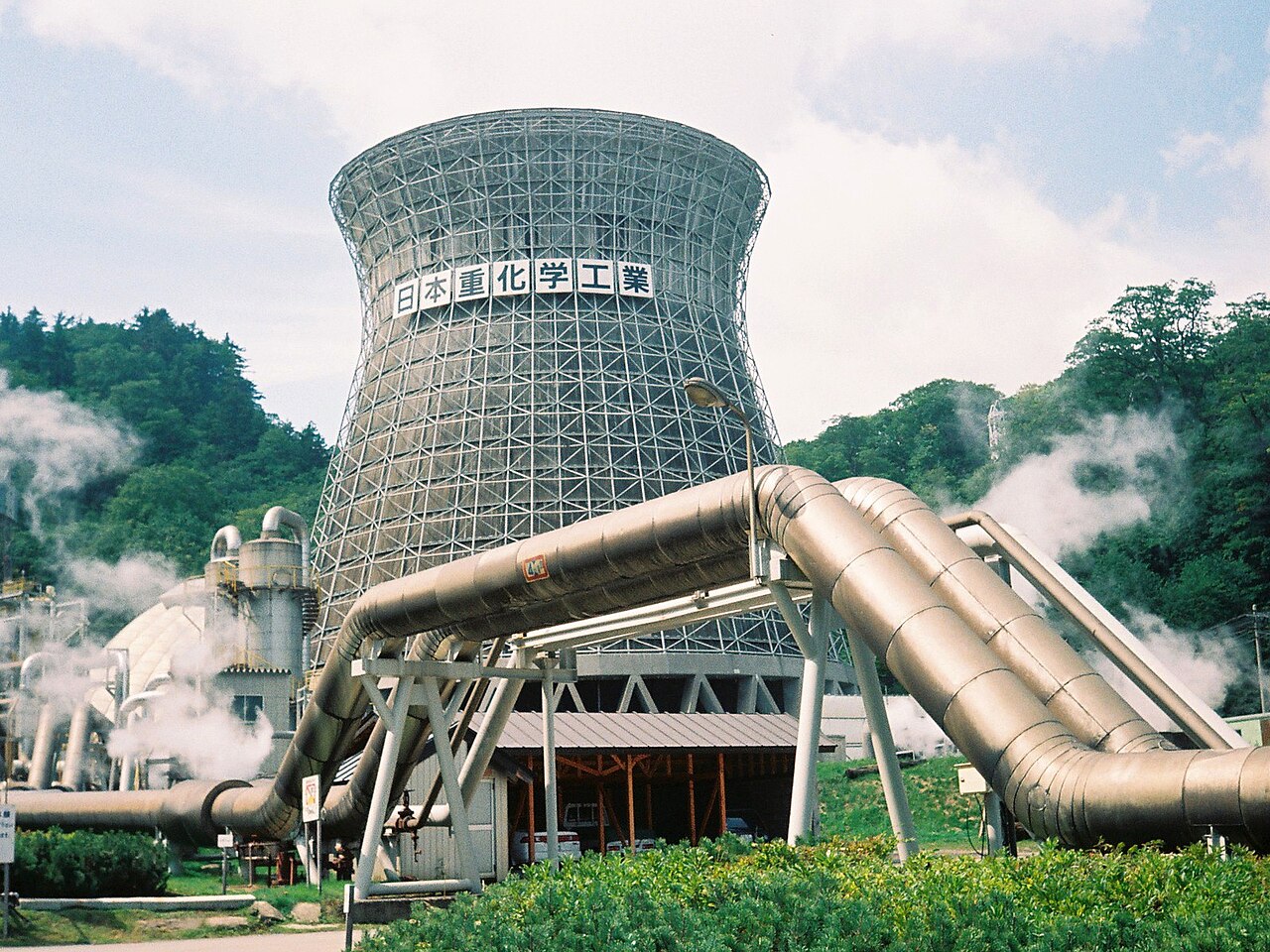
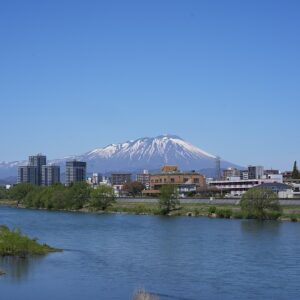
Matsukawa Geothermal Power Station, also in Hachimantai, began operating on 1966/10/8 (Showa 41) as Japan’s first commercial geothermal power station. It started in 1952, when steam burst from a well that the former Matsuo Village had drilled for hot spring water. Its initial output was 9,500 kW.
Land Where Only Steam Comes Out
In most geothermal areas, wells produce steam and hot water together. Matsukawa is a rare place in Japan where only steam comes out, and that dry steam turns the turbines directly (the dry steam method). You can learn about the station’s history and how it works at its visitor facility, Matsukawa Geothermal Museum (Matsukawa Chinetsukan). The geothermal steam that vents at Matsukawa Onsen is also used for dyeing cloth.
-
-
Things to Do in Morioka: Nambu Ironware, Mt. Iwate and Sansa Odori
Morioka was listed second in The New York Times “52 Places to Go in 2023.” Iwachu Tekkikan, the Hara Takashi Memorial Museum, the Miyazawa Kenji materials, views of Mt. Iwate and Mt. Himekami with the climbing restrictions, Chagu Chagu Umakko and Sansa Odori, all with official sources.
続きを見る
Hanamaki Onsen Area and the Miyazawa Kenji Memorial Museum
Osawa Onsen, where Kenji went from childhood
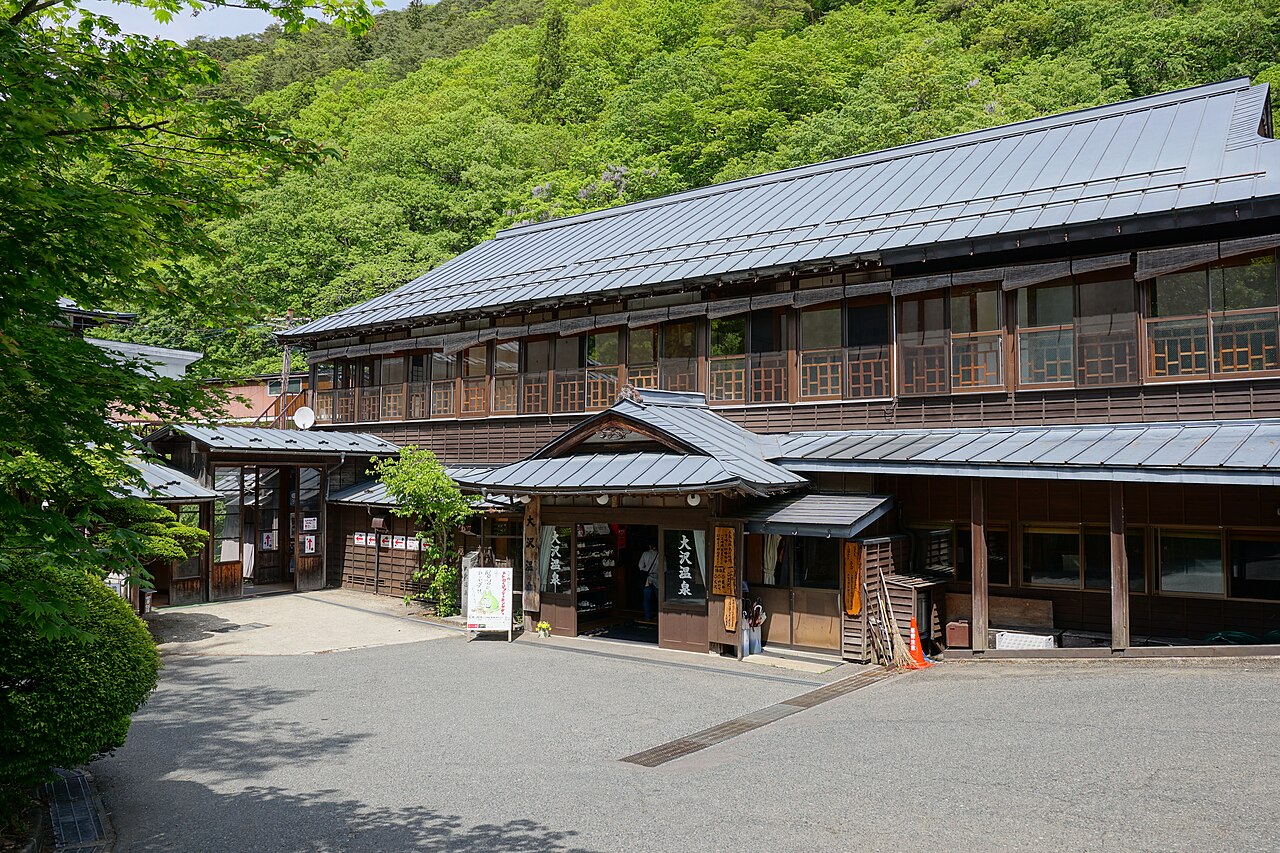
The Hanamaki Tourism Association groups the 12 hot spring areas of the Hanamaki Onsen region, including Hanamaki Onsen, Dai Onsen, Shidotaira Onsen, Osawa Onsen and Namari Onsen, under the name “Hanamaki 12 Hot Springs.” In the days of the Nambu domain, they were the domain’s own hot springs.
Osawa Onsen has an open-air bath facing the river, “Osawa-no-Yu.” Miyazawa Kenji, who was from Hanamaki, came here many times from a young age. Takamura Kotaro, who spent 7 years in Hanamaki, said this bath “has the taste of a real hot spring.” The photo shows Tojiya at Osawa Onsen.
The “Shirozaru-no-Yu” bath at Namari Onsen averages 1.25 m deep, so you bathe standing up. The water is not pumped in; it wells up right where the tub is. It was originally mixed bathing, and there are women-only hours.
Ihatov and the Miyazawa Kenji Memorial Museum
As Hanamaki City explains it, “Ihatov” is the dream world Kenji pictured in his mind while standing in the real landscape and climate of Iwate. The Miyazawa Kenji Memorial Museum in Hanamaki is open 9:00–16:30 and closed on Tuesdays (when Tuesday is a public holiday, it closes on a later weekday instead).
Getting there: Hanamaki Onsen is about 20–30 minutes from JR Shin-Hanamaki Station by free shuttle bus or taxi.
-
-
Things to Do in Tohoku: Geibikei, Oirase and Matsushima
GO JAPAN NOW Contents Things to Do in Tohoku: Pick by Answering Questions1. Where do you want to go? …
続きを見る
Hiraizumi and Chuson-ji, and Geibikei Gorge in Ichinoseki
The temple of the Oshu Fujiwara clan and a gorge you tour by boat. Both from Ichinoseki Station
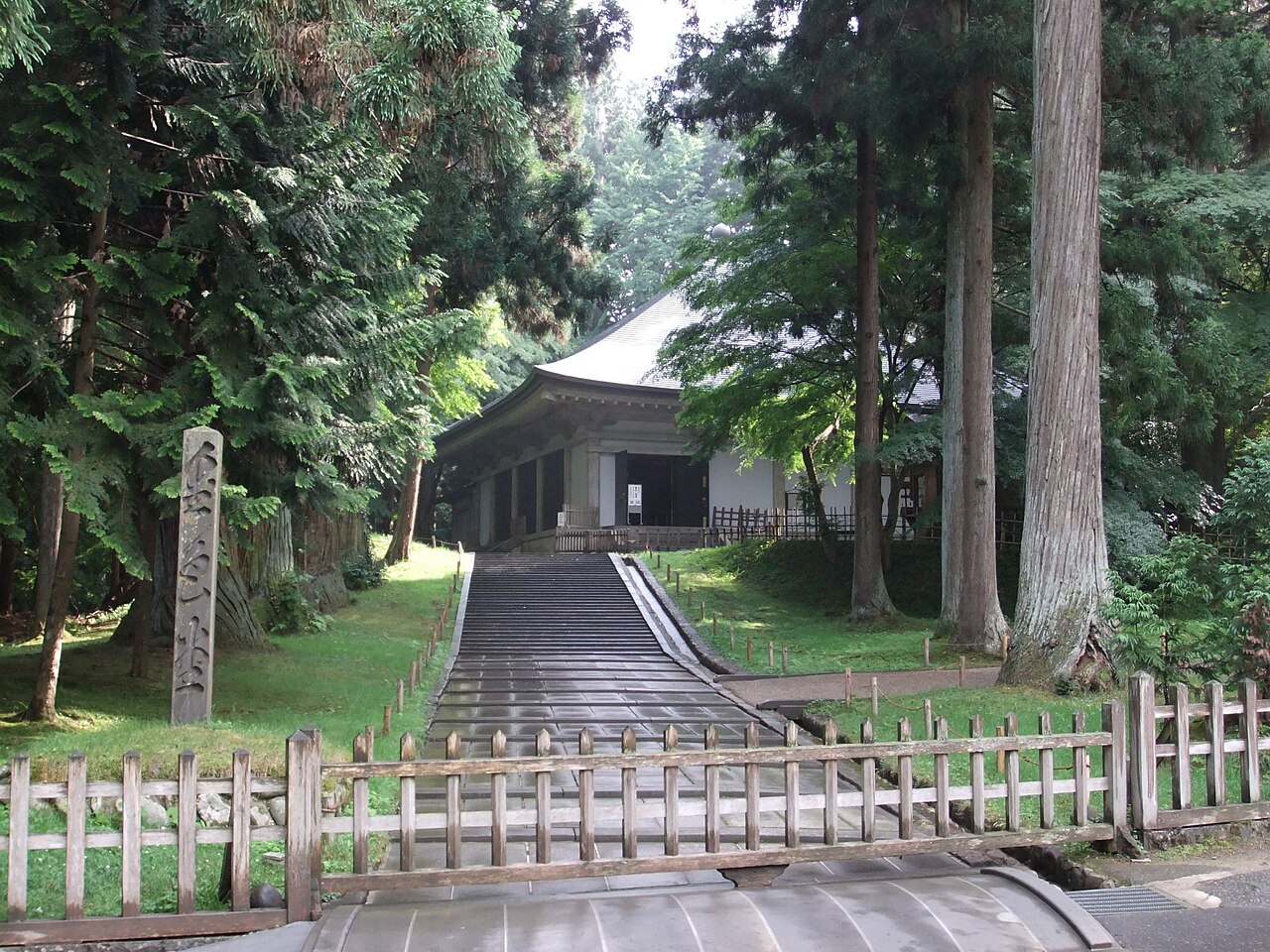
Chuson-ji was founded in 850 (Kasho 3) by Jikaku Daishi Ennin. In 1105 (Choji 2), Kiyohira, the first lord of the Oshu Fujiwara clan, began building halls and pagodas on a large scale. His wish was to console those who died in the Former Nine Years’ and Later Three Years’ Wars of the late 11th century, friend and foe alike, and to build a peaceful land in Tohoku based on the teachings of the Buddha. It was also a resolve against war by Kiyohira, who had lost his father, wife and children to the fighting.
The Konjikido (Golden Hall), whose framework Kiyohira raised in 1124, preserves its original form and was the first building designated a National Treasure. The inner sanctuary is decorated with gold leaf, mother-of-pearl inlay of luminous turban shell, ivory and gems. The building in the photo is the shelter hall that houses the Konjikido.
Three Generations of Hiraizumi, and Its End
The second lord, Motohira, built Motsu-ji, and the third, Hidehira, built Muryoko-in.
When Minamoto no Yoshitsune fled to Hiraizumi after falling out with his elder brother Yoritomo, Hidehira took him in. After Hidehira’s death, the fourth lord, Yasuhira, gave in to Yoritomo’s pressure and drove Yoshitsune to take his own life. Yasuhira was then attacked by Yoritomo in turn, and the Oshu Fujiwara clan fell in 1189 (Bunji 5). In 2011, the “Cultural Heritage of Hiraizumi,” which includes Chuson-ji, became a World Cultural Heritage site.
Getting there: from Morioka, 43 minutes to Ichinoseki on the Tohoku Shinkansen, then change at Ichinoseki for a 9-minute ride to Hiraizumi. From Shin-Hanamaki, where the shuttle bus to Hanamaki Onsen leaves, it is 30 minutes to Ichinoseki.
Geibikei Gorge Boat Ride (Ichinoseki)
From Ichinoseki Station you can also take the JR Ofunato Line 30 minutes to Geibikei Station. About 5 minutes on foot from the station is Geibikei Gorge, a nationally designated Place of Scenic Beauty (467 Machi, Nagasaka, Higashiyama-cho, Ichinoseki). The boat ride takes about 90 minutes round trip. Genbikei, also in Ichinoseki, is a different gorge.
The boat ride costs ¥2,000 for adults, ¥900 for elementary school students and ¥200 for small children at the official ticket counter (in Japanese yen, checked 2026/11/15). The Klook boat ticket is from ¥1,900 (the amount I saw on 2026/11/15). Klook’s amount is shown in yen and varies with the date, group size and your card’s exchange rate. It is the price of the cheapest ticket, and who it applies to and what it includes may differ from the official counter price. These links include affiliate links.
Geibikei Gorge boat ride ticket: from ¥1,900 (as shown on Klook, 2026/11/15)
-
-
Things to Do in Morioka: Nambu Ironware, Mt. Iwate and Sansa Odori
Morioka was listed second in The New York Times “52 Places to Go in 2023.” Iwachu Tekkikan, the Hara Takashi Memorial Museum, the Miyazawa Kenji materials, views of Mt. Iwate and Mt. Himekami with the climbing restrictions, Chagu Chagu Umakko and Sansa Odori, all with official sources.
続きを見る
Ryusendo Cave: One of Japan’s Three Great Limestone Caves
An underground lake in Iwaizumi. The water looks clearest in winter
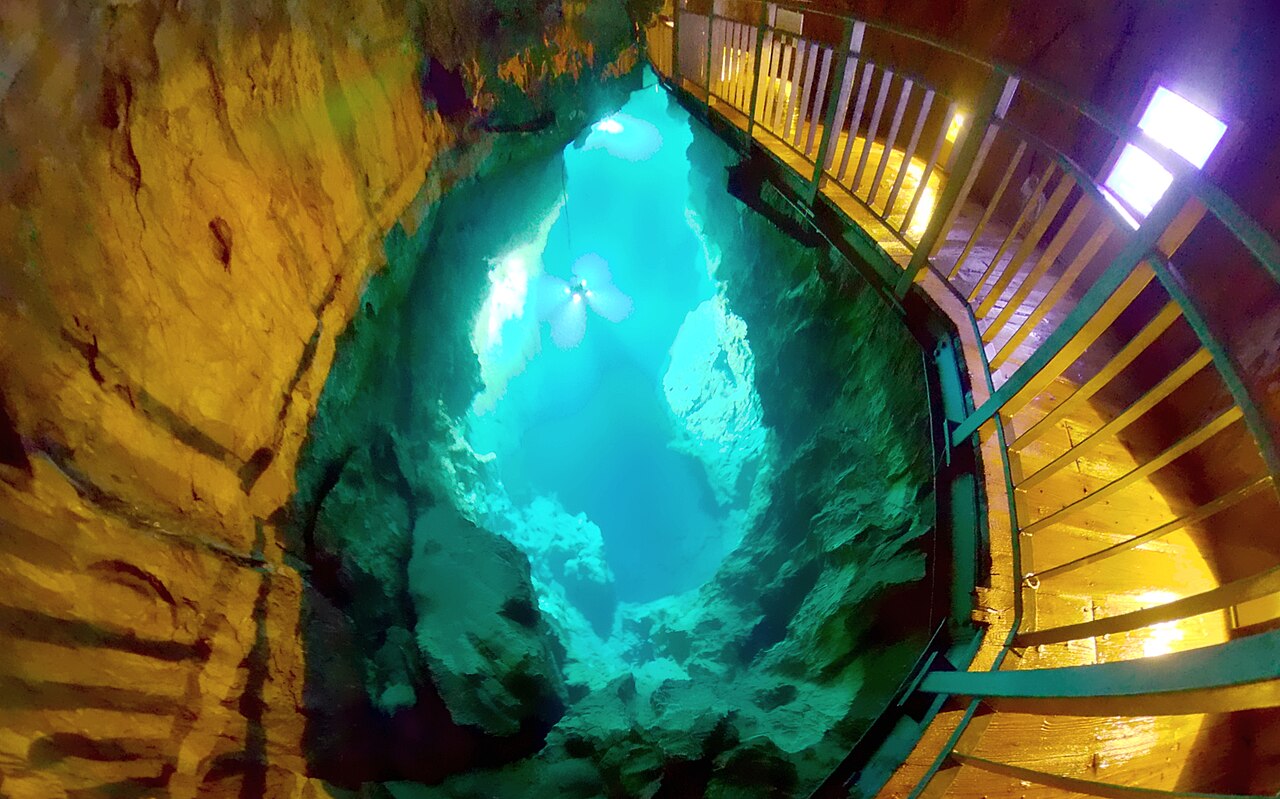
Ryusendo Cave in Iwaizumi is counted among Japan’s three great limestone caves, alongside Akiyoshido in Yamaguchi Prefecture and Ryugado in Kochi Prefecture. It was designated a national Natural Monument on 1938/12/14 (Showa 13) as “Iwaizumi Wakkutsu and its bats.” Its known length is 4,088 m, of which 700 m is open to visitors.
Eight underground lakes have been found, and three are open to visitors. The lakes are lit with underwater lights. According to Ryusendo Cave, winter is when you can see the lakes so clear that it is hard to tell where the surface is.
Admission is ¥1,100 for adults (high school age and older) and ¥550 for elementary and junior high school students (in Japanese yen, checked 2026/11/15). Hours are 8:30–17:00, until 18:00 from May to September and until 16:00 from December to February (months 12–2).
Getting there: JR buses run from Morioka Station to Iwaizumi. Ryusendo Cave says the bus from Morioka Station is the convenient way to come.
-
-
Things to Do in Tohoku: Geibikei, Oirase and Matsushima
GO JAPAN NOW Contents Things to Do in Tohoku: Pick by Answering Questions1. Where do you want to go? …
続きを見る
The Rias Coast of Sanriku: South from Miyako
Cliffs 50–200 m high in the north, a chain of inlets in the south
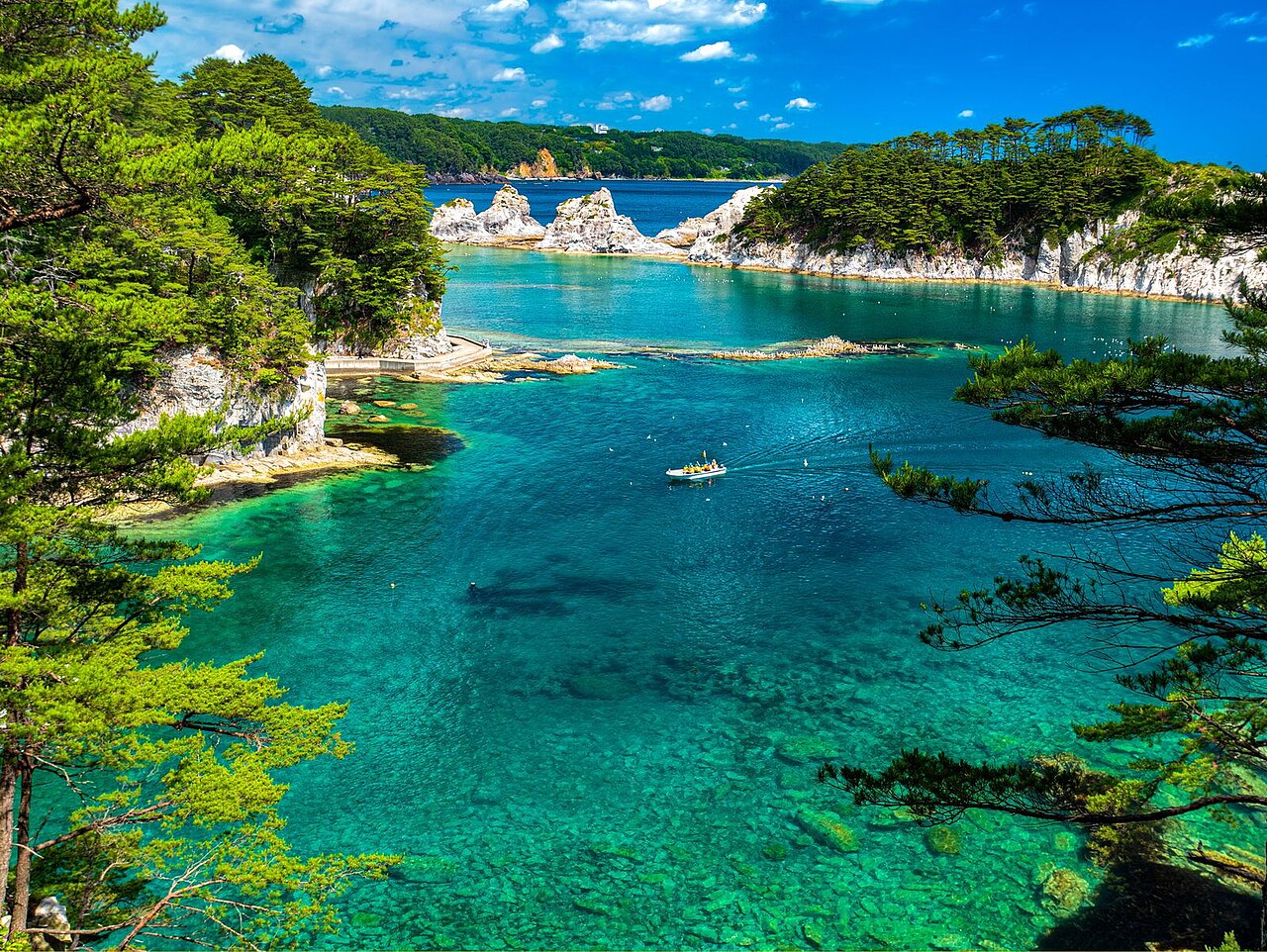
Sanriku Fukko National Park runs along the Pacific coast from Hachinohe in Aomori Prefecture, through Iwate, to Ishinomaki in Miyagi Prefecture. Not all of Iwate’s coast is a rias coast. According to the Ministry of the Environment, the rias coast is the part south of Miyako, Iwate. The northern side is marine terraces lined with cliffs 50 m to 200 m high, and small fishing-boat tours that pass below the cliffs and through sea caves run in various places.
The inlets of the rias coast in the south are calm, sheltered from the waves of the open ocean. Rafts for farming wakame seaweed, scallops, oysters and sea squirts line the bays. In the Great East Japan Earthquake of March 11, 2011, the tsunami ran up these inlets and took many lives and livelihoods. The area was certified as a Japanese Geopark, “Sanriku Geopark,” in September of Heisei 25.
Getting there: from Morioka to Miyako, about 1 hour 40 minutes by the 106 Limited Express bus, or about 2 hours 15 minutes by the 106 Express bus or the JR Yamada Line. The 106 Limited Express and Express buses make 12 round trips on weekdays and 10 on holidays (as of April 1, 2026). The number of services changes, so check the Iwate Kenpoku Bus page before you go.
Under a joint arrangement, a JR Yamada Line ticket can also be used on the 106 Limited Express and Express buses, and the 106 Limited Express has direct services to Jodogahama Park Hotel and to the Miyako sightseeing boat “Miyako Umineko Maru.”
-
-
Things to Do in Morioka: Nambu Ironware, Mt. Iwate and Sansa Odori
Morioka was listed second in The New York Times “52 Places to Go in 2023.” Iwachu Tekkikan, the Hara Takashi Memorial Museum, the Miyazawa Kenji materials, views of Mt. Iwate and Mt. Himekami with the climbing restrictions, Chagu Chagu Umakko and Sansa Odori, all with official sources.
続きを見る
Baseball Players from Iwate: Shohei Ohtani and Roki Sasaki
Oshu and Rikuzentakata. Both are now with the Dodgers
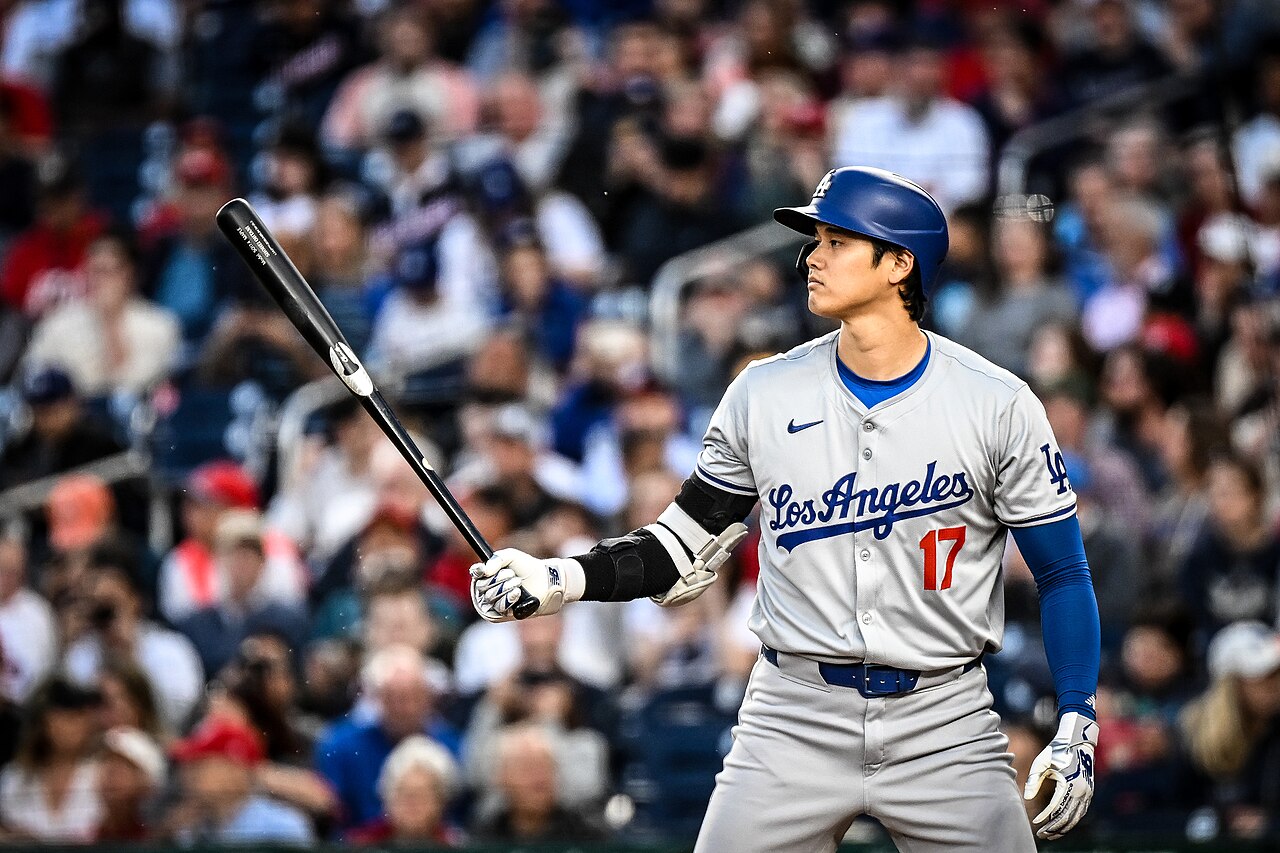
Shohei Ohtani was born on July 5, 1994, in Oshu, Iwate. While at Oshu Municipal Anetai Elementary School he joined the Mizusawa Little League, then went on from Oshu Municipal Mizusawa Minami Junior High School to Hanamaki Higashi High School. It was also in Oshu, at Hotel Plaza Inn Mizusawa, that he announced he would join the Hokkaido Nippon-Ham Fighters. He now plays for the Los Angeles Dodgers.
Hanamaki Higashi High School was created in 1982 (Showa 57) through the merger of 2 private high schools, Tanimura Gakuin High School and Hanamaki High School attached to Fuji Junior College. It is not a facility open to sightseeing visits.
Roki Sasaki (Rikuzentakata)
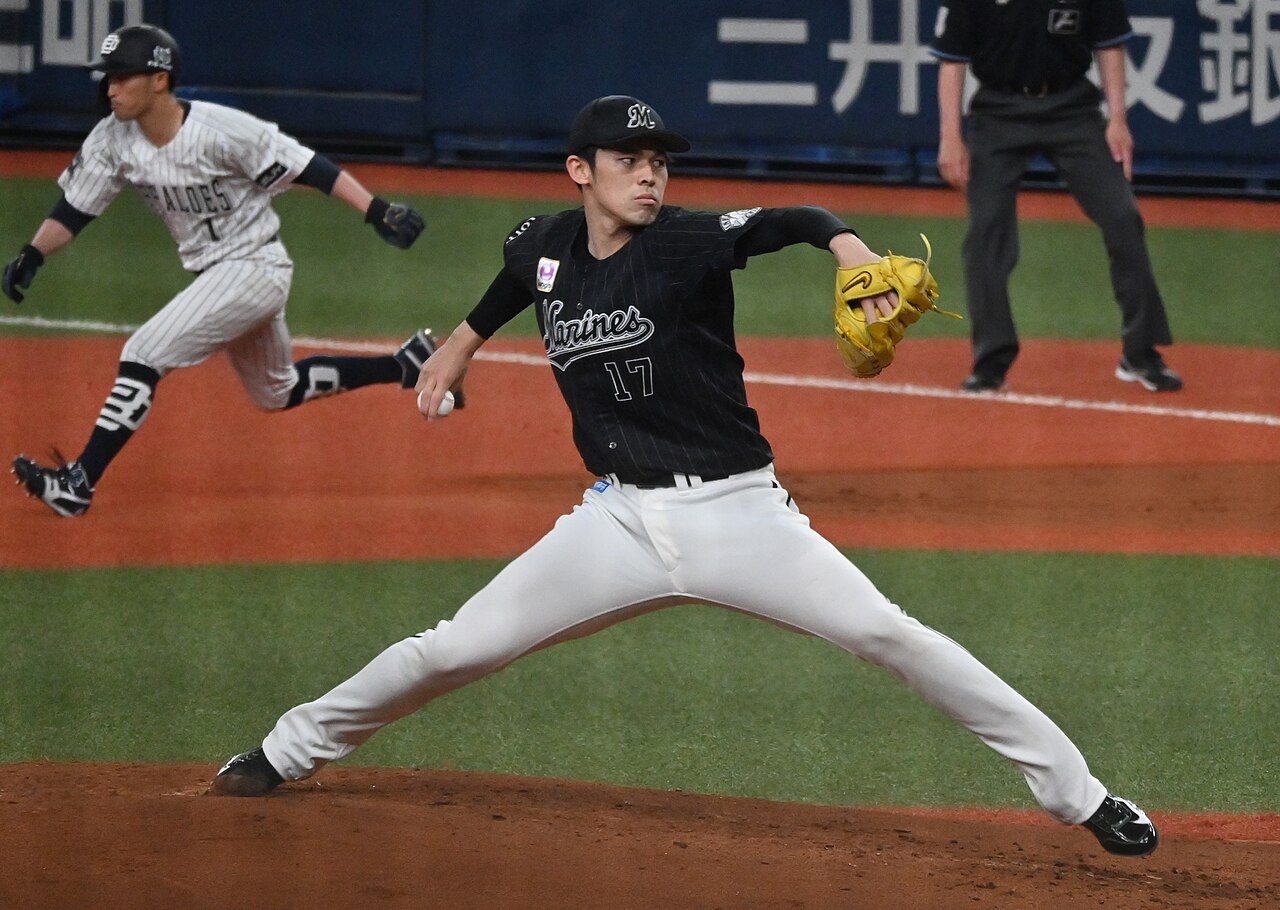
Roki Sasaki was born on 2001/11/3 in Rikuzentakata, Iwate. He went to Ofunato High School and now plays for the Los Angeles Dodgers, the same team as Shohei Ohtani.
-
-
Things to Do in Tohoku: Geibikei, Oirase and Matsushima
GO JAPAN NOW Contents Things to Do in Tohoku: Pick by Answering Questions1. Where do you want to go? …
続きを見る
Things to Do in Iwate: FAQ
Time from Morioka, winter, gorge names, the high school and the coast
-
-
Things to Do in Tohoku: Geibikei, Oirase and Matsushima
GO JAPAN NOW Contents Things to Do in Tohoku: Pick by Answering Questions1. Where do you want to go? …
続きを見る
-
-
Things to Do in Morioka: Nambu Ironware, Mt. Iwate and Sansa Odori
Morioka was listed second in The New York Times “52 Places to Go in 2023.” Iwachu Tekkikan, the Hara Takashi Memorial Museum, the Miyazawa Kenji materials, views of Mt. Iwate and Mt. Himekami with the climbing restrictions, Chagu Chagu Umakko and Sansa Odori, all with official sources.
続きを見る
Sources (pages in Japanese; checked 2026/11/15)
Koiwai Farm, Ltd., “History of Koiwai Farm”
Koiwai Farm, Ltd., “Company Profile”
Koiwai Farm Makiba-en, “Admission”
Koiwai Farm Makiba-en, “Access”
Koiwai Dairy Products, “Company Profile”
Toshichi Onsen Saiunso
JOGMEC, “Matsukawa Geothermal Power Station”
Iwate Prefecture, “Matsukawa Geothermal Power Station (Iwate’s Local Pride)”
Hanamaki Tourism Association, “Hanamaki 12 Hot Springs”
Namari Onsen Fujisan Ryokan, “Hot Springs”
Hanamaki Onsen, “Access and Free Shuttle Bus”
Hanamaki City, “Miyazawa Kenji Memorial Museum”
Hanamaki City, “The Role of the Miyazawa Kenji Ihatov Center”
Chuson-ji, “About Chuson-ji”
Chuson-ji, “About the Konjikido”
Chuson-ji, “Access”
Hiraizumi Town, “Cultural Heritage of Hiraizumi”
Ichinoseki City official tourism site, “Geibikei Gorge”
Geibikei Gorge official site
Ryusendo Cave official site (overview)
Ryusendo Cave official site
Ryusendo Cave official site (access)
Ministry of the Environment, “Sanriku Fukko National Park”
Iwate Kenpoku Bus, “Morioka–Miyako 106 Limited Express and Express Buses”
Oshu City, “The Career of Shohei Ohtani”
MLB.com, “Shohei Ohtani” (in English)
Hanamaki Higashi High School, “History”
MLB.com, “Roki Sasaki” (in English)
Ofunato City (official site)