Best Places to Visit in Japan 2026 | Go Japan Now

Japan Destinations 2026

Go Japan Now
Best Places to Visit in Japan

From Japan's iconic cities to its most underrated regions — a practical guide to where to go in Japan in 2026, for every kind of traveler.

🏨 Browse Hotels on Klook

Stage 1 · Why Japan

Why Japan's Destinations Are Unlike Anywhere Else

Ask seasoned travelers to name the country that consistently defies expectations and one name comes up more than any other: Japan. The best places to visit in Japan are extraordinary not just because of what they contain — the temples, the food, the technology, the nature — but because of the way in which they are maintained, presented, and experienced. Japan has a talent for making visitors feel simultaneously overwhelmed and deeply at ease, which is a very rare combination.

What makes Japan's destinations different is a layered quality that rewards every type of traveler. The history enthusiast finds sites maintained to a standard that many countries simply cannot match — temples in Kyoto that have stood for over a thousand years and still function as active religious centers, not just photogenic ruins. The food traveler discovers that Japan has more Michelin-starred restaurants than France and that quality exists at every price point, from a 600-yen convenience store onigiri to a 30,000-yen kaiseki dinner. The nature seeker finds volcanoes, tropical coral reefs, ski slopes, and ancient cedar forests — often within the same country's borders.

The 2026 context adds another layer of appeal. The Japanese yen has been trading at historically low levels against major currencies — around 150 yen to the US dollar — making Japan's world-class experiences dramatically more accessible to international visitors. A 7-night trip that would have felt aspirational several years ago now falls comfortably within a mid-range budget. The best places to visit in Japan have always been worth the trip; in 2026, they are also unusually affordable to reach and explore.

Understanding what makes Japan's destinations distinctive also requires appreciating the role of local food culture. Each major region — and often each prefecture — has a flagship dish or culinary identity that is treated with something close to civic pride. Ramen alone has dozens of regional styles: Sapporo's rich miso broth, Tokyo's shoyu base, Kyushu's pork-bone tonkotsu. The concept of eating your way through a Japan itinerary is not a travel cliché but a genuine and deeply rewarding way to experience regional identity. The best places to visit in Japan are often, at least partly, defined by what gets cooked there and nowhere else. This food dimension makes destination selection both more complex and considerably more enjoyable.

Japan's infrastructure supports multi-destination travel in a way that few countries can match. The shinkansen bullet train network connects most major destinations with speed, comfort, and near-perfect punctuality. A single JR Pass unlocks this entire network for a fixed price. Within cities, subway systems are clean, safe, frequent, and reliably signposted in English. This means that a well-planned trip can realistically cover three or four major destinations without the logistics friction that would make a similar itinerary exhausting in most other countries.

Finally, Japan rewards repeat visits in a way that almost no other destination does. Travelers who come expecting to "see Japan" in one trip almost universally return — often multiple times — because what they found on the first visit was so much deeper and more varied than anticipated. The best places to visit in Japan differ dramatically by season: Kyoto in cherry blossom season is not the same place as Kyoto under snow in winter. Hokkaido in powder snow is not the same as Hokkaido in wildflower summer. Planning which Japan to visit is itself an enjoyable problem to have.

📶 Stay Connected From the Moment You Land

Activate a Japan eSIM before you fly and connect instantly on arrival — no queuing at the airport SIM counter. Klook's Japan eSIM covers the entire country with high-speed data and takes minutes to set up via QR code.

Get Klook Japan eSIM →

Stage 2 · Classic Route

The Classic Route — Tokyo, Kyoto & Osaka

For first-time visitors asking where to go in Japan, the answer almost always starts with the same three cities: Tokyo, Kyoto, and Osaka. This is not a lack of imagination — it is honest advice. These three cities are among the best destinations in Japan precisely because each one excels at something different, and together they offer a comprehensive introduction to what Japan is and has been.

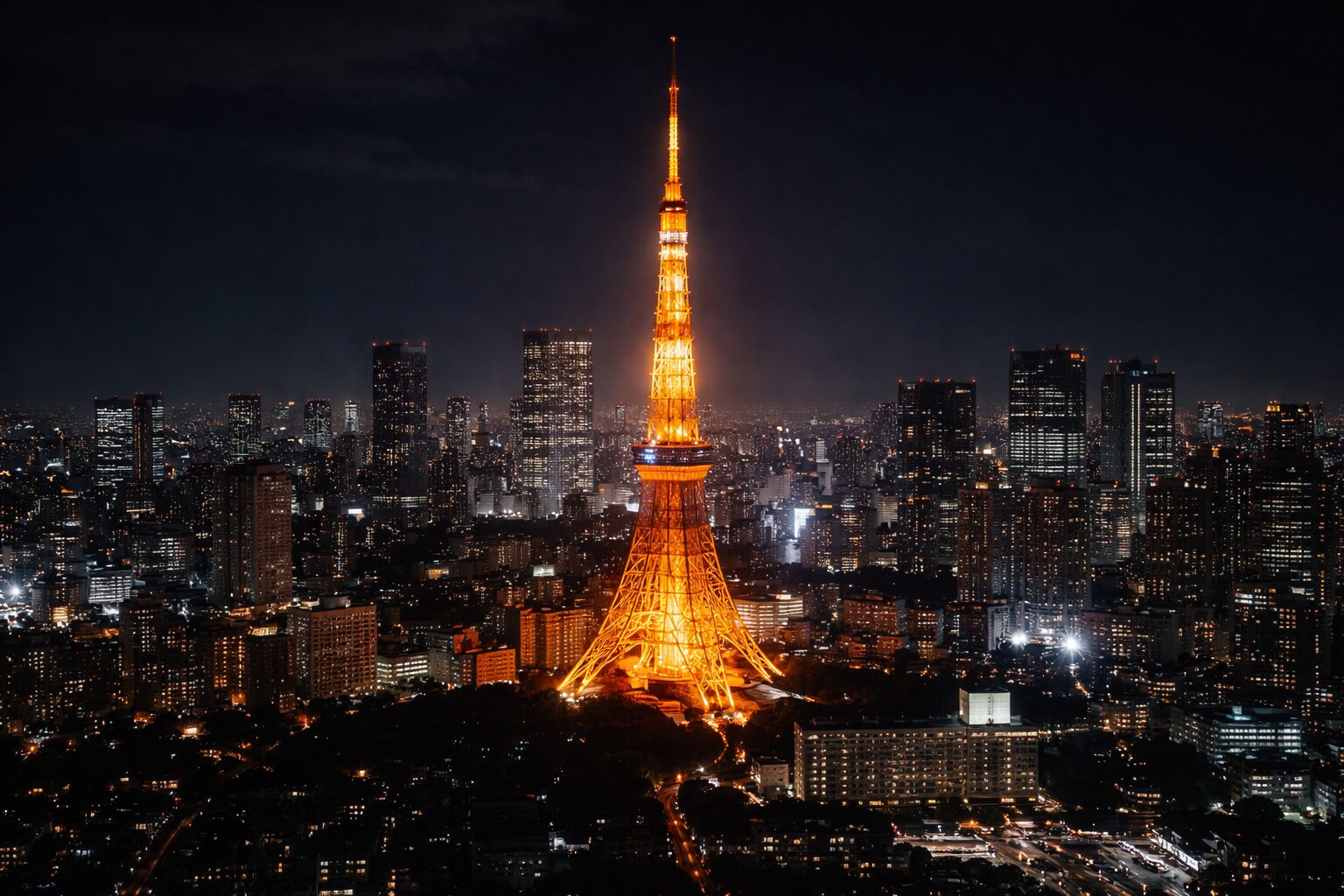
Tokyo is the entry point for most international travelers and, for many, the most overwhelming city on earth in the best possible sense. With over 13 million people in the city proper and 37 million in the greater metropolitan area, Tokyo is a world unto itself. The variety of neighborhoods alone could fill a week's itinerary: Shibuya for the famous scramble crossing and youth fashion; Shinjuku for neon-lit entertainment districts and the world's busiest station; Asakusa for the sensoji temple and traditional crafts; Yanaka for a glimpse of pre-war Tokyo's street layout; Akihabara for electronics and anime culture; Harajuku for street fashion and the serene Meiji Shrine just steps away. Tokyo is a city of contradictions that somehow all cohere into a seamlessly functioning whole.

For a deeper look at Tokyo's neighborhoods, culture, and day trips, see our complete guide to discovering Tokyo.

Kyoto was Japan's imperial capital for over a thousand years and remains the country's undisputed cultural heart. With over 1,600 Buddhist temples and Shinto shrines — seventeen of which are UNESCO World Heritage Sites — Kyoto is where much of what the world recognizes as "traditional Japan" actually lives. The Fushimi Inari shrine, with its thousands of vermilion torii gates, is arguably the single most photographed site in Japan. The Gion district preserves the architecture and aesthetic of the geisha quarter as it has existed for centuries. Arashiyama's bamboo grove delivers a sensory experience that photographs consistently fail to capture. Kyoto is best experienced at a slower pace over at least three days — ideally more.

Osaka is Japan's kitchen and its most extroverted city. Where Tokyo projects cool restraint and Kyoto embodies refined elegance, Osaka leads with warmth, humor, and an almost aggressive enthusiasm for food. The phrase "kuidaore" — eating yourself into bankruptcy — is an Osaka invention that locals wear as a badge of pride. Dotonbori's neon-lit canal district, Kuromon Ichiba market, and the 16th-century Osaka Castle are the headline attractions, but the city's real draw is eating: takoyaki (octopus balls) from a street stall, ramen at a basement counter, and kushikatsu (deep-fried skewers) at a standing bar. Osaka typically requires two to three days and works perfectly as the exit point for a Tokyo → Kyoto → Osaka itinerary.

Day trips from the Tokyo-Kyoto-Osaka base extend the classic route's reach considerably. From Tokyo: Nikko (UNESCO-listed shrine complex), Kamakura (Great Buddha and coastal temples), Hakone (onsen and Mount Fuji views), and Yokohama's Chinatown and harbor district are all accessible within 90 minutes. From Kyoto: Nara (friendly free-roaming deer and colossal Todaiji temple), Osaka's Dotonbori, and Himeji (Japan's finest surviving feudal castle) are close enough for half-day outings. Building one or two day trips into the classic route adds significant value without requiring additional hotel reservations.

The journey between all three cities is itself part of the experience. The Tokaido Shinkansen connects Tokyo and Osaka in about two hours and forty minutes, passing the flanks of Mount Fuji on a clear day. Kyoto sits on the same line, about 35 minutes before Osaka from the east. This efficiency means a traveler can breakfast in Tokyo, visit a temple in Kyoto, and eat Osaka street food for dinner — all without rushing.

Stage 3 · Beyond the Route

Beyond the Golden Route

Japan's classic cities are extraordinary, but the country's most memorable experiences are often found in destinations that don't appear on the typical first-timer's itinerary. Once the Tokyo-Kyoto-Osaka circuit feels familiar, these destinations reveal a Japan that is slower, wilder, more local, and in many ways more profound.

Hokkaido is Japan's northernmost main island and its most dramatically wild destination. Visitors come in winter for what is genuinely some of the world's best powder snow — Niseko in particular has achieved global renown among serious skiers. Sapporo, the island's capital, hosts the famous Snow Festival every February. In summer, Hokkaido transforms into a landscape of lavender fields, flower meadows, and vast national parks including Daisetsuzan — the largest in Japan. The food culture is distinct and exceptional: fresh seafood from some of the world's most productive cold-water fishing grounds, Genghis Khan (grilled mutton) barbecue, and dairy products of a quality that regularly surprises visitors expecting otherwise from Japan.

Hiroshima and Miyajima form one of Japan's most emotionally significant and visually stunning combined itineraries. Hiroshima's Peace Memorial Museum and Park confront one of the twentieth century's most defining events with extraordinary dignity and clarity — the experience is sobering, educational, and ultimately hopeful in a way that makes it essential rather than merely somber. A short ferry from Hiroshima brings visitors to Miyajima Island, where the famous "floating" Torii gate of Itsukushima Shrine rises from the sea at high tide, and friendly deer roam freely among the shrine's wooden structures. A single day covers both; two days allows time to absorb each properly.

Kanazawa has emerged in recent years as one of Japan's most compelling mid-sized cities. Sometimes called "Little Kyoto," Kanazawa avoided major WWII bombing and preserves beautifully intact samurai and geisha districts. Kenroku-en, one of Japan's three great gardens, is here. The extraordinary 21st Century Museum of Contemporary Art — round, transparent, and deliberately disorienting — makes Kanazawa a place where centuries of craft tradition and cutting-edge contemporary culture occupy the same city block. The Omicho covered market is among the best places in Japan to eat fresh local seafood at market prices.

Okinawa is Japanese in culture and administration, yet feels like a separate world from mainland Japan. The island prefecture has its own distinct language, cuisine, architectural tradition, and subtropical climate. White coral beaches, crystal-clear turquoise water, and vibrant coral reef ecosystems draw divers and beach travelers who might not otherwise think of Japan as a beach destination. Naha's Kokusai Dori street and the reconstructed Shuri Castle introduce a Ryukyu Kingdom history that differs entirely from the mainland Japanese narrative. Okinawa also has one of the world's highest concentrations of centenarians and a diet that has attracted significant scientific attention.

Stage 4 · Hidden Gems

Hidden Gems Worth the Detour

For travelers who have already seen Japan's headline destinations, or for those planning a trip specifically to avoid the crowds, these places consistently reward the extra logistics required to reach them. A useful framing: Japan's hidden gems are not hidden because they are inferior to the famous destinations — they are hidden because Japan's transport network historically made them harder to reach from the main shinkansen corridor. As regional access has improved, so has international awareness. Go now, before the crowds catch up.

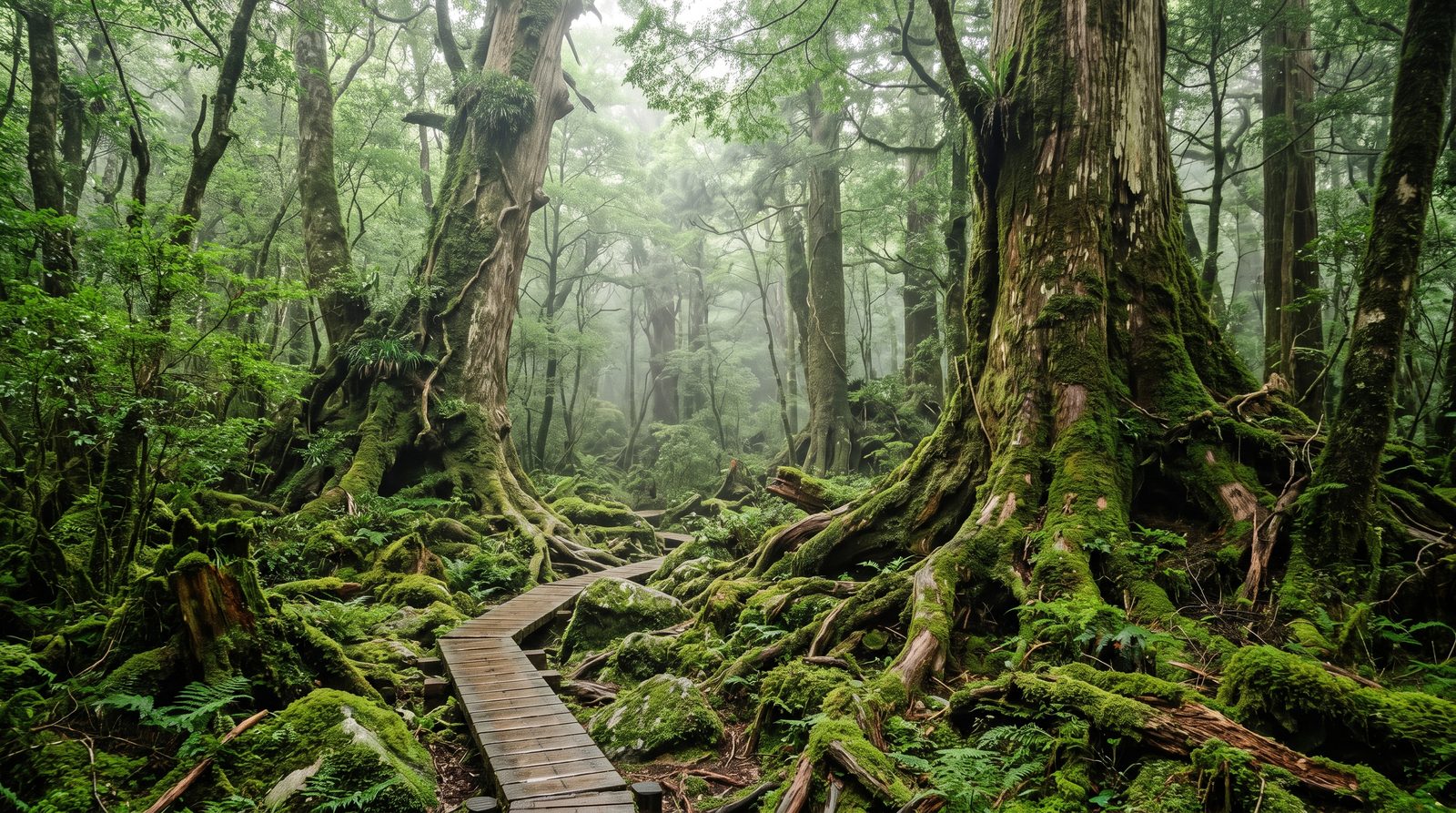
Yakushima Island, a UNESCO World Heritage Site off the southern tip of Kyushu, is home to ancient Japanese cedar trees (yakusugi) that are estimated to be over 7,000 years old. The island's interior is mountain jungle, often wrapped in mist — the landscape is said to have inspired the forests in Studio Ghibli's Princess Mononoke. Hiking to the Jomon Sugi cedar requires a full-day trail (approximately 10 hours round trip), but the island also offers accessible forest walks for those seeking the atmosphere rather than the summit.

Naoshima Island in the Seto Inland Sea is one of the world's most unusual art destinations — an island where the Benesse Art Site has integrated major works by artists including Yayoi Kusama, James Turrell, and Walter De Maria into the natural landscape, the sea, and purpose-built underground museums. The island's fishing village aesthetic and the quality of the art make Naoshima something that doesn't exist anywhere else in exactly this form. It requires an overnight stay to appreciate properly.

Takayama, a mountain town in the Japanese Alps (Gifu Prefecture), preserves the architecture of an Edo-period merchant town with extraordinary completeness. The morning markets, sake breweries, and meticulously maintained sanmachi suji historic district operate within a landscape of mountain views that is simply not available in Japan's coastal cities. Takayama is accessible from Nagoya by limited express train and makes an excellent addition to a Kyoto-based itinerary via the Hida route.

The Kumano Kodo pilgrimage trail network on the Kii Peninsula is one of Japan's (and the world's) most extraordinary long-distance walks — and one of the least visited by international travelers relative to its historical and scenic significance. The trail connects a series of grand shrines through ancient cedar forest, mountain passes, and coastal scenery, much of it unchanged for a thousand years. Sections can be walked as day hikes from bases in the region, or as multi-day journeys staying in traditional guesthouses. The Kumano Kodo is UNESCO World Heritage listed, shares that distinction with the Camino de Santiago (visitors who have completed both pilgrimages receive a unique dual-completion certificate), and offers a meditative experience that no urban destination in Japan can replicate.

Kyushu's Onsen Circuit — particularly Beppu, Yufuin, and the Unzen-Amakusa area — gives access to Japan's geothermal heritage in a setting that is both spectacular and much less crowded than Hakone or the Kinosaki-Onsen towns near Kyoto. Beppu's "hells" (jigoku), where brilliantly colored mineral pools boil and steam, are unlike any natural phenomenon on the mainland. Yufuin's ryokan culture and pastoral setting make it one of Japan's most refined short-break destinations.

🔍

Japan's Hidden Destinations — Full Guide

Beyond the tourist trail: Yakushima, Naoshima, Takayama, and more destinations that reward travelers willing to go further.

Find
yakushima, green, natural, natural heritage, mystery, forest, yakushima, yakushima, yakushima, yakushima, yakushima Go Japan Now - Explore & Experience Japan
Hidden Gems in Japan 2026 — Secret Spots Beyond the Tourist Trail

Japan's most famous sights are famous for a reason — but the country's hidden gems are where the rea ...

続きを見る

Stage 2 · Planning

How to Choose Your Destinations

Japan's breadth means that planning which destinations to prioritize is a genuinely important decision. The best places to visit in Japan depend entirely on how long you have, what you are most interested in, and whether this is your first visit or a return trip. The table below maps popular trip lengths to realistic destination combinations:

Trip Length Recommended Route JR Pass?
5–6 days Tokyo (3N) + Kyoto/Osaka (2–3N) Borderline
7–9 days Tokyo (3N) + Kyoto (2N) + Osaka (2N) + Hiroshima day trip Yes — 7-day
10–12 days Above + Kanazawa or Hakone Yes — 14-day
14 days Classic route + Kyushu or Hokkaido Yes — essential
21+ days All regions + island detours Yes — 21-day

One practical note on booking: Japan's best ryokan, popular temple lodgings (shukubo), and seasonal accommodation — cherry blossom season in Kyoto, powder-snow weekends in Niseko — book out months in advance. The gap between "I should plan this trip" and "I need to book now" is narrower in Japan than in almost any other major travel destination. Procrastinating on accommodation for a peak-season Kyoto visit is the single most common source of Japan travel regret. Booking trains (especially shinkansen reserved seats for popular holiday weekends) follows a similar logic — JR tickets open 30 days in advance and sell fast.A few destination-selection principles that hold up regardless of trip length: travel by season when possible. Cherry blossom season (late March–mid April) is spectacular but crowds and hotel prices peak. Autumn foliage (mid October–late November) offers similar beauty with slightly less pressure. Summer brings matsuri (festivals) and fireworks but also heat, humidity, and typhoon risk. Winter outside Hokkaido is mild, far less crowded, and often the best time for onsen towns.The JR Pass question deserves a specific note. The pass provides unlimited travel on most JR-operated trains, including most shinkansen routes. For a 7-night trip covering Tokyo and the Kansai region (Kyoto/Osaka), the math is close — calculate the round-trip shinkansen cost and compare it to the pass price. For 10 days or longer, or any itinerary including Hiroshima, Kanazawa, Kyushu, or Hokkaido, the pass almost always wins. Purchase it before you arrive in Japan — it cannot be bought at the standard price once you are in the country. The JR Pass remains one of the best value infrastructure investments in international travel.If you are traveling for the first time, resist the temptation to overload your itinerary. Japan is a country that rewards slower exploration. Three days in Kyoto is better than one. Two nights in a genuine ryokan is better than seven nights in seven different budget hotels. Build in transit time and unplanned afternoons. The best Japan travel experiences frequently happen in the gaps between scheduled activities.FAQ — Best Places to Visit in JapanThe most common questions from travelers planning their Japan destinations, answered with practical and honest advice.Is Tokyo or Kyoto better for a first visit to Japan?

Both, ideally. Tokyo is the better entry point for logistics and provides the best introduction to modern Japan's scale and energy. Kyoto is non-negotiable for anyone interested in Japanese history, traditional culture, or aesthetics. If you can only choose one due to time constraints: Tokyo if this is your very first trip to Japan and you want to understand the country's present; Kyoto if you have some familiarity with Japan and want to go deeper into its historical identity.

What are the best places to visit in Japan for nature lovers?

Japan has extraordinary natural destinations that most first-time visitors miss entirely. Top picks: Hokkaido for volcanic landscapes, wildflower meadows, and wildlife (foxes, deer, cranes); Yakushima Island for ancient cedar forests and mountain jungle; the Izu or Ogasawara Islands for marine biodiversity; Okinawa for tropical coral reef diving; the Japanese Alps (Kamikochi, Hakuba) for high mountain hiking. The best season for most Japanese nature travel is May–June or September–October.

How many days do I need in Japan?

A minimum of 7 nights is needed to see Tokyo and the Kansai region (Kyoto/Osaka) without feeling rushed. Ten to fourteen nights allows for a significantly richer experience including regional detours. Two weeks is the sweet spot for most first-time visitors who want both the iconic destinations and a few unexpected ones. Japan is a country that grows more rewarding the longer you stay — many first-time visitors return having regretted not budgeting more time.

What is the best time of year to visit Japan?

Spring (late March–early May) for cherry blossoms and mild weather; autumn (October–November) for fall foliage and comfortable temperatures. Both seasons are beautiful but attract peak crowds and premium hotel prices. For a quieter, more affordable visit: January–February (outside of ski resorts) or June–early July (rainy season, but moody and atmospheric). Summer (July–August) is hot and humid but delivers Japan's vibrant festival culture at its peak.

Is Japan good for solo travel?

Japan is arguably the single best country in the world for solo travel. The combination of extreme safety, excellent public transport, a solo-dining culture (counter seating is ubiquitous and socially normal), English signage in major cities, and a population that is helpful without being intrusive makes Japan uniquely accommodating for independent travelers. Hostel culture is well-developed, capsule hotels provide affordable single accommodation, and there is effectively no destination in Japan that is unsafe or logistically inaccessible for a solo traveler.

Plan Your Japan Trip — Next StepsWith your destination list taking shape, use these guides to build your complete Japan itinerary:

🗺️

First-Timer's Japan Guide

Visa requirements, itinerary templates, and budget breakdowns for your first trip to Japan.

Plan
mt.FUJI shizuoka Go Japan Now - Explore & Experience Japan
First Time in Japan: The Ultimate 2026 Guide for First-Time Visitors

📍 Your Complete 2026 Resource First Time in Japan: The Ultimate Stress-Free Guide Everything you nee ...

続きを見る

📶

Japan WiFi, SIM & eSIM Guide

Don't arrive without data. Compare all connectivity options and find what works best for your trip length.

Prepare
Japan WiFi, SIM & eSIM Guide 2026 — Stay Connected from Landing

📶 STAGE 2 — GETTING READY You're here: Sorting out internet before you land in Japan Japan has excel ...

続きを見る

🍜

Japan Food & Cultural Experiences

Ramen, sushi, street food, tea ceremony and seasonal festivals — the complete guide to experiencing Japan at its best.

Taste
seiya ramen iekei tonkotsu shouyu
Cultural Experiences in Japan 2026 | Art, Kimono, Food & More

Stage 3 — Experiences Best Cultural Experiences in Japan for Every Traveler Cultural experiences in ...

続きを見る

🔍

Japan Hidden Destinations

Beyond the tourist trail. Kanazawa, Yakushima, Naoshima — discover the Japan most visitors never see.


RECOMMEND

JRPASS Go Japan Now - Explore & Experience Japan 1

The Japan Rail Pass is one of the most talked-about travel purchases for Japan — and one of the most ...

2

📶 STAGE 2 — GETTING READY You're here: Sorting out internet before you land in Japan Japan has excel ...

更新日:

Copyright© Go Japan Now - Explore & Experience Japan , 2026 All Rights Reserved.