IC Card Japan 2026 — Suica, Pasmo & ICOCA Complete Guide
IC card Japan — your essential tap-and-go card for every train, subway, bus, and convenience store in the country. This guide covers Suica, Pasmo, ICOCA, and Mobile Suica: which to get, where to buy, how to top up, and how to get your refund at the airport.
- What Is an IC Card — and Why Do You Need One?
- IC Card Japan — All 10 Cards Compared
- How to Buy an IC Card in Japan
- How to Top Up, Check Balance & Use Your IC Card
- Where to Use Your IC Card in Japan
- IC Cards for Families & Children
- IC Card Limitations — What It Doesn’t Cover
- How to Refund Your IC Card Before Leaving Japan
- IC Card vs JR Pass — Do You Need Both?
- Frequently Asked Questions — IC Cards in Japan
What Is an IC Card — and Why Do You Need One?
The single most useful item you’ll carry in Japan
An IC card Japan is a rechargeable contactless smart card that works on virtually every form of public transport in the country — subway, JR trains, shinkansen local segments, buses, monorails, and ferries. Beyond transport, it doubles as a cashless payment card at convenience stores (7-Eleven, Lawson, FamilyMart), vending machines, coin lockers, taxis, and many restaurants.
The card stores value electronically. You load money onto it, tap in at the gate, tap out at your destination, and the exact fare is deducted automatically. No need to calculate fares, buy individual tickets, or handle coins. For first-time visitors, it eliminates the single most confusing part of getting around Japan.
An IC card is for short-distance urban transport (subways, city buses, local JR trains). It does not cover Shinkansen reserved seats. The JR Pass covers long-distance bullet trains and JR express lines — a completely different product. Most visitors need both.
Suica IC Card (Tokyo) — Pre-loaded, Ready at Airport Pickup
Suica · Pasmo · ICOCA · Kitaca · Toica · manaca · PiTaPa · Nimoca · Sugoca · Hayakaken
IC Card Japan — All 10 Cards Compared
Japan has 10 regional IC cards, but they’re fully interoperable nationwide — you can use a Suica bought in Tokyo on the Osaka subway without any issues. For tourists, the choice comes down to three cards:
RECOMMENDED
TOKYO / KANTO
KANSAI
| Card | Region | Best For | Pre-order |
|---|---|---|---|
| Suica | JR East (Tokyo) | All visitors — most flexible | ✅ Klook |
| Pasmo | Tokyo metro / private | Tokyo metro users | ❌ |
| ICOCA | JR West (Kansai) | Osaka / Kyoto arrivals | ❌ |
| Kitaca | JR Hokkaido | Hokkaido visitors | ❌ |
| Toica | JR Central | Nagoya area | ❌ |
| Nimoca | Nishitetsu (Fukuoka) | Kyushu visitors | ❌ |
| Sugoca | JR Kyushu | Kyushu JR users | ❌ |
Suica IC Card Tokyo — Best Card for Visitors · Skip the Station Queue
Airport · Station · Klook pre-order · Mobile Suica
How to Buy an IC Card in Japan
Option 1: Pre-order via Klook (Recommended)
The easiest option for visitors. Order a Suica card online before departure, pick it up at a designated counter at Narita or Haneda airport on arrival. Comes pre-loaded with ¥1,500 in credit (¥500 deposit included). Eliminates the station machine queue entirely — critical during peak season when machines have 15–30 minute waits.
Option 2: Station Ticket Machines
Available at most JR stations, major subway stations, and airports. Select English on the touchscreen. Insert cash (¥2,000 minimum recommended: ¥500 deposit + ¥1,500 initial load). The machine issues the card immediately. Note: many machines only accept cash — bring yen.
Select “Suica” on the ticket machine touchscreen
Look for the green Suica penguin logo. Choose “Issue New Card”. Select English if available.
Choose your initial load amount
Minimum ¥1,000. We recommend ¥3,000–5,000 as initial load for a week-long trip. The ¥500 deposit is added automatically.
Insert cash and collect your card
The machine accepts ¥1,000 and ¥10,000 notes. Coins also accepted. Your card is issued in seconds.
Option 3: Mobile Suica (iPhone/Android)
No physical card needed. Add Mobile Suica to Apple Wallet (iPhone) or Google Pay / Suica app (Android). Load via credit card. Tap your phone at the gate. Works identically to a physical card everywhere — including convenience stores and taxis. The most convenient option if your phone supports it.
iPhone: iPhone 7 or later with iOS 16+. Add via Wallet app → “+” → Suica. Works with NFC chip in Japan (same as contactless payment). Android: Requires Osaifu-Keitai compatible device (most Sony/Samsung flagships). Load via Suica app from Google Play. Note: Some older international iPhone models don’t support Japanese NFC — check your model before relying on this.
Suica IC Card — Pre-load ¥1,500 · Pick Up at Airport · Skip the Queue
How to Top Up, Check Balance & Use Your IC Card
Topping Up (Charge / Chasha)
Top up at any IC card machine, Suica machine, or convenience store (7-Eleven, Lawson, FamilyMart) using the “Charge” function. Minimum top-up: ¥1,000. Maximum card balance: ¥20,000. Cash only at most machines — have yen ready. Mobile Suica tops up via credit card from anywhere.
| Top-up Location | Cash? | Card? | Available |
|---|---|---|---|
| JR station machines | ✅ | ❌ | All hours |
| Subway station machines | ✅ | ❌ | Station hours |
| 7-Eleven / Lawson / FamilyMart | ✅ | ❌ | 24/7 |
| Mobile Suica app | ❌ | ✅ Credit card | 24/7 anywhere |
Checking Your Balance
Your balance is displayed on the turnstile screen every time you tap in or out. You can also check at any Suica machine (“Balance inquiry” option) or at convenience store checkout counters. Mobile Suica shows your real-time balance in the app.
Using Your IC Card
Tap the card (or phone) firmly on the yellow IC reader at the ticket gate. A beep and green light confirms entry. Tap again at exit — the fare is automatically calculated and deducted. Important: always tap out. Failing to tap out marks your journey as incomplete and may lock your card or overcharge you.
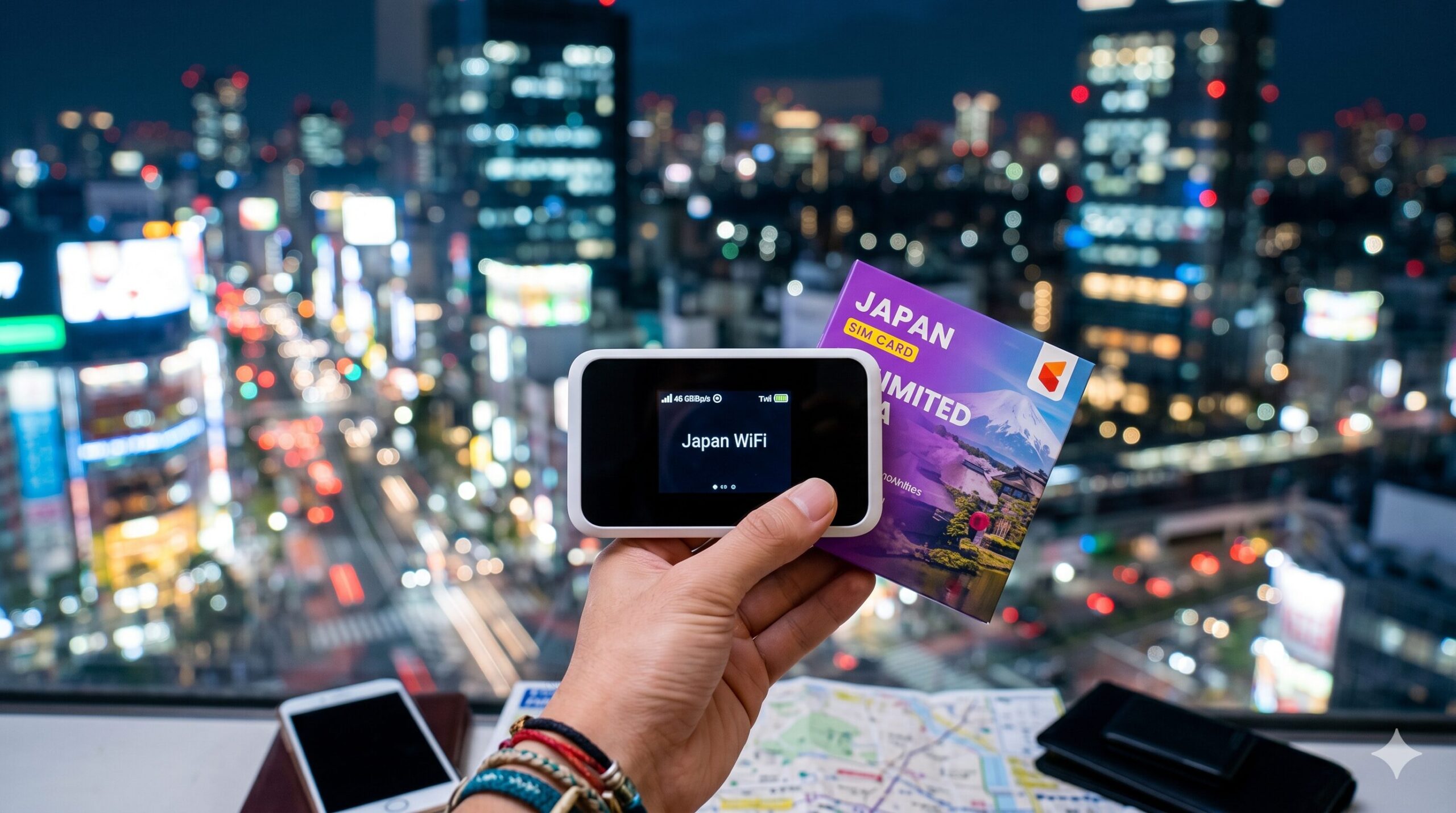
Sakura Mobile eSIM — Stay Connected While Navigating Japan’s Transit
Transport · Shops · Vending machines · Lockers · Taxis
Where to Use Your IC Card in Japan
Your IC card Japan works far beyond the train gate. Here’s the full scope:
All Public Transport
JR trains (non-reserved local), Tokyo Metro, Toei Subway, city buses, Yurikamome monorail, Narita Express local segments, Keikyu line to Haneda.
Convenience Stores
7-Eleven, Lawson, FamilyMart, Ministop, Daily Yamazaki — all accept IC cards. Often faster than cash at the register.
Vending Machines
IC card readers are on most modern vending machines (drinks, snacks, hot food). Tap and take — no coins needed.
Station Coin Lockers
Many IC-compatible lockers at major stations. Tap to lock and unlock — no cash coins required. Great for day trips when you want to leave luggage.
Taxis
Most Tokyo and major city taxis accept IC cards. Look for the IC sticker on the taxi window. Tap the card reader at the end of the ride.
Restaurants & Shops
Major chains (McDonald’s, Yoshinoya, Matsuya, Mos Burger, many supermarkets) accept IC cards. Look for the IC logo at checkout.
Klook Pass Greater Tokyo — Attractions Bundle for Tokyo Visitors
IC Cards for Families & Children

Children aged 6–11 travel at half fare on all IC card-compatible transport. Children under 6 travel free when accompanied by a fare-paying adult (up to 2 children per adult).
| Age | IC Card? | Fare | Notes |
|---|---|---|---|
| Under 6 | Not needed | Free | Up to 2 per adult |
| 6–11 (child) | Child IC card required | 50% adult fare | Must be issued as child card |
| 12+ (junior high+) | Adult IC card | Full fare | Standard card |
Child Suica cards (こどもSuica) must be issued at a JR East station ticket office (みどりの窓口 / Midori-no-Madoguchi) with ID. They cannot be issued at ticket machines or via Klook. The card automatically converts to an adult card when the child turns 12. For short visits, most families simply use adult cards and pay full child fare at gates — but the child card pays for itself quickly on longer trips.
Japan Transportation Guide — Complete Getting Ready Hub
IC Card Limitations — What It Doesn’t Cover
IC cards are powerful but not unlimited. Here’s what they cannot do:
- Shinkansen reserved seats — requires a separate ticket or JR Pass
- Limited Express trains (Narita Express, Romancecar, Haruka) — require a separate limited express ticket
- Night buses and highway buses — separate booking required
- Airport limousine buses (most) — cash or prepaid tickets only
- Rent-a-cycle docking stations — some accept IC, most require separate registration
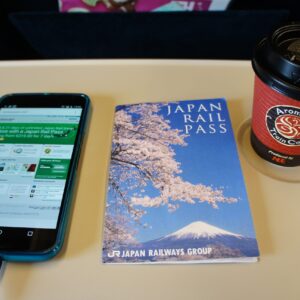
The optimal transport setup for most visitors doing the Golden Route (Tokyo → Kyoto → Osaka): JR Pass 7-day for Shinkansen and express trains + Suica IC card for subway, city buses, and daily purchases. Together they cover virtually every transport need in Japan. Order both before departure via Klook.
-
-
Japan Rail Pass 2026 — Is It Worth It? Complete Guide
▶ Stage 2 — Getting Ready Japan Rail Pass 2026 — Complete Guide to Prices, Types & Buying The J …
続きを見る
JR Pass 7-Day — Covers Shinkansen & Express Trains (IC Card Doesn’t)
How to Refund Your IC Card Before Leaving Japan

When you’re done with your IC card, you can refund the remaining balance plus the ¥500 deposit at any JR station office. You’ll receive your balance minus a ¥220 handling fee. If you’re planning to return to Japan, consider keeping the card — it stays valid for 10 years from the last top-up.
Visit a JR station ticket office (Midori-no-Madoguchi)
Refunds are processed at staffed counters only — not at machines. Available at major stations and Narita/Haneda airport JR counters.
Hand over your card and request a refund
Say “Suica no haraimodoshi” (Suica refund) or simply show the card and gesture. Staff handle this routinely for tourists.
Receive your cash refund
You receive: remaining balance + ¥500 deposit − ¥220 handling fee. Example: ¥800 balance + ¥500 deposit − ¥220 = ¥1,080 refund.
| Refund Scenario | You Receive |
|---|---|
| ¥0 balance remaining | ¥280 (¥500 deposit − ¥220 fee) |
| ¥500 balance remaining | ¥780 |
| ¥1,000 balance remaining | ¥1,280 |
| ¥3,000 balance remaining | ¥3,280 |
Sakura Mobile eSIM — Your Connection from Arrival to Final Departure Gate
IC Card vs JR Pass — Do You Need Both?

A question every first-timer asks. The answer depends entirely on your itinerary:
BUDGET OPTION
RECOMMENDED
When using a JR Pass, you still need an IC card for Tokyo Metro lines (not operated by JR), city buses, convenience stores, and any non-JR transport. The two cards are complementary — your JR Pass handles the big moves between cities; your Suica handles the daily routine.
-

-
Japan Transportation Guide 2026 — Trains, JR Pass & IC Cards
▶ Stage 2 — Getting Ready Japan Transportation Guide — Trains, JR Pass & IC Cards Explained jap …
続きを見る
JR Pass 7-Day + Suica IC Card — Order Both Before Departure
Frequently Asked Questions — IC Cards in Japan
RELATED — GETTING AROUND