Things to Do in Kyoto 2026 — Japan’s Cultural Heart
Things to do in Kyoto — 1,200 years of imperial history, 17 UNESCO World Heritage Sites, and some of the most extraordinary food, temples, and cultural experiences on earth. Everything you need to plan your 2026 visit.
- Why Visit Kyoto in 2026 — Japan’s Ancient Capital
- Kyoto’s Top 7 Must-See Attractions
- Kyoto Experiences & Activities to Book
- Kimono Rental & Tea Ceremony
- Authentic Matcha Preparation Class
- Fushimi Inari Hidden Hike — Small Group with English Guide
- Zazen Meditation & Shakyo Sutra Copying
- Hozu River Rafting & Sagano Scenic Train
- More Kyoto Day Trips & Niche Experiences
- Matcha Sweets in Uji
- teamLab Biovortex Kyoto — Digital Art Inside the Botanical Garden
- Kyoto Food Guide — What & Where to Eat
- Getting to Kyoto & Getting Around
- Where to Stay in Kyoto — Neighborhood Guide
- Kyoto FAQ — Your Questions Answered
Why Visit Kyoto in 2026 — Japan’s Ancient Capital
Imperial history · 17 UNESCO sites · unmatched value
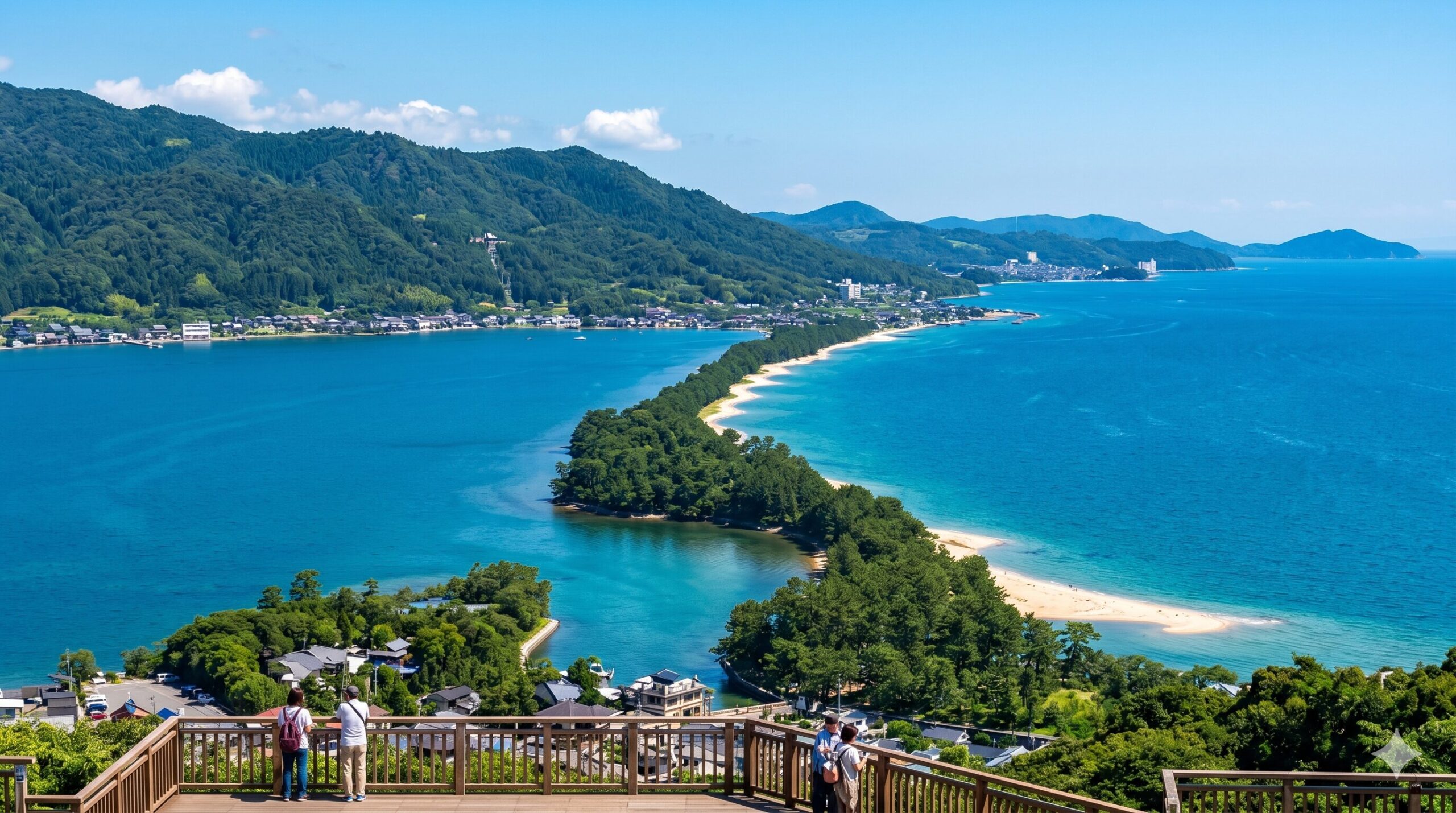
For travelers planning things to do in Kyoto, this city is one of the world’s most extraordinary living museums. From 794 to 1869 — over 1,000 years — Kyoto served as Japan’s imperial capital, the political, cultural, and spiritual center of an entire civilization. Today it is home to 17 UNESCO World Heritage Sites, more than 1,600 Buddhist temples, over 400 Shinto shrines, and a culinary tradition so refined it shaped Japanese cuisine for centuries.
In 2026, there has never been a better time to visit. The weak yen means travelers from the US, Europe, and Australia are getting extraordinary value. A machiya guesthouse stay runs $80–120 per night. A multi-course kaiseki dinner — once $300+ in 2019 — now costs under $180 at excellent mid-range restaurants. Kyoto has always been worth the journey; right now it’s worth it twice over.
Best Time to Visit Kyoto
| Season | Period | Highlight | Crowds |
|---|---|---|---|
| Cherry Blossom | Late Mar – Early Apr | Sakura at Maruyama Park & Philosopher’s Path | Very High |
| Autumn Foliage | Mid–Late Nov | Maples at Eikan-do & Tofuku-ji | Very High |
| Gion Matsuri | All of July | Grand float processions Jul 17 & 24 | High |
| Winter | Dec – Feb | Snow on Kinkaku-ji · Low prices · Thin crowds | Low |
| Summer | Aug | Festivals · caution: 35°C+ heat in basin | Medium |
Peak bloom typically falls in the first week of April, though recent years have seen late-March peaks. Book accommodation 3–6 months in advance for sakura and koyo seasons.
How Many Days for Kyoto?
At an absolute minimum, 2 full days covers the major highlights — Higashiyama/Kiyomizudera/Gion on day one, Arashiyama/Kinkaku-ji on day two. But 3–4 days is strongly recommended. This lets you add Fushimi Inari’s upper trails, a half-day trip to Uji for matcha, a zazen or tea ceremony experience, and Nishiki Market without feeling rushed. Kyoto consistently ranks as the city visitors most wish they’d stayed longer in.
Book Kyoto Hotels — Best Price Guarantee via Klook
UNESCO sites · torii gates · bamboo groves
Kyoto’s Top 7 Must-See Attractions
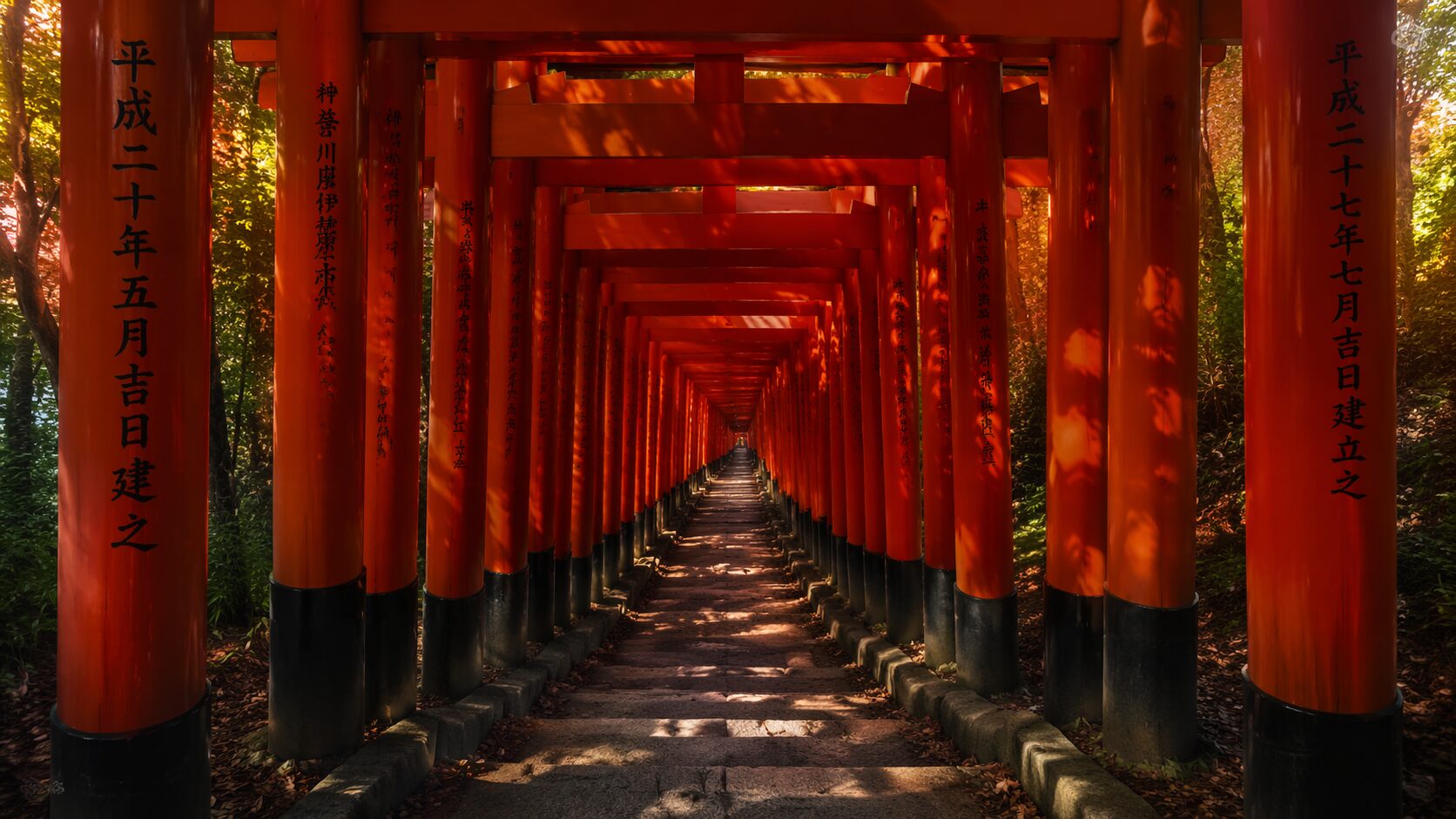
Kyoto has so many temples, shrines, and historic districts that first-time visitors can feel overwhelmed. These seven sites represent the absolute best — each one genuinely unmissable.
Fushimi Inari Taisha — 10,000 Torii Gates
The thousands of vermilion torii gates lining the trails up Mount Inari are arguably the single most photographed sight in Japan. Dedicated to Inari, the Shinto deity of rice and prosperity, the gates were each donated by Japanese businesses. Entry is completely free, 24 hours a day. The main trail winds 4km to the 233m summit — most visitors only go to the first gate cluster (Senbon Torii, 20–30 min). But above the Yotsutsuji intersection (~45 min from base), crowds thin dramatically. Visit before 7am or after dark for the best experience.
Kinkaku-ji — The Golden Pavilion
The top two floors of Kinkaku-ji are covered entirely in gold leaf, its reflection in the still pond below one of Japan’s defining images. Originally a 1397 retirement villa for shogun Ashikaga Yoshimitsu, the current structure is a 1955 reconstruction after a monk burned the original in 1950. Admission ¥500. Visit early morning to beat tour groups that arrive from 9:30am.
Kiyomizudera & the Higashiyama District
Kiyomizudera clings to Kyoto’s eastern hills, its famous wooden stage jutting 13 meters over the hillside on 139 pillars — assembled without a single nail. Below the temple, the sloping stone lanes of Sannenzaka and Ninenzaka are lined with beautifully preserved machiya townhouses selling Kyoto crafts, matcha sweets, and ceramics. Before 8am here is magical — souvenir shops still shuttered, soft light, near-solitude.
Arashiyama Bamboo Grove & Tenryu-ji
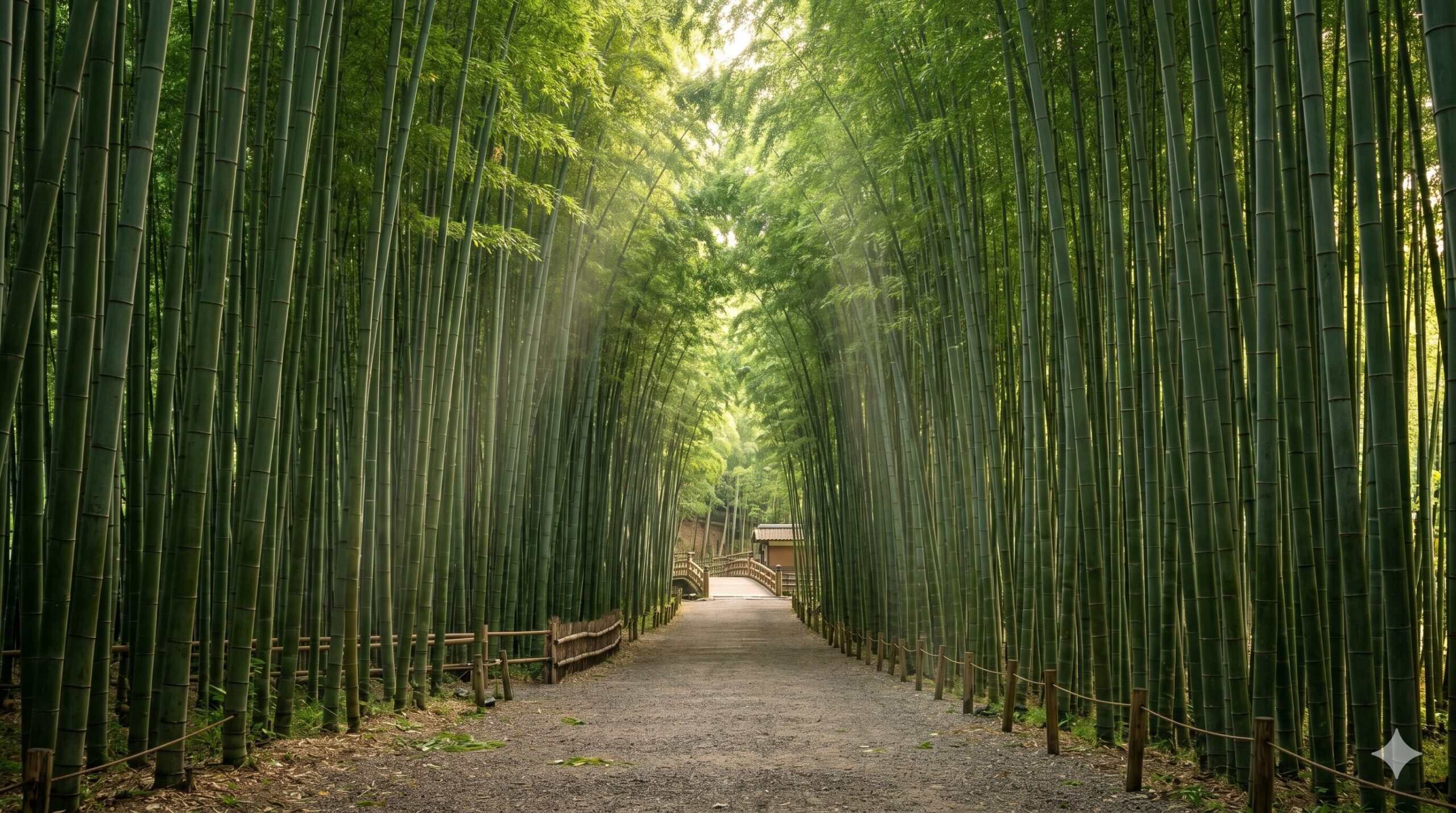
Walking through the bamboo forest — stalks rising 20 meters on either side, rustling and creaking in the wind — is a genuinely transportive experience. Free to enter at all hours. Adjacent Tenryu-ji is a UNESCO World Heritage Zen garden designed in the 14th century using the Arashiyama mountains as borrowed scenery (shakkei). Garden admission ¥500; full temple ¥800. The area also has Togetsukyo Bridge, the Iwatayama Monkey Park, and the charming Okochi Sanso Villa garden (¥1,000 including matcha).
Gion District — Kyoto’s Geisha Quarter
Gion is Kyoto’s most famous hanamachi (flower town), where geiko and maiko have cultivated the arts of entertainment for centuries. The Shirakawa canal area is especially beautiful at dusk, weeping cherry trees lining the water. For the best chance of spotting a maiko moving between engagements, position yourself on Hanamikoji Street between 5:30–7pm. Photography from a respectful distance is fine; blocking their path or approaching them is not.
Nijo Castle — The Shogun’s Kyoto Residence
Built in 1603 by Tokugawa Ieyasu as a statement of samurai authority over the imperial court, Nijo Castle’s Ninomaru Palace features elaborate Kano school painted screens and the famous “nightingale floors” — corridors deliberately constructed to squeak as an anti-assassination measure. The grounds are spectacular during cherry blossom season. Admission ¥1,300. UNESCO World Heritage Site.
Ryoan-ji — Japan’s Most Famous Rock Garden
The kare-sansui garden of Ryoan-ji is considered the pinnacle of Japanese rock garden art. Fifteen stones in five groups are set on raked white gravel enclosed by an ancient clay wall. From any single viewpoint, only 14 of the 15 stones are visible — the 15th becomes visible only upon enlightenment, per Zen tradition. Admission ¥600. UNESCO World Heritage Site.
Browse 1,000+ Kyoto tours & experiences in one place
Kimono · tea ceremony · Hozu River · Fushimi hike
Kyoto Experiences & Activities to Book
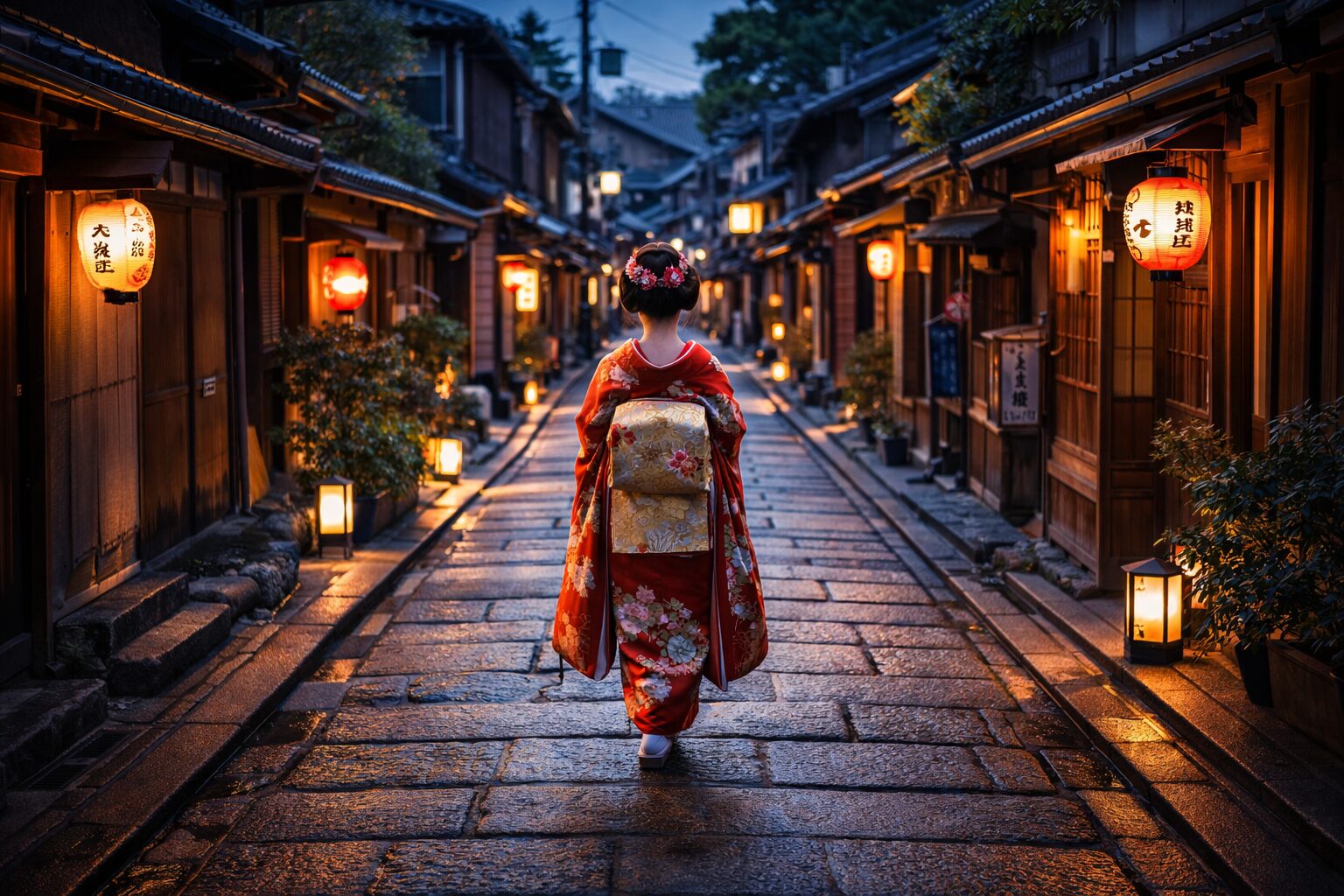
Kyoto rewards those who go beyond sightseeing and engage hands-on with its living traditions. These bookable experiences turn a temple-hopping trip into something deeper.
Kimono Rental & Tea Ceremony
Wearing a kimono through Gion or Higashiyama is a quintessential Kyoto experience. MAIKOYA Kyoto combines professional kimono dressing with an authentic tea ceremony led by an English-speaking instructor — you’ll learn the precise choreography of chado (the Way of Tea), including how to whisk matcha, appreciate the bowl, and the meditative philosophy underlying the ritual. Sessions run 60–90 minutes and suit all ages.
Kyoto Table-Style Tea Ceremony at a Kyo-Machiya
Authentic Matcha Preparation Class
For those who want to go beyond drinking matcha and learn the practical craft, a hands-on matcha preparation class teaches the precise sieving, measuring, whisking, and frothing techniques used by Japanese tea masters. You’ll prepare and drink your own bowl, learn the seasonal etiquette, and leave with the muscle memory to recreate it at home.
Kyoto Tea Ceremony & Matcha Preparation Experience
Fushimi Inari Hidden Hike — Small Group with English Guide
Beyond the famous Senbon Torii gate cluster, Mount Inari hides a network of trails most tourists never see — old shrines tucked in cedar groves, mossy stone foxes, viewpoints over Kyoto and the Yamashiro plain. A local English-speaking guide makes the difference between a 30-minute photo stop and a 3-hour experience that unfolds the mountain’s meaning. MagicalTrip’s small-group hidden hike is consistently rated among Kyoto’s best small-group tours.
Fushimi Inari Hidden Hiking Tour — Small Group · English Guide
Kyoto Gion Tea Ceremony & Wabi-sabi Walking Tour — Small Group · English Guide
Zazen Meditation & Shakyo Sutra Copying
Several Zen temples offer public zazen (seated meditation) sessions, usually in the early morning. Kenninji — Kyoto’s oldest Zen temple, founded 1202 — and Myoshinji both have English-friendly sessions. Shakyo (sutra copying with a fine brush) is offered at Chion-in and Daikaku-ji — no Japanese ability needed, sessions last 60–90 min. Both practices are profoundly calming and free or donation only.
Hozu River Rafting & Sagano Scenic Train
The Hozu River gorge between Kameoka and Arashiyama offers traditional wooden boat rides through rocky rapids — the 16km journey takes ~2 hours through spectacular mountain scenery. Particularly beautiful in autumn. The Sagano Scenic Railway (Sagano Romantic Train) runs the same gorge by open-air train, 7.3km through the canyon. Both sell out fast — advance booking essential.
More Kyoto Day Trips & Niche Experiences
For day trips, seasonal cherry blossom cruises, samurai/kendo experiences, and themed walking tours not covered by the major operators above, Viator aggregates the broadest catalogue of Kyoto small-group options.
All Kyoto Tours & Day Trips — Browse on Viator
100% Customizable Private Tours in and around Kyoto — Local Guide, Your Pace
Matcha Sweets in Uji
Uji, 17 minutes south of Kyoto by JR Nara Line, is the spiritual home of Japanese matcha. The town has cultivated tea since at least the 12th century. The main street along the Uji River is lined with 100+ year old tea houses serving matcha in every form — soft serve, parfaits, mochi, warabi mochi, and ceremonial bowls. Tsuien and Nakamura Tokichi are two celebrated institutions.
MAIKOYA Kimono & Tea Ceremony — Instant Confirmation
teamLab Biovortex Kyoto — Digital Art Inside the Botanical Garden
Housed within the Kyoto City Botanical Garden, teamLab Biovortex Kyoto is a permanent indoor digital art museum spanning four floors and more than 50 interactive installations exploring the unseen flows of wind, water, and life. Massless floating light forms, resonating gardens, and living digital ecosystems respond to your movement, so no two visits look the same. It pairs naturally with a Kyoto Botanical Garden stroll earlier in the day.
teamLab Biovortex Kyoto — Kyoto Botanical Garden
Kaiseki · yudofu · matcha · obanzai · tsukemono
Two ways to spend a day in Kyoto. A booked experience runs to a set time and you just show up. A private guide costs more, but the route is yours — the quiet temples, the backstreets of Gion, wherever you actually want to go.
Kyoto Food Guide — What & Where to Eat
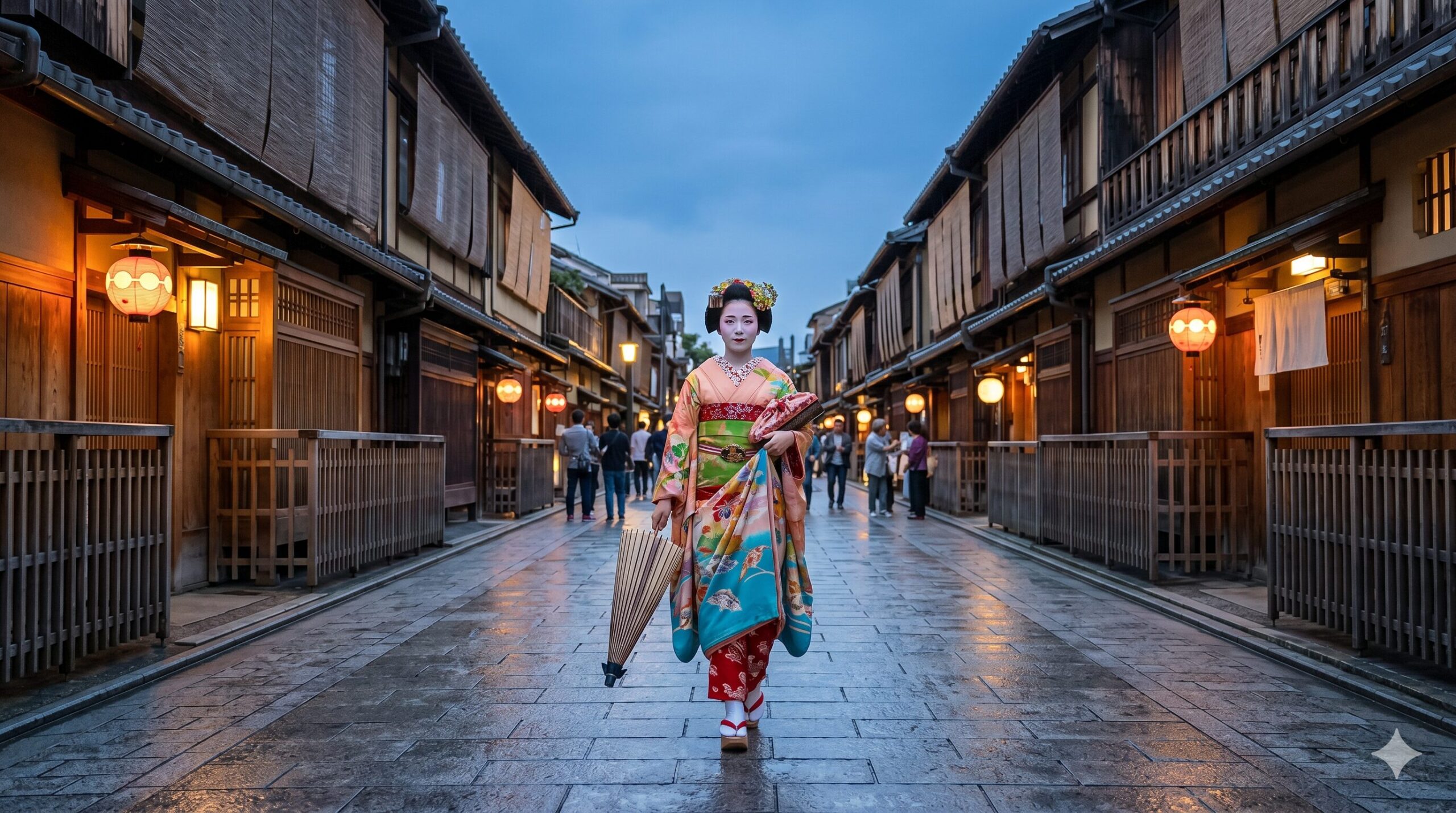
Kyoto cuisine (kyo-ryori) is a distinct culinary tradition built around delicacy, seasonality, and visual presentation. The city’s landlocked position historically limited fresh seafood, which drove Kyoto chefs to develop extraordinary techniques with tofu, vegetables, pickles, and freshwater fish — the result is a cuisine of remarkable sophistication.
5 Must-Eat Kyoto Dishes
ICONIC
LOCAL
MUST TRY
SWEET
AUTHENTIC
Where to Eat by Area
| Area | Best For | Budget |
|---|---|---|
| Gion / Pontocho | Kaiseki · riverside summer dining (yuka) | $$–$$$$ |
| Nishiki Market | Tsukemono · tofu · street snacks · free samples | $–$$ |
| Uji | Matcha everything — sweets · sets · ceremonial | $–$$ |
| Arashiyama | Yudofu · kaiseki lunch · riverside tofu | $$–$$$ |
| Kawaramachi | All budgets — ramen · izakaya · conveyor sushi | $–$$$ |
Kyoto Food Budget — Per Day
| Meal | Range | Note |
|---|---|---|
| Breakfast | $5–20 | Convenience store · bakery set · obanzai |
| Lunch | $10–30 | Ramen/soba $10–15 · yudofu set $18–30 |
| Kaiseki Dinner | $80–200 | Mid-range · high-end from $300 |
| Matcha Sweets | $8–15 | Per serving |
| Konbini Meal | $3–7 | 7-Eleven/Lawson — surprisingly good |
Kyoto Sushi Cooking Class in a Renovated Historic Bathhouse
Shinkansen · city bus · JR Pass · IC card
Getting to Kyoto & Getting Around
Getting to Kyoto
SHINKANSEN
SHORT HOP
DIRECT
Getting Around Kyoto City
City Bus — ¥260/ride · ¥700 one-day pass
The backbone of Kyoto tourist transport. Key routes: Bus 100 (Kiyomizudera–Gion–Heian Jingu), Bus 101/205 (Kinkaku-ji loop), Bus 11 (Fushimi Inari). Very crowded during cherry blossom and autumn foliage peak periods.
Subway — Karasuma & Tozai Lines
Karasuma Line (N–S): Kyoto Station → Shijo → Oike → Kitaoji (Kinkaku-ji). Tozai Line (E–W): Nijo Castle → Higashiyama (Keage station for Nanzenji). Fast, reliable, air-conditioned.
Keihan Railway — East Side & Uji
Private line along the east side of the Kamo River, connecting to Fushimi Inari, Uji (via Uji Line) and Higashiyama temples. Lower fares than taxis.
IC Card (Suica / ICOCA) — Load & Tap
Load an IC card for frictionless travel across buses, subway, and JR trains. Available from any station machine. Strongly recommended for all visitors.
Is the JR Pass Worth It for Kyoto?
The JR Pass covers all JR trains including Shinkansen (except Nozomi/Mizuho) and the JR Haruka to Kansai Airport. If your itinerary includes Tokyo → Kyoto round trip plus day trips to Nara, Hiroshima, or Osaka, the 7-day pass (~¥50,000 / $330 USD) typically pays for itself. For Kyoto city travel, the JR Pass covers the JR Nara Line (Fushimi Inari, Uji) but does NOT cover city buses, subway, or private railways.
For the full transport breakdown — IC cards, regional passes, and airport routes — see the dedicated guide.
-
-
Japan Transportation Guide 2026 — Trains, JR Pass & IC Cards
▶ Stage 2 — Getting Ready Japan Transportation Guide — Trains, JR Pass & IC Cards Explained jap …
続きを見る
Stay Connected in Kyoto — eSIM & WiFi
A Japan eSIM or pocket WiFi is essential for navigating Kyoto — Google Maps and transit apps won’t work without data. Activate before your flight for seamless coverage from the moment you land.
JR Pass 7-Day — Buy on Klook, Activate in Japan
Gion machiya · Arashiyama ryokan · Station area
Where to Stay in Kyoto — Neighborhood Guide
Choosing the right neighborhood significantly affects your Kyoto experience. The city is not large, but transport between districts can be time-consuming without strategic base selection.
CONVENIENT
ATMOSPHERIC
PREMIUM
BALANCED
Renting an entire machiya (traditional wooden townhouse) is one of the most distinctive ways to experience Kyoto — sometimes 100+ years old, carefully renovated with tatami rooms, engawa verandas, and tsuboniwa courtyard gardens. Prices $80–250/night for houses accommodating 2–6 people. Ideal for longer stays or small groups.
For a full Japan accommodation guide covering budget hostels through luxury ryokan, see:
-
-
Where to Stay in Japan 2026 — Hotels, Ryokan & Budget Guide
▶ Stage 2 — Getting Ready Where to Stay in Japan 2026 — Hotels, Ryokan & Budget Guide Where to s …
続きを見る
Browse Kyoto Hotels — Ryokan, Machiya & More
Days needed · cherry blossom · geisha · transport
Kyoto FAQ — Your Questions Answered
-
-
Best Places to Visit in Japan 2026 | Go Japan Now
▶ Stage 4 — Go Deeper Best Places to Visit in Japan 2026 — Complete Destination Guide Best places to …
続きを見る
New to Japan? Start with the First-Time Japan Guide