Things to Do in Okinawa 2026 — Tropical Paradise Travel Guide
Things to do in Okinawa — Japan’s southernmost subtropical archipelago in 2026. Turquoise beaches, the Churaumi whale shark aquarium, Ryukyu castles, manta-ray dives, and Yaeyama islands from Naha. Complete guide for first-time visitors.
- Why Okinawa? Things to Do in Japan’s Tropical Paradise
- Getting to Okinawa from Tokyo, Osaka & Asia
- Must-See Attractions in Okinawa — Top 7 Spots
- Top Experiences in Okinawa — Diving, Whales & Ryukyu Culture
- Okinawa Food Guide — 7 Must-Eat Ryukyuan Dishes
- Getting Around Okinawa Main Island & Remote Islands
- Where to Stay in Okinawa — Area Guide
- FAQ — Things to Do in Okinawa 2026
- Next Steps — Plan Your Okinawa Trip
Why Okinawa? Things to Do in Japan’s Tropical Paradise
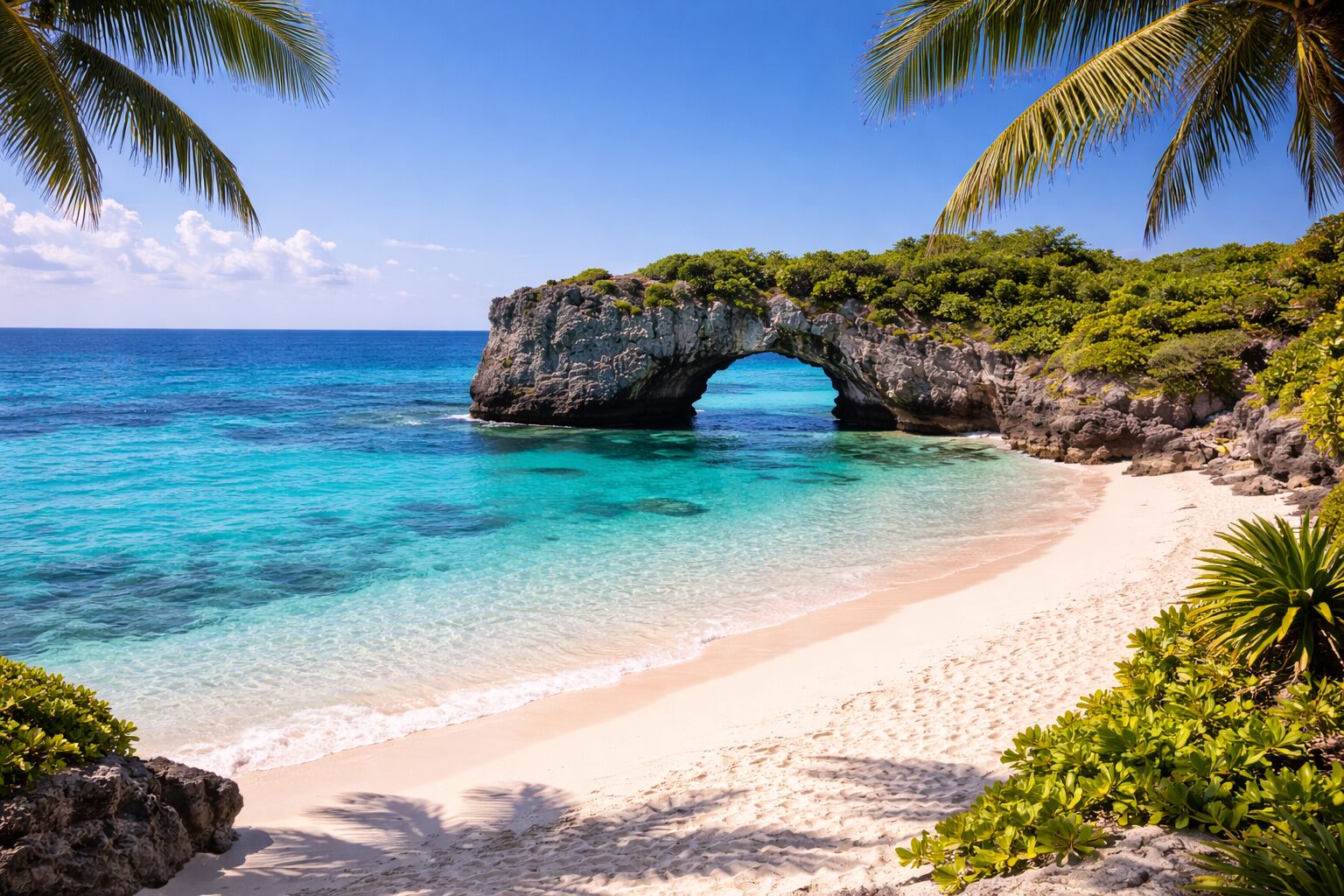
The best things to do in Okinawa span tropical beaches, world-class diving, deep Ryukyuan culture, and some of Japan’s most affordable resort experiences. Stretching nearly 1,000 km southwest of mainland Honshu, Okinawa Prefecture encompasses more than 160 islands — of which about 40 are inhabited. The main island, Okinawa-honto, sits at roughly the same latitude as Miami, giving it a warm, humid climate year-round and turquoise waters that rival the Caribbean.
What makes Okinawa truly extraordinary is its history. From the 15th century through 1879, the Ryukyu Kingdom governed these islands as an independent maritime state, trading actively with China, Korea, and Southeast Asia. That centuries-long independence created a culture, language, cuisine, religion, and architecture distinct from mainstream Japanese identity even today. Okinawan (Uchinaguchi) is not a dialect — it is a separate language. Ryukyu music, based on the three-stringed sanshin, sounds closer to Okinawa’s Southeast Asian trading partners than to the koto of Kyoto. The shisa lion-dog guardian statues on every rooftop, the neon-orange bingata textiles, and the haari dragon-boat festivals are all living expressions of Ryukyuan culture.
The Weak-Yen Advantage in 2026
For international travelers, 2026 is an exceptional year to visit. With the yen hovering around ¥150–¥155 to the US dollar, a beachfront resort 5-night package that cost $1,500 in 2019 now runs under $1,000. Compared to Hawaii (average hotel $350+/night) or Bali (rapidly rising prices and long-haul flight costs), Okinawa delivers world-class tropical experiences at a significant discount. Budget travelers can live well on $80–$120 per day including accommodation; mid-range couples can manage a genuinely luxurious trip on $200–$300 per day total.
Best Time to Visit Okinawa
Suggested 3–5 Day Okinawa Itinerary
Day 1 — Naha City & Shuri Castle: Arrive at Naha Airport, check in, explore Kokusai Dori for lunch and souvenir shopping. Afternoon at Shuri Castle, the UNESCO-listed palace of the Ryukyu kings. Evening: Ryukyu cuisine at a restaurant near Makishi Public Market.
Day 2 — Central Okinawa: Drive north to Cape Manzamo (the famous elephant-trunk cliff), stop at Kouri Bridge for photos of the emerald sea, and cross to Kouri Island for swimming and the Kouri Ocean Tower.
Day 3 — North & Churaumi Aquarium: Okinawa Churaumi Aquarium in the morning (whale sharks and mantas; arrive before 10am to beat crowds), Nakijin Castle ruins nearby (UNESCO). Afternoon beach time at Sesoko Island.
Days 4–5 — Remote Islands: Fly to Ishigaki Island (45 min from Naha) for Kabira Bay’s glass-bottom boat tours, manta ray diving, and Yaeyama soba. Or head to Miyako Island for Yonaha Maehama — regularly rated Japan’s most beautiful beach — and drive the spectacular Irabu Bridge.
Getting to Okinawa from Tokyo, Osaka & Asia
Okinawa is reached almost exclusively by air. There is no rail or ferry connection from the mainland that is practical for tourists. The good news: flights are frequent, well-priced, and arrive at clean, easy-to-navigate airports.
Arriving at Naha Airport (OKA)
Naha Airport is Okinawa’s main international and domestic hub. Direct flights connect Naha to most major cities in East Asia.
| From | Flight Time | Carriers |
|---|---|---|
| Tokyo (HND/NRT) | ~2.5 hours | ANA, JAL, Peach, Jetstar |
| Osaka (KIX/ITM) | ~2 hours | ANA, JAL, Peach |
| Taipei (TPE) | ~1 hour | China Airlines, EVA, Peach |
| Seoul (ICN/GMP) | ~2 hours | Korean Air, Asiana, Jeju Air |
| Hong Kong / Shanghai | ~2.5 hours | Seasonal direct services |
Ishigaki (ISG) & Miyako (MMY) Airports
Both remote island airports receive direct flights from Tokyo (Haneda/Narita, about 3 hours) and connect through Naha in 45 minutes. If you are combining all three island groups, fly Naha → Ishigaki → Miyako → Naha in a loop for maximum efficiency. Domestic carriers JTA and Ryukyu Air Commuter operate the inter-island routes.
Combining Okinawa With Mainland Japan
Okinawa has no JR railway, so a JR Pass cannot be used on the islands themselves. However, if your trip combines Okinawa with Tokyo, Kyoto, Osaka, or Hiroshima, a 7-day or 14-day JR Pass covers all your Shinkansen and JR train travel on Honshu and is excellent value. Most international visitors fly into Tokyo or Osaka, spend several days on the mainland with the JR Pass, then fly internally to Okinawa.
-

-
Japan Airport Transfers 2026: Narita, Haneda & Kansai Complete Guide
▶ Stage 2 — Getting Ready Japan Airport Transfers 2026 — Narita, Haneda & Kansai Complete Guide …
続きを見る
📶 Sakura Mobile SIM — reliable 4G/5G across Okinawa main island & remote islands
🚄 7-Day JR Pass — for your Honshu leg before or after Okinawa
Must-See Attractions in Okinawa — Top 7 Spots
Okinawa’s must-see attractions span Ryukyuan history, world-class marine life, and dramatic island scenery. These seven places form the backbone of any Okinawa itinerary.
Shuri Castle (Shurijo) — Ryukyu Royal Palace
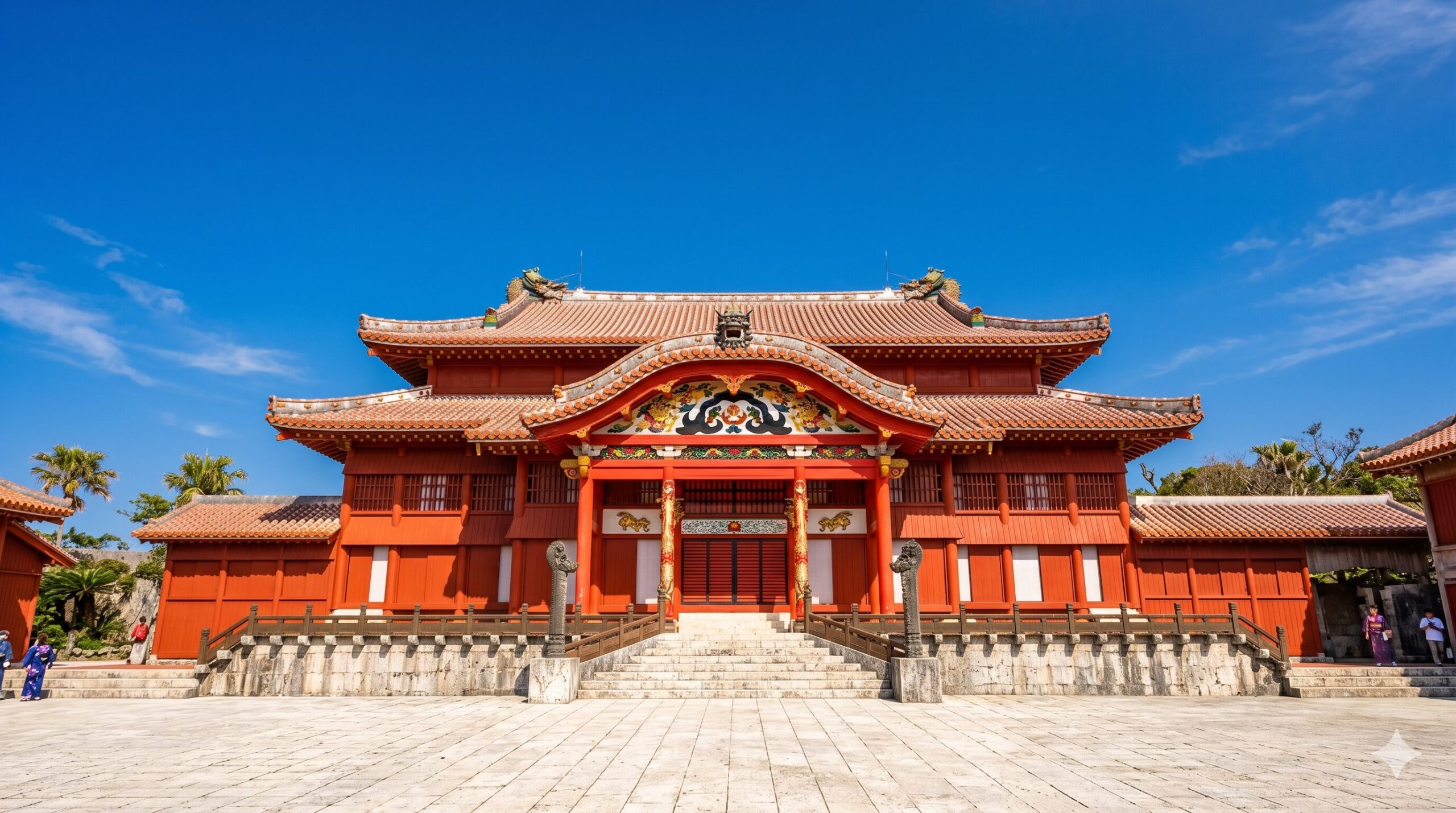
The beating heart of Ryukyuan civilization, Shuri Castle served as the royal palace of the Ryukyu Kingdom from the early 15th century until 1879. Listed as a UNESCO World Heritage Site in 2000, it was devastated by fire in October 2019 — but reconstruction is actively underway, and the Seiden (main hall) reopened for partial viewing in 2022. Even mid-rebuild, the castle’s vivid red lacquer walls, ceremonial gates, and commanding hilltop position over Naha make it unmissable. Allow 1.5–2 hours. Entry: ¥600 adults.
Okinawa Churaumi Aquarium — Whale Sharks & Mantas
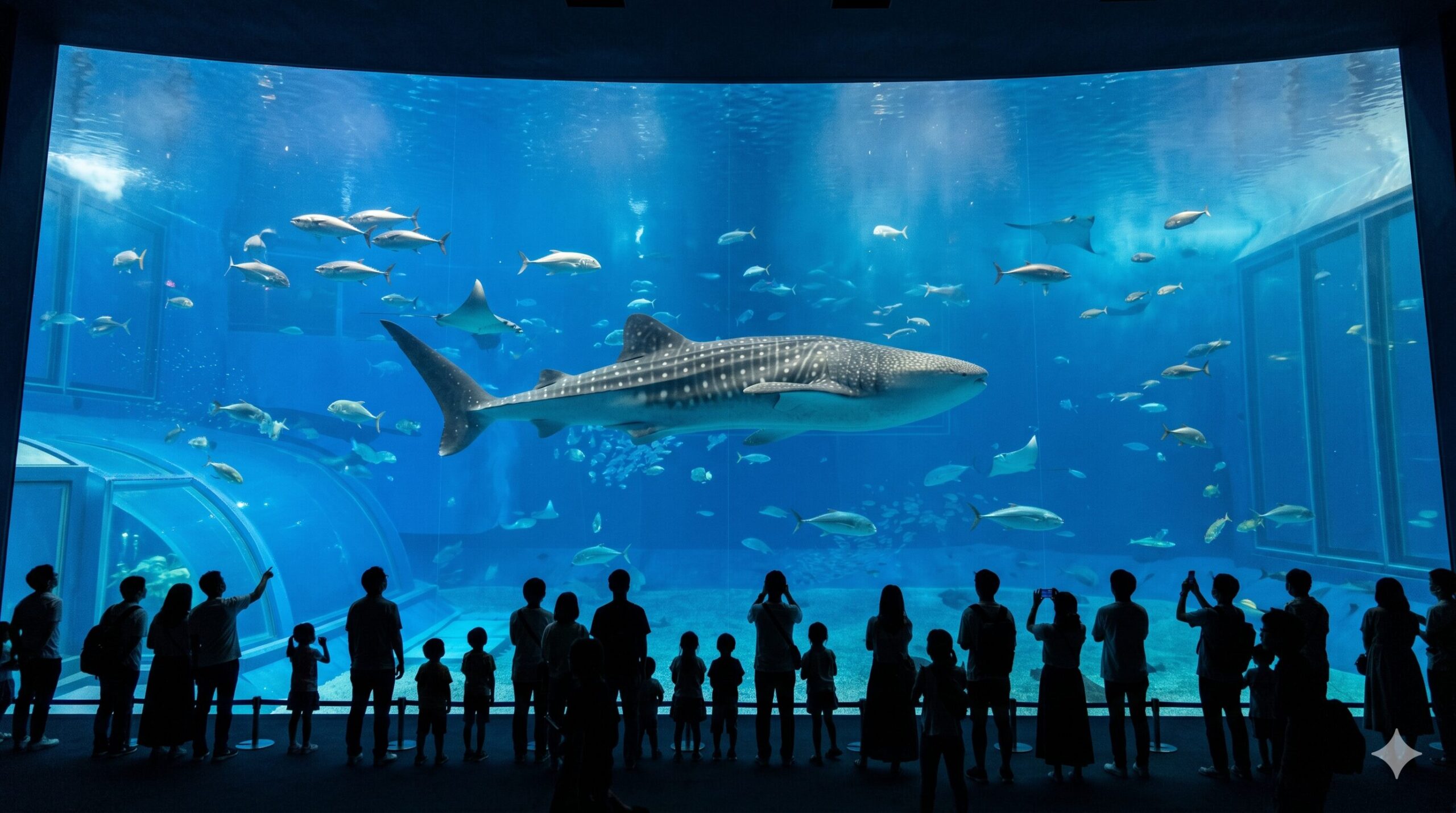
One of the world’s great aquariums, Churaumi (meaning “beautiful sea” in Okinawan) holds three whale sharks — the largest fish on earth — and giant manta rays in its 7,500-cubic-meter Kuroshio Sea tank. The 8.2-meter-tall acrylic panel viewing wall is genuinely awe-inspiring. Surrounding attractions include the Dolphin Show, manatee pools, and sea turtle lagoons. Built inside Ocean Expo Park, admission also grants access to native Okinawan plant gardens and traditional houses. Budget half a day.
Kokusai Dori — Naha’s International Street
Kokusai Dori (“International Street”) runs 1.6 km through central Naha and is Okinawa’s most tourist-friendly promenade. The street brims with shisa figurine shops, bingata fabric stores, awamori liquor boutiques, and restaurants serving everything from champuru stir-fries to taco rice. The covered Heiwa Dori arcade branches off midway, leading to the atmospheric Makishi Public Market — buy fresh fish on the first floor and have it cooked to order on the second. In the evenings, Noren Plaza yatai (food stalls) serve cold Orion Beer alongside live Okinawan folk music.
Cape Manzamo — The Elephant Trunk Cliff
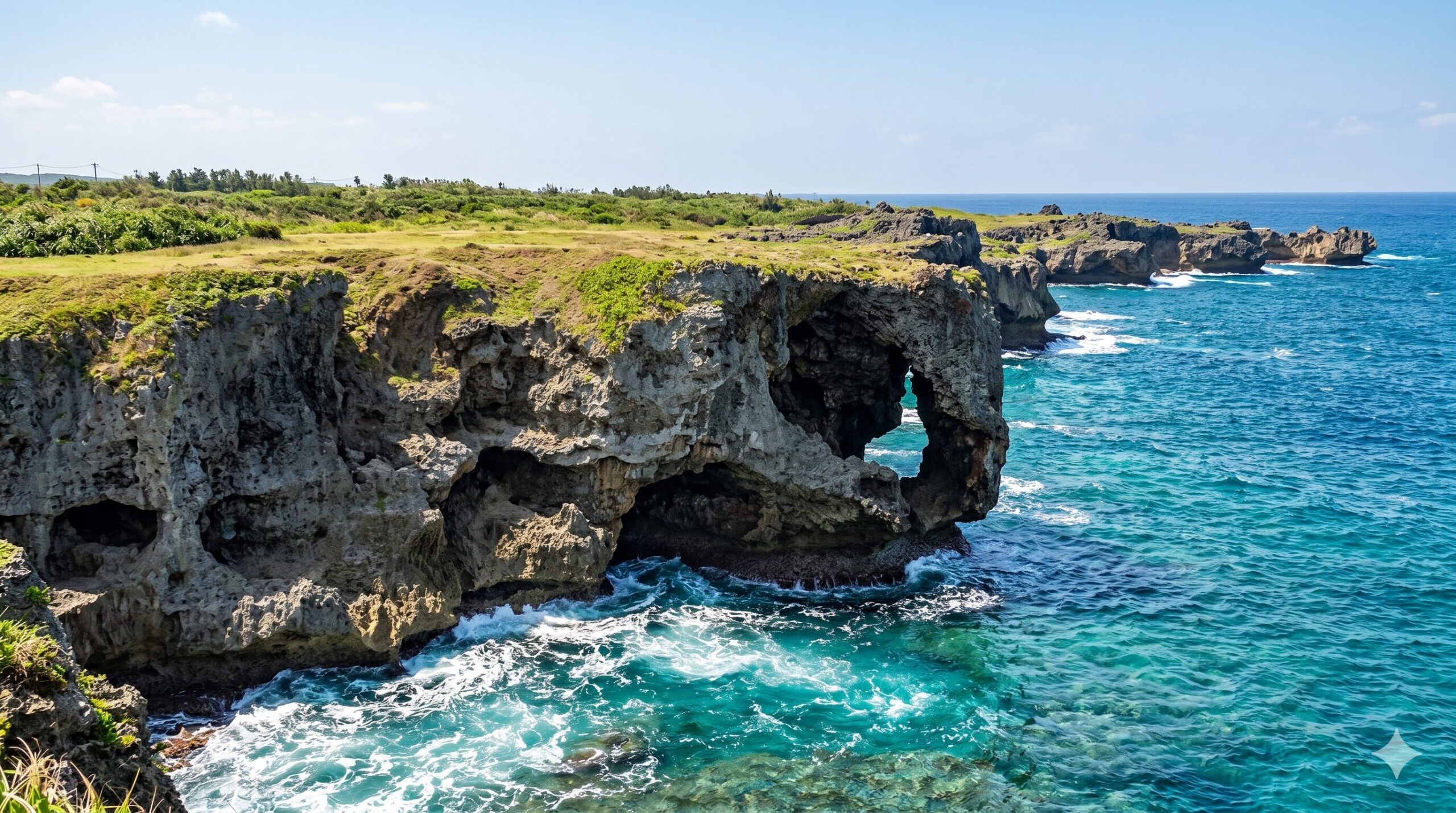
This wind-sculpted coral cliff, jutting into the East China Sea about 20 km north of Naha, gets its name from a Ryukyuan phrase meaning “a cape spacious enough for 10,000 people to sit.” The famous “elephant trunk” rock formation — a natural arch eroded by centuries of wave action — is Okinawa’s most photographed natural landmark. Sunset here is spectacular. Free entry; parking ¥200.
Kouri Island & Kouri Bridge
The 2-km Kouri Bridge, completed in 2011, is one of Japan’s longest toll-free bridges and delivers a cinematic approach to tiny Kouri Island across water that shifts from jade to deep blue. The island has pristine beaches (Kouri Beach is the most popular), a heart-shaped rock formation beloved by couples, and the Kouri Ocean Tower with 360-degree views. The drive across the bridge at sunrise or sunset is among Okinawa’s most rewarding simple experiences.
Ishigaki Island — Gateway to Yaeyama
Ishigaki, the largest inhabited island in the Yaeyama group, offers Kabira Bay — a protected inlet where glass-bottom boat tours reveal coral gardens in utterly still turquoise water (swimming is not allowed, protecting the black pearl farms). Manta ray encounters are nearly guaranteed at Manta Scramble dive site from March to November. Ishigaki beef rivals Wagyu from Kobe for marbling. The city of Ishigaki has excellent izakayas and a thriving café culture.
Miyako Island — Japan’s Most Beautiful Beach
Yonaha Maehama on Miyako Island consistently ranks as Japan’s most beautiful beach: 7 km of powdery white sand curving around water so shallow and translucent it looks like a swimming pool. Miyako Island is also connected to two neighboring islands by the impressive Ikema Bridge and Irabu Bridge — at 3.5 km, the longest toll-free bridge in Japan. Miyako beef is a local delicacy, and the island has become a hot spot for workcation travelers.
Browse 1,000+ Okinawa tours & experiences in one place
Top Experiences in Okinawa — Diving, Whales & Ryukyu Culture
Beyond the major landmarks, Okinawa’s real draw is the sheer range of water, cultural, and historical experiences available — many unique to the Ryukyu islands.
Diving & Snorkeling
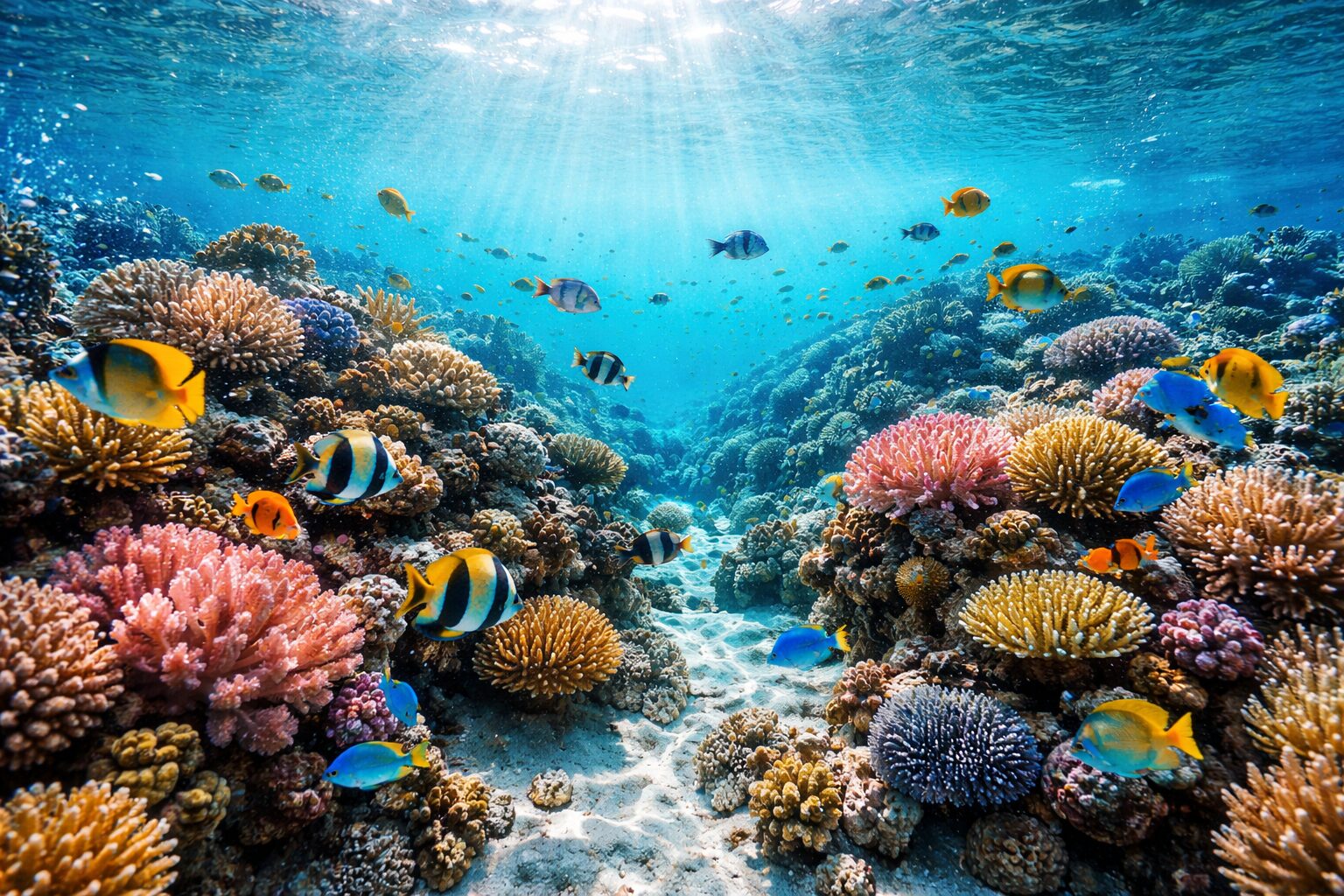
Okinawa’s underwater world is among Asia’s finest. The Blue Cave near Maeda Point on the main island’s west coast is the most accessible dive and snorkel site — sunlight enters a submerged cave and refracts into an otherworldly electric blue. Day trips run from Naha and Onna-son from around ¥4,000–¥7,000 per person. For certified divers, the Kerama Islands (just 35 km west of Naha, accessible by high-speed ferry in 50 minutes) offer visibility exceeding 30 meters and prolific coral gardens — rated among the world’s top 10 dive destinations. Kabira Bay in Ishigaki is the place for near-guaranteed manta ray encounters.
Whale Watching (January – March)
Humpback whales migrate through Okinawan waters from January through March, making this the only place in Japan where whale watching is a major winter activity. Tours depart from Zamami Island (in the Kerama group) and Nago Bay on the main island’s north coast. Sighting rates exceed 95% during peak season (February). Half-day tours cost ¥5,000–¥8,000.
Marine Sports — Onna-son Resort Coast
Virtually every beach resort on the main island and the remote islands offers parasailing, stand-up paddleboarding, sea kayaking, banana boat rides, and jet skiing. Onna-son Village — Okinawa’s “resort coast” — has the highest concentration of water-sport operators. Miyako Island has emerged as a top spot for kite surfing thanks to consistent trade winds.
Ryukyu Cultural Experiences
Away from the water, Okinawa offers remarkable cultural immersion. Yachimun-dori (Pottery Street) in Naha’s Tsuboya district is lined with workshops where artisans make the distinctive heavy, ash-glazed Okinawan ceramics. Bingata dyeing workshops (¥3,000–¥5,000) let you create your own stencil-patterned fabric using traditional Ryukyuan techniques. Three-string sanshin music lessons are available at several Naha studios — the instrument is central to Okinawan identity and used in every traditional festival. Eisa dance performances, with their powerful taiko drumming, occur at summer festivals and can be seen year-round at cultural centers.
War Memorial Sites — Essential History
Okinawa was the site of one of World War II’s most devastating land battles. The Battle of Okinawa (April–June 1945) killed over 200,000 people — roughly a quarter of the island’s civilian population. The Himeyuri Peace Museum in Itoman City commemorates the young female students mobilized as nurses who died in the battle. The Okinawa Peace Memorial Park and its Cornerstone of Peace, inscribed with the names of all 240,000+ killed regardless of nationality, is one of Asia’s most moving war memorials. Both are essential visits for understanding modern Okinawa.
Workcation in Okinawa
Okinawa has become one of Japan’s leading workcation destinations, with the Japanese government actively promoting remote work on the islands. Onna-son has several co-working resorts where you can work mornings and dive or snorkel afternoons. Miyako Island has dedicated co-working spaces with ocean views. Fast fiber internet is widely available across the main island and major remote islands.
Browse all Okinawa tours & small-group experiences via Viator
Blue Cave Snorkeling, Kerama Islands & Manta Dives — book ahead for peak season
Okinawa Food Guide — 7 Must-Eat Ryukyuan Dishes
Reserve a Naha izakaya — best way to taste champuru, rafute & awamori in one night
Okinawan cuisine is as distinct from Japanese mainland food as French is from Italian. Built on pork, bitter vegetables, tofu, and seaweed — with centuries of Chinese influence — it is hearty, soulful, and deeply flavored. Okinawans historically had one of the world’s longest life expectancies, and their diet is central to that reputation.
The 7 Essential Okinawan Dishes
1. Okinawa Soba
Okinawa soba bears no relation to mainland buckwheat soba — it is thick wheat noodles served in a rich pork-and-bonito broth, topped with braised pork belly (soki soba uses spare ribs; san-mai niku uses layered pork). A bowl costs ¥600–¥1,000 and is the island’s quintessential comfort food. Best: Hamaya Soba in Naha, Yunangi near Kokusai Dori, and countless roadside shops in the north.
2. Goya Champuru
Champuru (meaning “mixed” in Okinawan) is Okinawa’s signature stir-fry method. Goya champuru combines bitter melon (goya), tofu, egg, and thin slices of spam or pork in a simple but intensely savory dish. The bitter melon’s distinctive flavor takes some getting used to, but it is deeply tied to Okinawan culinary identity and considered key to local longevity.
3. Rafute
Slow-braised pork belly simmered for hours in awamori (Okinawan rice liquor), soy sauce, and brown sugar until meltingly tender. Rafute is Okinawa’s answer to chashu — but richer and more complex thanks to the awamori. Often served over rice or alongside champuru.
4. Umibudo (Sea Grapes)
These delicate green clusters of tiny sea grapes (a type of seaweed) pop gently on the tongue, releasing a burst of ocean flavor. Okinawa — particularly the town of Onna — is the center of umibudo cultivation. Served simply with ponzu or soy sauce, they are eaten fresh and extremely fragile; you cannot take them off the island.
5. Taco Rice
A local invention born from the US military presence in Okinawa (bases still occupy 18% of the main island), taco rice layers seasoned ground beef, cheese, lettuce, tomato, and salsa over a bowl of white rice. It sounds odd; it tastes like Okinawa comfort food. The original is from Kinshiro restaurant in Kin Town.
6. Jimami Tofu (Peanut Tofu)
Made from ground peanuts and starch rather than soy, jimami tofu has a creamy, slightly sticky texture and a rich, nutty flavor unlike any mainland tofu. Served chilled with a drizzle of sweetened soy sauce, it is a staple appetizer at traditional Okinawan restaurants (ryori-ya).
7. Sata Andagi
Okinawa’s beloved deep-fried doughnut — crispy on the outside, soft and cakey within — sata andagi are sold at every market and fair stall. Made from flour, egg, and sugar, they are simple and addictive. Makishi Public Market’s bakery stalls are the best place to eat them warm.
Where to Eat in Okinawa — Neighborhood Guide
Naha — Kokusai Dori & Makishi Market
Kokusai Dori is tourist-friendly with English menus widespread. For the most authentic experience, head into the Heiwa Dori arcade or directly to Makishi Public Market (buy fresh seafood on the first floor; take it to a restaurant on the second to have it cooked). Budget ¥800–¥1,500 per dish.
Northern Okinawa — Onna-son & Nago
The Onna Village area along Route 58 is the origin of umibudo cultivation and home to several agu pork specialists. Nago City further north has excellent taco rice shops near the central market. Budget ¥1,000–¥2,500 for lunch.
Ishigaki Island — Yaeyama Cuisine
Ishigaki offers its own distinct culinary sub-tradition: Ishigaki beef (heavily marbled, served as sukiyaki or grilled), Yaeyama soba (thinner and flatter than main-island soba), and island vegetables unique to the Yaeyama region. The evening izakaya scene around Ishigaki Port is superb. Budget ¥1,500–¥4,000 per person for dinner.
Miyako Island
Miyako beef rivals Ishigaki beef for quality. Miyako soba uses a distinctive katsuobushi (bonito flake) broth and slightly thinner noodles. Fresh island vegetables and local awamori round out the Miyako dining experience.
Okinawa Food Budget Reference
| Meal Type | Budget (USD) | Example |
|---|---|---|
| Soba / fast lunch | $5–10 | Okinawa soba or taco rice |
| Casual lunch | $10–20 | Champuru set meal, market fish |
| Izakaya dinner | $20–50 | Small plates + awamori cocktails |
| Agu pork hot pot | $40–80 | Heritage pork shabu-shabu |
Getting Around Okinawa Main Island & Remote Islands
Once you have arrived in Okinawa, navigating the islands is straightforward — but very different from the rest of Japan. There is virtually no train network, and a rental car is the default transport mode for anyone venturing beyond Naha city.
Yui Rail Monorail (Naha Only)
The Yui Rail monorail runs 17 km from Naha Airport to Shuri, passing through central Naha and reaching Shuri Castle. It is clean, fast, and useful for Naha city sightseeing. However, the Yui Rail is the only public rail transit on the entire main island.
Rental Cars — Strongly Recommended
A rental car is strongly recommended for anything beyond Naha. The main island is about 130 km from north to south, and public buses are infrequent and slow. International driving permits are valid in Japan, and rental rates start around ¥4,500/day for a compact. Reserve well in advance for summer and Golden Week — the island regularly sells out of rental cars.
Ferries to Remote Islands
From Ishigaki Port, high-speed ferries run frequently to Taketomi Island (10 min), Iriomote Island (40–60 min), and Kohama Island (25 min). Ferries from Naha’s Tomari Port reach the Kerama Islands (Zamami: 50 min by high-speed vessel, 2 hours by regular ferry). Domestic flights connect Naha to Ishigaki and Miyako in 45 minutes.
Important Note on the JR Pass
Okinawa has no JR railway — the JR Pass cannot be used anywhere on Okinawa’s islands. If you are making a full Japan trip that includes Tokyo, Kyoto, Osaka, or Hiroshima before or after Okinawa, the JR Pass is essential value for the mainland leg only. Buy it before arriving in Japan for the best price.
📶 Sakura Mobile — essential for road trips, beach hopping & ferry schedules
Where to Stay in Okinawa — Area Guide
Accommodation in Okinawa ranges from internationally branded beachfront resorts on the Onna Village coast to traditional machiya guesthouses on Taketomi Island and budget hostels in Naha. Choosing the right base depends on your priorities: convenience, beach access, or island authenticity.
FIRST-TIMERS
LUXURY
FAMILIES
YAEYAMA
BEACHES
RYUKYU
-
-
Where to Stay in Japan 2026 — Hotels, Ryokan & Budget Guide
▶ Stage 2 — Getting Ready Where to Stay in Japan 2026 — Hotels, Ryokan & Budget Guide Where to s …
続きを見る
🏨 Compare Okinawa Hotels — Naha, Onna resort coast, Ishigaki & Miyako
FAQ — Things to Do in Okinawa 2026
Next Steps — Plan Your Okinawa Trip
-
-
Best Places to Visit in Japan 2026 | Go Japan Now
▶ Stage 4 — Go Deeper Best Places to Visit in Japan 2026 — Complete Destination Guide Best places to …
続きを見る