Japan Travel Guide 2026 — Culture, Food & Hidden Gems | Go Japan Now

▶ THE GO JAPAN NOW HUB

Japan Travel Guide 2026 — Plan, Pack, Explore & Go Deeper

Your complete Japan travel guide for 2026 — visa & budget basics, JR Pass & eSIM, where to stay, food, culture and hidden gems beyond Tokyo and Kyoto. One hub, four travel stages, everything verified for the weak-yen 2026 window.

Start with Stage 1 →

Updated May 2026 · Booking links verified · EN · 中文 · 한국어 · 日本語

What This Guide Covers

What This Guide Covers

This is the master hub for everything Go Japan Now covers. Whether this is your first trip, your fifth, or you're planning the family pilgrimage you've been postponing for a decade, the four travel stages below take you from the first idea on a Sunday afternoon to the day you board the plane home.

  • Stage 1 — Plan: visa, budget, when to go, how long to stay, what to skip on a first trip.
  • Stage 2 — Get Ready: JR Pass, eSIM & pocket WiFi, IC cards, airport transfer, packing.
  • Stage 3 — Experience: food, culture, cities, day trips, seasonal festivals.
  • Stage 4 — Go Deeper: hidden gems beyond the tourist trail, returning-visitor itineraries.
  • Reference: Japan by the numbers 2026 + the 11 questions every traveler asks.

Why Japan Is the Best Travel Destination Right Now (2026 Edition)

01
Why Japan Is the Best Travel Destination Right Now
The 2026 case for going now, not later

The honest answer to "why Japan in 2026" comes down to a single number: the exchange rate. The Japan travel guide you're reading exists in a strange historical moment — the yen is sitting near 25-year lows against the US dollar, the euro and the British pound. At roughly $1 ≈ ¥155 in May 2026, the same Tokyo hotel that ran $280/night in 2019 now runs about $175 with no change in quality. A bowl of world-class ramen in Shinjuku is ¥900 (about $6). A Shinkansen ride from Tokyo to Kyoto — one of the most iconic three-hour journeys on the planet — is roughly ¥14,000, just under $90.

What makes this window distinctive isn't only the cheap yen. It's the combination of that cheap yen with infrastructure that has spent the last decade quietly upgrading itself for international travelers. English signage in major stations has gone from "spotty" in 2015 to "comprehensive" in 2026. Mobile payment via Apple Pay and Google Pay is now accepted at most chain stores, vending machines and even shrines. The JR Pass and major regional rail passes can all be activated digitally before arrival. Pocket WiFi and eSIMs are now reservable online, with same-day airport pickup or 5-minute installation on the plane.

Then there's the basic Japan story that hasn't changed: safety, cleanliness and omotenashi. Lost wallets get returned with cash intact, often through the police box system. Tokyo's metro runs to the second. Convenience stores — open 24/7, on virtually every block — sell genuinely good hot food, fresh sandwiches, hot drip coffee for ¥110, ATMs that accept foreign cards, and umbrella rentals for ¥100 when the weather turns. These aren't quirky travel anecdotes. They are the everyday infrastructure that makes Japan uniquely stress-free to navigate, even on a first trip with zero Japanese.

For travelers comparing Asia — Singapore, Hong Kong, Seoul, Bangkok — Japan is currently the best value-to-quality ratio in the region. A seven-day trip covering Tokyo, Kyoto and Osaka realistically lands at $1,500-$2,500 per person for everything except international flights: mid-range hotels, three meals out per day, JR Pass, attractions and a couple of premium experiences. That's roughly 30% less than the same trip in Singapore at 2026 prices, and the experiences are deeper and stranger.

The window is not infinite. The Bank of Japan has begun gradually normalizing rates, and most economists expect the yen to strengthen meaningfully through 2027-2028. If you've been postponing Japan for years, this is the moment — not because it's about to become un-affordable, but because the gap between "best value in Asia" and "fairly priced developed country" is narrowing.

via Klook
Japan eSIM — activate before your flight, instant data on landing

Book →

Stage 1 — Plan Your Trip

02
Stage 1 — Plan Your Trip
Visa, budget, season, length of stay

Stage 1 is where the trip succeeds or quietly dies. Most "Japan was overwhelming" stories trace back to a planning phase that skipped three or four small decisions. Get these right and the rest of the Japan travel guide becomes execution rather than improvisation.

The four planning decisions that matter most

In order of priority for a first trip:

  • Visa. Citizens of 71 countries — including the US, UK, Canada, Australia, EU, South Korea, Taiwan, Singapore and most of Latin America — enter Japan visa-free for stays of up to 90 days. Check the Japan Ministry of Foreign Affairs site for your specific nationality.
  • Season. Spring (late March-mid May) and autumn (late October-mid November) are peak for cherry blossom and momiji. They are also the most crowded and most expensive. Late May, early June, September and early December are the quiet sweet spots.
  • Length. A first trip of 10-14 nights is ideal. Five nights is enough only if you commit to one city. Three weeks unlocks Hokkaido, Okinawa, Shikoku or Kyushu in addition to the golden route.
  • Budget anchor. Lock in a per-day spend before booking — mid-range comfort lands at $150-$200/day per person excluding international flights. Budget travel realistically hits $80-$110/day.

When to go, month by month

Season Best for Watch out for
Late Mar – early Apr Cherry blossom (sakura) Most expensive period of the year; book 4-6 months ahead
Late Apr – early May Late blossom + early greenery Golden Week (late Apr-early May) — domestic travel chaos, avoid
Jun Quiet, cheap, lush green Tsuyu (rainy season) in most of Japan, except Hokkaido
Jul – Aug Matsuri (summer festivals), fireworks, Hokkaido escape Hot & humid in Tokyo/Kyoto/Osaka; typhoons possible
Sep – mid Oct Quiet, mild, good value Typhoon tail end through mid-September
Late Oct – mid Nov Momiji (autumn leaves) Second peak season; book 3-4 months ahead
Dec – Feb Snow festivals, skiing, illuminations, cheap rates Cold; some northern routes affected by snow

Realistic budget bands for 2026

Backpacker (7 days, excl. flights)
BUDGET
Daily spend$80 – $110
AccommodationHostel / capsule
TransportIC card + local trains
FoodKonbini + counter ramen
7-day total~$560 – $770

Mid-range (7 days, recommended)
SWEET SPOT
Daily spend$150 – $200
Accommodation3-star hotels / business hotels
TransportJR Pass 7-day
FoodMix of izakaya, sushi, kaiseki
7-day total~$1,050 – $1,400

Premium (7 days)
LUXURY
Daily spend$350 – $700+
Accommodation4-5 star hotels / ryokan
TransportGreen Car JR Pass / private
FoodMulti-course kaiseki, sushi-ya
7-day total~$2,450 – $4,900+

START HERE
First Time in Japan? — visa, budget, sample itineraries & everything for trip #1

Read the Stage 1 Guide →

Plan
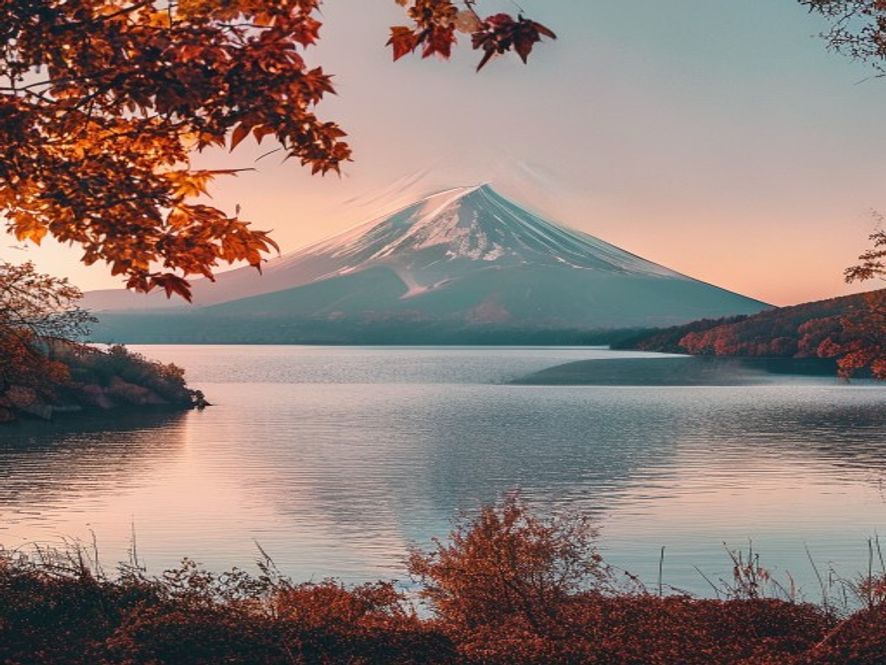
about Japan — Mount Fuji and Japanese culture guide for first-time visitors
First Time in Japan: The Ultimate 2026 Guide for First-Time Visitors

▶ Stage 1 — Planning First Time in Japan — The Ultimate 2026 Guide for First-Time Visitors Everythin ...

続きを見る

Stage 2 — Get Ready Before You Land

03
Stage 2 — Get Ready Before You Land
JR Pass, eSIM, IC cards, airport transfer

Stage 2 is the boring stage that travelers under-invest in and then regret on day one. Three decisions made in the two weeks before departure determine whether you spend day one fumbling at a SIM kiosk or stepping straight onto the Narita Express with full internet and a pre-loaded IC card.

The three pre-departure essentials

  • Connectivity — eSIM or pocket WiFi. Decide which one fits your trip and activate before boarding. eSIM is best for solo travelers with recent iPhones or Pixels. Pocket WiFi is better for groups of 2-5 sharing one device. Either way, the answer is never "I'll figure it out at the airport."
  • Rail pass — JR Pass or regional pass. If your trip covers two or more major cities via Shinkansen, the 7-day JR Pass almost always pays for itself. If you're staying in one region (Kansai, Tohoku, Hokkaido), a regional pass is dramatically cheaper.
  • IC card — Suica, Pasmo or ICOCA. This is the single most useful piece of plastic in Japan. Used on every train, bus, vending machine and convenience store. You can now add it to Apple Wallet directly — no physical card needed.

eSIM vs pocket WiFi — at a glance

Option Best for Typical cost (7 days)
eSIM (Klook, Sakura Mobile) Solo travelers, modern phones ¥1,200 – ¥3,500
Pocket WiFi (Sakura, NINJA) Groups of 2-5, laptop users ¥3,500 – ¥6,000
Physical SIM Long-stay (30+ days) ¥4,000 – ¥9,000
Roaming via home carrier 1-3 day stopover only $10-15/day (rarely worth it)
MUST-HAVE
Sakura Mobile eSIM & pocket WiFi — Japan-based, English support, airport pickup

Get Sakura →

JR Pass — yes or no for 2026

The simple rule for 2026: two intercity Shinkansen rides = JR Pass pays for itself. A 7-day standard JR Pass costs ¥50,000 in 2026 (it was repriced upward in October 2023 and again adjusted in 2025). A single Tokyo-Kyoto round trip is ¥27,000 + ¥27,000 = ¥54,000. So even one round trip on the Shinkansen alone justifies the pass.

Where the JR Pass is the wrong call: trips that stay in one city (Tokyo-only or Kansai-only). For those, an IC card + regional pass combination is dramatically cheaper.

via Klook
JR Pass 7-Day — book online, collect at airport, valid nationwide

Book JR Pass →

Airport transfer — what to book in advance

Narita and Haneda (Tokyo) and Kansai (KIX, serving Osaka and Kyoto) are the three main international gateways. From Narita, the Narita Express (N'EX) reaches central Tokyo in 53-90 minutes and is fully covered by the JR Pass. From Haneda, the Tokyo Monorail or Keikyu Line is 25-30 minutes. From KIX, the JR Haruka Express is 50 minutes to Kyoto.

For arrivals after a 12-hour flight with luggage, the airport limousine bus drops you within a few minutes' walk of most major hotels and is often the easier choice despite being slightly slower.

GUIDE
WiFi, SIM & eSIM in Japan — full comparison + which to choose for your trip

Read the Connectivity Guide →


Ready
beige train during day Go Japan Now - Explore & Experience Japan
Japan Transportation Guide 2026 — Trains, JR Pass & IC Cards

▶ Stage 2 — Getting Ready Japan Transportation Guide — Trains, JR Pass & IC Cards Explained japan tr ...

続きを見る

Stage 3 — Experience Japan (Food, Culture & Cities)

04
Stage 3 — Experience Japan
Food, culture, cities, day trips, festivals

Stage 3 is the part of the trip travelers actually remember. The mistake first-timers make here is treating Japan like a checklist: Skytree, Shibuya, Fushimi Inari, Dotonbori, done. That itinerary technically works, but it produces the same trip everyone else has. The Japan travel guide approach instead is to anchor your time around themes — food, craft, faith, seasonal moments — and let the famous landmarks fold in naturally.

The five experience pillars

  • Food. Tokyo has more Michelin stars than any city on earth, but the bigger story is that great food exists at every price point. A ¥900 bowl of ramen at a counter shop in Shinjuku is often the highlight of the day.
  • Craft & culture. Tea ceremony, kimono dressing, sword forging, washi paper, indigo dyeing, sake brewing — all bookable with English instruction in Tokyo, Kyoto and Osaka.
  • Faith & ritual. Shinto shrines and Buddhist temples are not museums; they are working religious spaces. Fushimi Inari, Senso-ji, Meiji Jingu and the great mountain temples (Koyasan, Eihei-ji) reward early-morning visits.
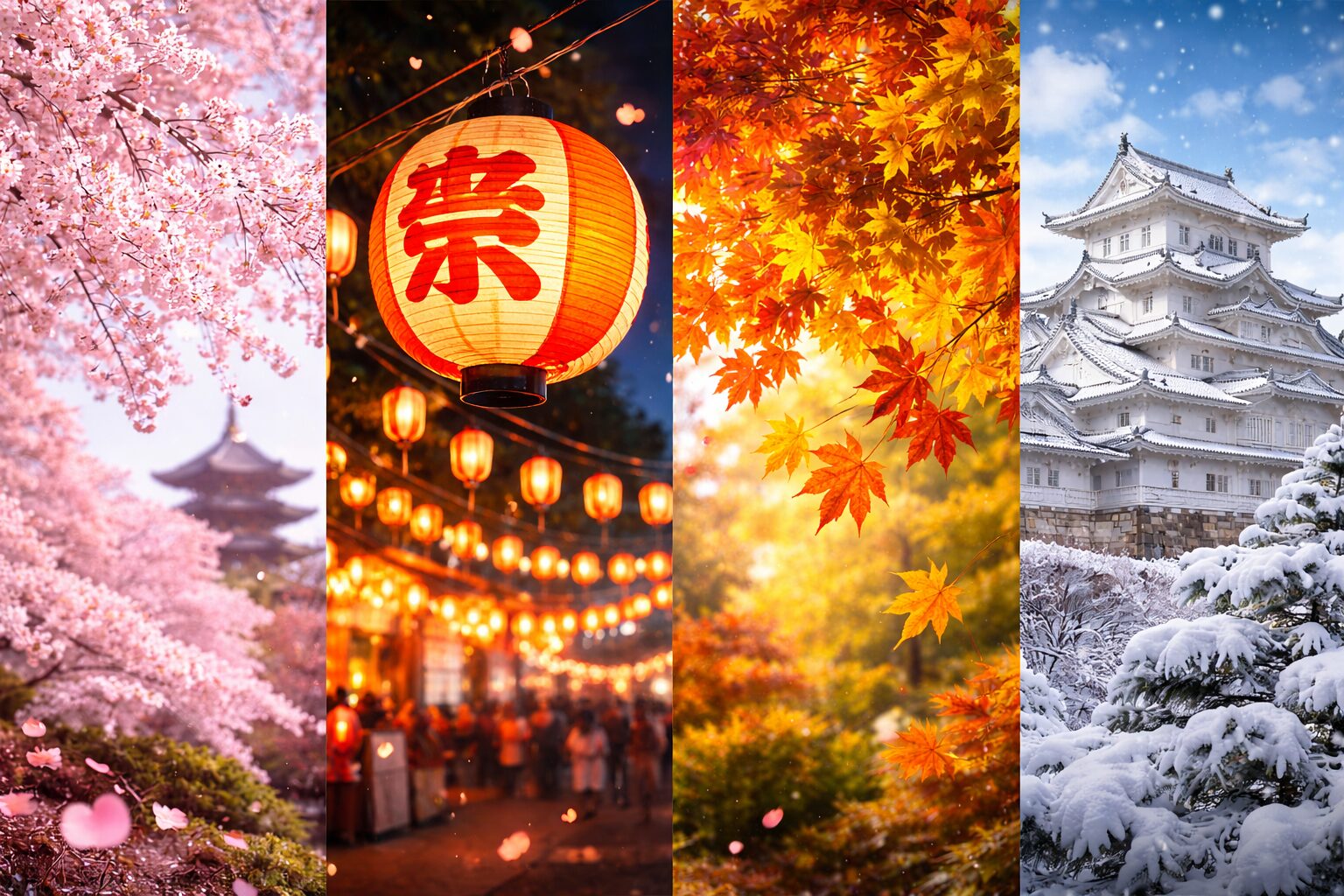
  • Seasonal moments. Hanami picnics in spring, summer matsuri with fireworks, autumn momiji at Eikan-do, winter illuminations in Roppongi.
  • City vs. countryside contrast. One day of Tokyo neon and one day of cedar-forest temples on Koyasan is, for most travelers, the most powerful 48 hours of the entire trip.

Food — where to eat, by budget

Budget Where What to expect
¥500 – ¥1,500 Konbini, counter ramen, gyudon chains Genuinely good, fast, foreigner-friendly
¥1,500 – ¥4,000 Izakaya, sushi conveyor belt, soba Most travelers' default — eat here often
¥4,000 – ¥10,000 Mid-tier sushi-ya, yakitori counters, kaiseki lunch Where Japan's food culture really opens up
¥10,000+ High-end kaiseki, Michelin sushi, ryokan dinner Worth one or two splurges per trip

The "golden route" vs. theme-based routing

The standard golden route is Tokyo (3-4 nights) → Hakone or Kamakura day trip → Kyoto (3 nights) → Osaka day trip → Tokyo for departure. It works. About 65% of first-time travelers do exactly this.

The theme-based alternative — for travelers who want a less crowded trip — is to pick two anchor themes and route around them. Examples: "food + craft" routes Osaka-Kanazawa-Kyoto; "faith + nature" routes Tokyo-Nikko-Koyasan-Kyoto; "winter contrast" routes Tokyo-Hokkaido-Kyoto. Each produces a trip that the people you'll be sharing photos with on Instagram haven't already seen.

via GYG
Tokyo Shinjuku Food Tour — 15 dishes, 4 eateries, English guide

Book Tour →

via Klook
teamLab Planets TOKYO — immersive digital art, advance ticket

Book Ticket →

GUIDE
Cultural Experiences in Japan — tea ceremony, kimono, sumo, samurai & more

Read the Experiences Guide →


Enjoy
Cultural experiences in Japan — kimono, tea ceremony and traditional arts guide
Cultural Experiences in Japan 2026 | Art, Kimono, teamLab & Food

Contents Cultural Experiences in Japan — Planning Your VisitWhy Cultural Experiences in Japan Define ...

続きを見る

Stage 4 — Go Deeper (Beyond the Tourist Trail)

05
Stage 4 — Go Deeper
Hidden gems, returning-visitor itineraries

If Stage 3 is "the trip everyone takes," Stage 4 is "the trip you'll book a flight back for." The Japan travel guide advice for returning visitors is almost always the same: leave the golden route and pick one region to explore at depth. The country rewards repetition.

Five regional anchors worth a full trip

  • Kanazawa & the Noto Peninsula. Two hours from Tokyo by Shinkansen. Samurai districts, geisha quarters, one of Japan's three great gardens (Kenroku-en), world-class contemporary art at the 21st Century Museum, and a coastline of fishing villages.
  • Tohoku (northern Honshu). Cedar forest mountains, mountain monks at Yamadera, hot-spring villages, the surreal blue ponds of Aomori. Genuinely cheap and genuinely uncrowded.
  • Shikoku. The 88-temple pilgrimage, surfing in Kochi, the Iya Valley vine bridges, Matsuyama's Dogo Onsen.
  • Kyushu. Volcanic landscapes around Aso and Sakurajima, Beppu's hot spring "hells," Nagasaki's layered history, Kagoshima's bayfront city.
  • The Japanese Alps & Hida-Takayama. Shirakawa-go's thatched-roof farmhouses, Matsumoto Castle, hot springs at Hirayu Onsen.

Two day trips that punch above their weight

Hiroshima & Miyajima. The Peace Memorial Museum is among the most powerful museum experiences anywhere in the world, and the torii gate of Itsukushima Shrine — appearing to float at high tide — is one of the most photographed images in Japan for good reason. From Tokyo it's an all-day commitment via Shinkansen; from Osaka or Kyoto it's an easy day trip.

Nikko. Two hours from Tokyo. UNESCO World Heritage shrines, towering cedar avenues, a mountain hot-spring town at Yumoto. The autumn foliage in late October at Lake Chuzenji is among the best in Japan.

via GYG
From Tokyo: Nikko World Heritage 1-Day Bus Tour — English guide, lunch included

Book Tour →

via GYG
From Tokyo: Shirakawa-go & Kanazawa Day Trip — UNESCO village + samurai town

Book Tour →

GUIDE
Hidden Gems Japan — Kanazawa, Tohoku, Shikoku, Kyushu & the regions worth a second trip

Read the Deeper Guide →

Deeper
yakushima, green, natural, natural heritage, mystery, forest, yakushima, yakushima, yakushima, yakushima, yakushima Go Japan Now - Explore & Experience Japan
Hidden Gems Japan 2026 — Secret Spots Beyond the Tourist Trail

▶ Stage 4 — Go Deeper Hidden Gems in Japan 2026 — Secret Spots Beyond the Tourist Trail These hidden ...

続きを見る

Best Cities & Destinations to Visit

06
Best Cities & Destinations to Visit
The five anchor cities every itinerary should weigh

Most Japan itineraries are built around the same five anchor cities. Each has its own personality, its own day-trip orbit, and its own argument for inclusion.

City Personality Worth (nights)
Tokyo Capital — neon, food, neighborhoods, day trips 3-5
Kyoto Old Japan — temples, geisha, gardens 2-3
Osaka Food capital — Dotonbori, Universal Studios, takoyaki 1-2
Hokkaido (Sapporo) Wild north — winter sports, summer wildflowers, ramen 2-4
Okinawa (Naha) Tropical south — beaches, Ryukyu culture, scuba diving 3-5
HUB
Best Places to Visit in Japan — full city guides, neighborhoods & itineraries

Browse All Cities →


Spot
kinkakuji temple kyoto Go Japan Now - Explore & Experience Japan
Things to Do in Kyoto 2026 — Temples, Geisha & Essential Travel Guide

▶ Stage 4 — Destination · Kyoto Things to Do in Kyoto 2026 — Japan's Cultural Heart Things to do in ...

続きを見る

Japan by the Numbers — 2026 Edition

07
Japan by the Numbers — 2026 Edition
Quick-reference figures for planning
Metric 2026 Figure Notes
International visitors (2025) 36.8 million Record year; 2026 projected 40M+
USD/JPY exchange rate ~¥155 per $1 Near 25-year low for yen
Avg. daily spend per visitor ~$150 – $200 Mid-range, includes everything ex-flights
Tokyo ramen (counter) ¥800 – ¥1,200 (~$5-$8) World-class at budget prices
7-day JR Pass (standard) ¥50,000 (~$320) Pays for itself with one Tokyo-Kyoto round trip
Narita to Tokyo (N'EX) ¥3,070 (~$20) Covered by JR Pass; 53 min direct
Michelin stars (Tokyo) 200+ (most in world) Many starred restaurants under ¥10,000
Visa-free nationalities 71 countries Up to 90 days stay
Convenience stores nationwide ~55,000 Open 24/7 in almost every neighborhood

Common Mistakes First-Time Travelers Make

08
Common Mistakes First-Time Travelers Make
The five regrets we hear over and over
First-Trip Pitfalls — what to fix in planning
OVER-PACKING THE ITINERARY
  • Five cities in seven days = none experienced
  • Two days per major city minimum
  • Build in one rest day per week
SKIPPING THE JR PASS DECISION
  • Day-of Shinkansen tickets cost 2x more
  • Two intercity rides = pass pays for itself
  • Activate online before departure
WHAT TO DO INSTEAD
  • Pick 2-3 anchor cities, not 5
  • Book eSIM + IC card before flight
  • Eat 70% of meals away from tourist zones
  • Book one premium experience as the trip's centerpiece

The other mistakes worth flagging: bringing a giant suitcase you'll regret on every train transfer (Japan's train infrastructure rewards a single 50L roller bag), assuming credit cards are universally accepted (still cash-heavy at small restaurants and shrines — carry ¥10,000 per day in yen), and underestimating walking distances (most travelers cover 15-20km per day on foot in Tokyo and Kyoto without realizing it).

FAQ — Japan Travel Guide 2026

09
FAQ — Japan Travel Guide 2026
The 11 questions every traveler asks

These are the most common questions we receive from travelers planning a 2026 trip. Honest, practical answers — no marketing fluff.

Do I need a visa to visit Japan in 2026?
Citizens of 71 countries — including the US, UK, Canada, Australia, EU member states, South Korea, Taiwan and Singapore — can enter Japan visa-free for tourism stays of up to 90 days. Check the Japan Ministry of Foreign Affairs website for your specific nationality. You'll still need a valid passport with at least 6 months remaining and a return ticket.

When is the best time of year to visit Japan?
Spring (late March – early May) for cherry blossom and autumn (late October – mid November) for momiji are the two peaks. For fewer crowds and lower prices, late May, early June, September and early December are the sweet spots. Avoid Golden Week (late April – early May) and Obon (mid August) — domestic travel goes into chaos.

Is Japan expensive to travel in 2026?
Not at current exchange rates. With $1 USD ≈ ¥155, Japan is the best value in developed Asia. Budget travelers manage on $80-$110/day, mid-range on $150-$200/day, premium on $350+/day. A 7-night trip excluding international flights typically runs $560-$1,400 depending on style.

Can I get around Japan without speaking Japanese?
Yes, comfortably. Major cities have excellent English signage in stations, airports and tourist areas. Google Maps works flawlessly for navigation including train transfers. Google Translate's camera mode handles menus and signs. Restaurant staff in Tokyo, Kyoto and Osaka are increasingly used to non-Japanese-speaking customers.

Should I get a JR Pass for my Japan trip?
If your trip covers two or more major cities by Shinkansen, the 7-day JR Pass almost always pays for itself — a single Tokyo-Kyoto round trip is roughly equal to the pass cost. For single-city stays (Tokyo-only, Kansai-only), skip the JR Pass and use an IC card with a regional pass instead.

eSIM or pocket WiFi — which one should I get?
eSIM is the right choice for solo travelers with a recent iPhone or Pixel — instant activation, no device to carry. Pocket WiFi makes more sense for groups of 2-5 people sharing one connection, especially for those traveling with laptops. Activate either one before your flight; don't wait until you land.

How long should my first trip to Japan be?
10-14 nights is the sweet spot. Five nights is enough only if you commit to one city. Anything under five nights with multiple cities becomes a checklist sprint. Three weeks unlocks Hokkaido, Okinawa, Shikoku or Kyushu in addition to the golden route.

Is Japan safe for solo and female travelers?
Yes — Japan ranks among the safest countries in the world for solo travelers, female travelers, and families. Late-night public transport, walking alone after dark in major cities, and using cash openly are all generally considered safe. The most common "incidents" travelers report are lost belongings being returned through the koban (police box) system.

Do Japanese restaurants and shops accept credit cards?
Increasingly yes, but still cash-heavy at smaller restaurants, izakayas, shrines and family-run shops. Apple Pay and Google Pay work at most chain stores and major retailers. Carry roughly ¥10,000 per person per day in cash as a backup. 7-Eleven ATMs accept foreign-issued cards 24/7 nationwide.

What should I pack for a Japan trip?
A single 50L roller bag plus a daypack handles most trips comfortably. Japan's train infrastructure punishes oversized luggage. Pack layers regardless of season, comfortable walking shoes (you'll cover 15-20km/day in Tokyo and Kyoto), and slip-on shoes for temple visits. Most toiletries are easily replaced at any drugstore once you arrive.

Where should I stay — Tokyo, Kyoto, or both?
For any trip 7 nights or longer, both. Tokyo and Kyoto are complementary rather than competitive — Tokyo for energy, food and neighborhoods; Kyoto for temples, gardens and old-Japan atmosphere. Three nights in Tokyo and two-to-three in Kyoto is the most-recommended split.

Your Next Steps — Build Your 2026 Trip

Step 1 — Plan: Confirm your visa, choose your season, and lock the budget band with our First Time in Japan guide.

Step 2 — Get Ready: Sort the three pre-departure essentials — eSIM or pocket WiFi, JR Pass and IC card — before you fly.

Step 3 — Experience: Anchor your trip in two themes (food + craft, faith + nature, etc.) using the cultural experiences guide.

Step 4 — Go Deeper: Pick one Stage 4 region — Kanazawa, Tohoku, Shikoku, Kyushu or the Japanese Alps — from the hidden gems guide.

Sakura Mobile — eSIM & Pocket WiFi for Japan
Japan-based, English support, airport pickup or instant eSIM activation

Book Sakura →

RECOMMEND

JRPASS Go Japan Now - Explore & Experience Japan 1

▶ Stage 2 — Getting Ready Japan Rail Pass 2026 — Complete Guide to Prices, Types & Buying The Japan ...

Japan WiFi SIM eSIM — compare pocket WiFi, SIM cards and eSIM options for Japan travel 2

▶ Stage 2 — Getting Ready Japan WiFi SIM eSIM 2026 — Stay Connected from the Moment You Land Japan W ...

更新日:

Copyright© Go Japan Now - Explore & Experience Japan , 2026 All Rights Reserved.