Hidden Gems in Japan 2026 — Secret Spots Beyond the Tourist Trail
These hidden gems Japan itineraries span five regions — Tohoku, Chubu, Chugoku, Kyushu, and Shikoku — with practical access info, ryokan booking tips, and verified booking links for 2026.
New to Japan? Read the First-Timer’s Guide before going off the beaten path
- Why Japan’s Hidden Gems Beat the Famous Sights
- How to Plan Your Off-the-Beaten-Path Japan Trip
- Tohoku — Japan’s Undiscovered North
- Chubu & Hokuriku — Mountains, Sake and Hidden Valleys
- Chugoku & the San’in Coast — Western Japan’s Secret Shore
- Kyushu — Beyond Fukuoka and Nagasaki
- Shikoku — The Pilgrimage Island
- Frequently Asked Questions
Why Japan’s Hidden Gems Beat the Famous Sights
How to Plan Your Off-the-Beaten-Path Japan Trip
The case for going off the tourist trail in 2026
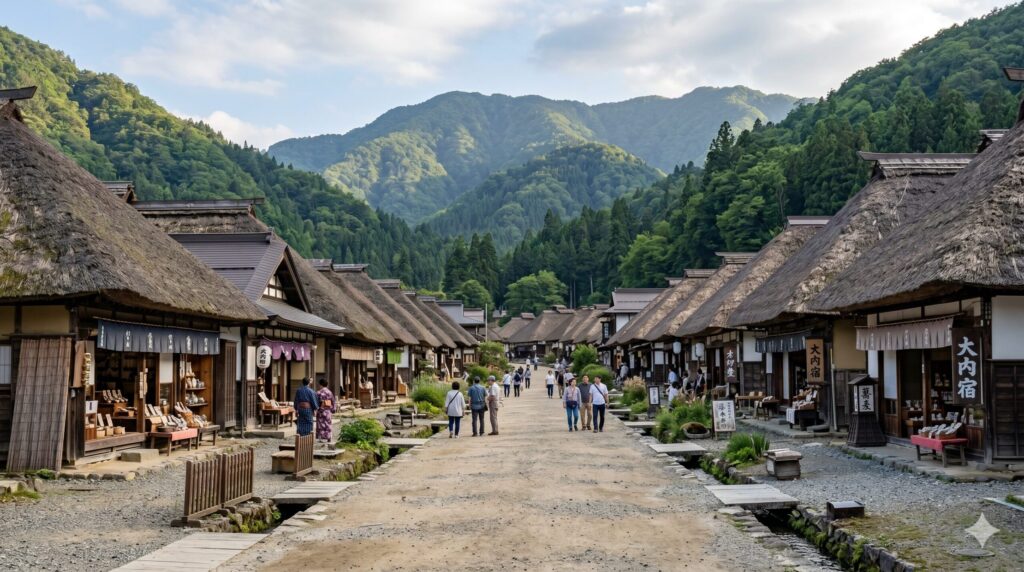
Japan’s hidden gems have never been more accessible — yet visitor numbers at off-the-beaten-path destinations remain a fraction of the famous sights. Kyoto’s Fushimi Inari now draws over 3 million visitors annually. The samurai town of Kakunodate in Akita, equally photogenic and historically rich, sees perhaps 300,000. That ratio — roughly 10:1 — is typical across Japan’s famous versus overlooked destinations.
The practical barriers to reaching these places have dropped significantly. Japan’s rail network reaches almost everywhere, translation apps handle menus and conversations, and local tourism boards increasingly produce excellent English resources. The hidden Japan is more accessible than ever — it just takes a little more intention to reach.
What Makes a Destination a “Hidden Gem”?
For this guide, a hidden gem is any destination that delivers a genuine Japan experience without the infrastructure of mass tourism. Some are geographically remote. Some are simply overlooked despite being easy to reach. All of them reward the traveler who shows up.
| Region | Highlights | Access from Tokyo |
|---|---|---|
| Tohoku | Samurai towns, folklore, onsen | 2–4 hrs Shinkansen |
| Chubu / Hokuriku | Alps, UNESCO villages, sake | 2.5–4 hrs Shinkansen |
| Chugoku / San’in | Shinto shrines, sand dunes, cycling | 4–5 hrs Shinkansen |
| Kyushu | Onsen, volcanoes, castle towns | 5–6 hrs Shinkansen |
| Shikoku | Pilgrimage, gorges, ancient onsen | 4–5 hrs (ferry / limited express) |
The 2026 Crowd Factor
Japan’s inbound tourism hit record levels in 2025, exceeding 35 million visitors. The concentration at famous sights has intensified accordingly — while Kyoto introduced access restrictions at Gion and Fushimi Inari, less-known destinations absorbed almost no additional footfall. 2026 is arguably the best year in a decade to visit the hidden Japan.
-
-
Japan Transportation Guide 2026 — Trains, JR Pass & IC Cards
▶ Stage 2 — Getting Ready Japan Transportation Guide — Trains, JR Pass & IC Cards Explained jap …
JR Pass 7-Day — unlock all 5 regions in this guide
Tohoku — Japan’s Undiscovered North
Samurai towns, folklore valleys and mountain onsen
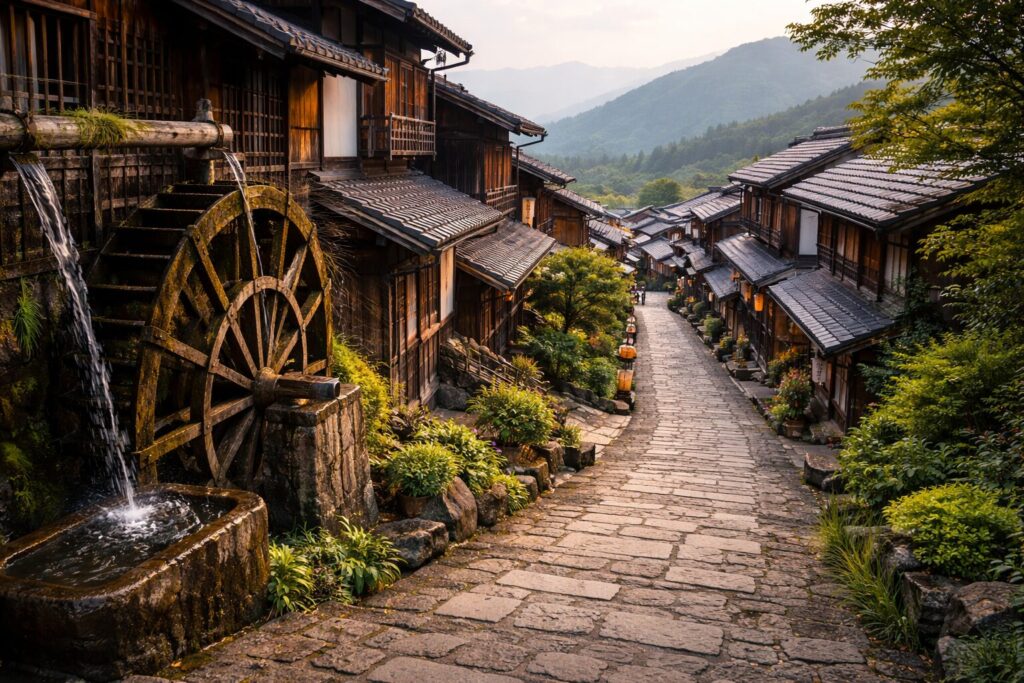
Tohoku — the six prefectures of northern Honshu — is Japan’s most underrated region. Bullet trains from Tokyo reach Sendai in under two hours, yet visitor numbers remain a fraction of destinations further south. Tohoku has Hokkaido’s dramatic landscapes without the long haul, Kyoto’s historic depth without the tour buses, and a distinct regional culture that feels genuinely different from the Japan most visitors see.
Kakunodate — The Samurai Town That Time Forgot
Akita Prefecture’s Kakunodate preserves an extraordinary collection of samurai residences dating to the 17th century. Unlike Kyoto’s preserved districts, Kakunodate receives a fraction of the visitors, meaning you can walk its weeping cherry blossom-lined streets in near-solitude. The bukeyashiki (samurai quarter) is one of the most atmospheric places in Japan. Six of the original samurai houses are open to the public, including the Aoyagi-ke — the largest and best-preserved. The town is accessible in about 3.5 hours from Tokyo by Shinkansen to Tazawako station.
Best time to visit: Late April for the extraordinary combination of cherry blossoms framing the samurai houses — one of Japan’s most underrated seasonal spectacles. Early November for vivid autumn foliage along the Hinokinai River.
Tono — Folklore Capital of Japan
Deep in Iwate Prefecture, the Tono basin is where folklorist Kunio Yanagita collected the stories that became “Tono Monogatari” — Japan’s equivalent of the Brothers Grimm. The valley is still dotted with magariya (L-shaped thatched farmhouses), traditional watermill sites, and kappa pools where the mythical water creatures supposedly lurk. Cycling between sites is the ideal way to explore — rental bikes are available at Tono station. Budget a full day. Tono is a 2.5-hour train ride from Sendai.
Hirosaki — Beyond the Cherry Blossoms
Hirosaki in Aomori is famous during cherry blossom season, but most visitors don’t know what they’re missing the rest of the year. The castle park, the preserved Meiji-era Western buildings in the Motomachi district, and the local apple orchards make it worth visiting any time — Aomori produces around 60% of Japan’s apples. The Neputa Festival in August — often overshadowed by the more famous Nebuta in Aomori City — is one of the most visually dramatic events in Japan, featuring enormous illuminated warrior floats.
Yamadera — The Mountain Temple of Basho
Risshaku-ji temple in Yamagata Prefecture — known as Yamadera — is where the poet Matsuo Basho composed his famous haiku about cicadas and mountain stillness. The climb up 1,000 stone steps through cedar forest to the temple complex at the summit is genuinely moving. The views from the top across the surrounding mountains are spectacular year-round. Yamadera is 20 minutes by local train from Yamagata, which is 2.5 hours from Tokyo by Shinkansen.
SAMURAI TOWN
FOLKLORE
CASTLE
TEMPLE
Sakura Mobile eSIM — stay connected in rural Tohoku with no dead spots
Chubu & Hokuriku — Mountains, Sake and Hidden Valleys
Japan’s mountain spine from the Japan Alps to the Sea of Japan
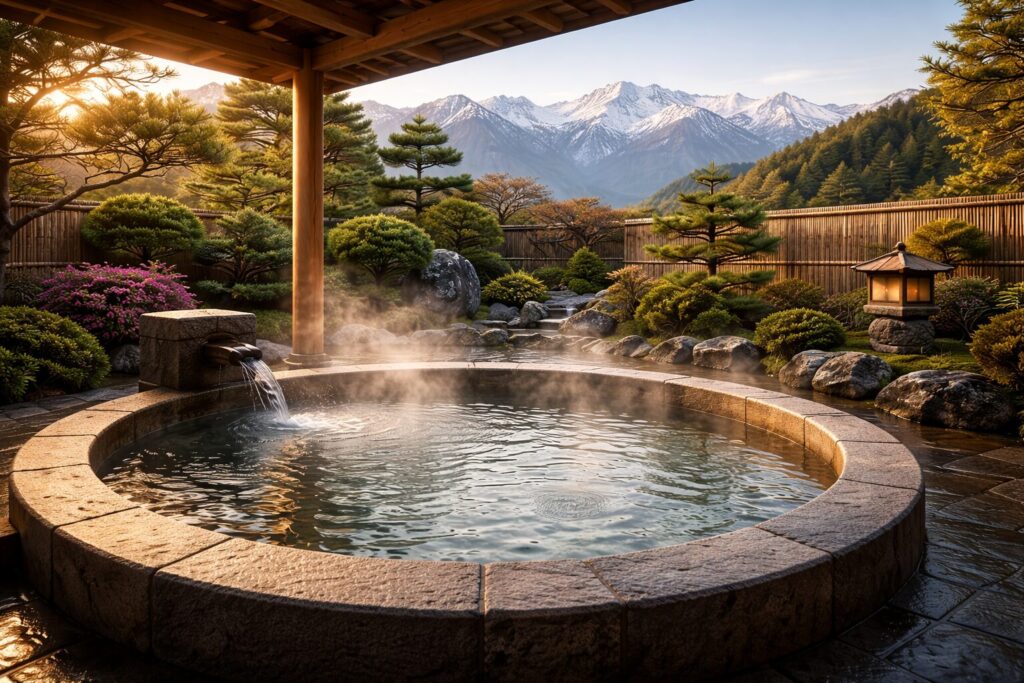
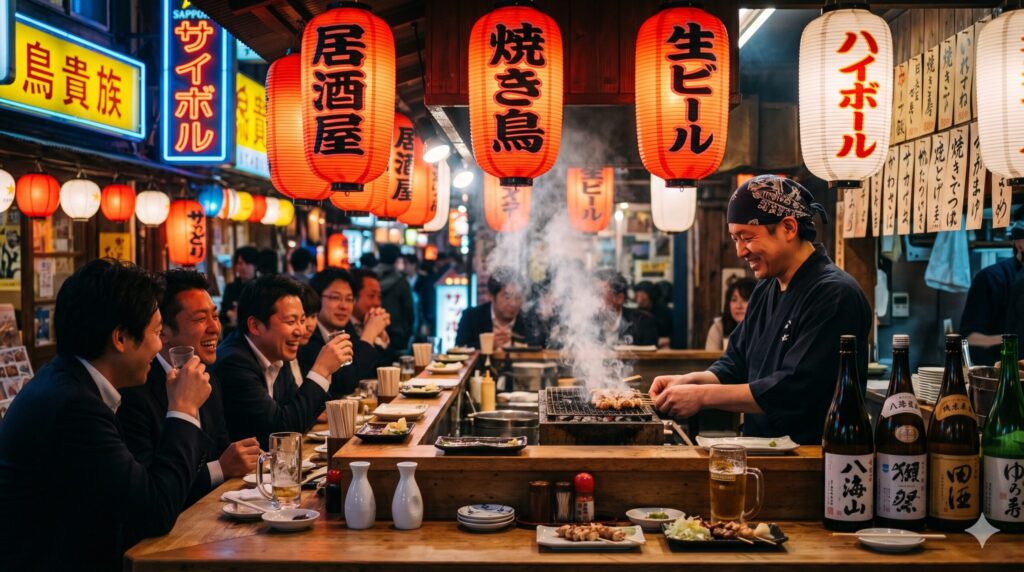
Central Japan’s mountain spine contains some of the country’s most dramatic landscapes and best-preserved traditional communities. The Hokuriku Shinkansen now connects Tokyo to Kanazawa in 2.5 hours — a game-changer that opened the region to day-trippers but hasn’t yet produced Kyoto-level crowds. The window for experiencing this region before it tips into mass tourism may be closing.
Kanazawa — The Kyoto That Wasn’t Bombed
Kanazawa is often described as “little Kyoto” for its preserved geisha districts, samurai quarters, and garden culture. But unlike Kyoto, it suffered neither heavy wartime damage nor 30 years of overtourism. Kenroku-en garden — one of Japan’s three great landscape gardens — remains walkable on a normal weekday. The Higashi Chaya geisha district has working ochaya (teahouses) that pre-date Kyoto’s more famous equivalents. The 21st Century Museum of Contemporary Art is one of the finest in Asia. All three are within 20 minutes’ walk of Kanazawa station.
Don’t miss: The Omicho Market for the Hokuriku seafood — crab, yellowtail, and sea urchin from the Sea of Japan at prices significantly lower than Tokyo equivalents. The Nomura Samurai House in the Nagamachi district for one of Japan’s best private garden experiences.
Shirakawa-go & Gokayama — UNESCO Farmhouses
The thatched-roof gassho-zukuri farmhouses of Shirakawa-go and the neighboring Gokayama valley are among the most photographed rural scenes in Japan. What surprises visitors is how dramatically different the experience is between the two. Shirakawa-go’s main village (Ogimachi) is well-managed but genuinely busy in peak season. Gokayama’s smaller clusters — Suganuma (9 houses) and Ainokura (20 houses) — receive a fraction of the visitors and allow for genuine overnight stays with local families. Booking Gokayama accommodation months in advance is essential.
Matsumoto — Alps Gateway with Its Own Gravity
Matsumoto in Nagano hosts one of Japan’s few original (non-reconstructed) castles — the “Crow Castle,” with its striking black exterior set against the Northern Alps. The castle town has excellent independent restaurants, a thriving arts scene centered on conductor Seiji Ozawa’s Matsumoto Festival, and superb access to the Kamikochi alpine valley. Kamikochi itself — a flat-bottomed glacial valley at 1,500m altitude, closed to private vehicles — is one of Japan’s most spectacular and walkable natural landscapes. Matsumoto deserves at least one overnight stay.
Kanazawa to Matsumoto — The Hidden Connector
Few travelers know that Kanazawa and Matsumoto are connected by the scenic Hakuba area — Japan’s top ski resort in winter, spectacular trekking territory in summer. The Hakuba Alps combine some of Japan’s highest peaks with excellent English-language mountain hospitality developed for the international ski market. A Kanazawa → Hakuba → Matsumoto routing adds two days to an itinerary but creates a central Japan circuit of genuine depth.
TOP PICK
UNESCO
CASTLE
JR Pass — Hokuriku Shinkansen covers Tokyo → Kanazawa in 2.5 hours
Chugoku & the San’in Coast — Western Japan’s Secret Shore
Shinto, sand dunes and Japan’s greatest cycling route
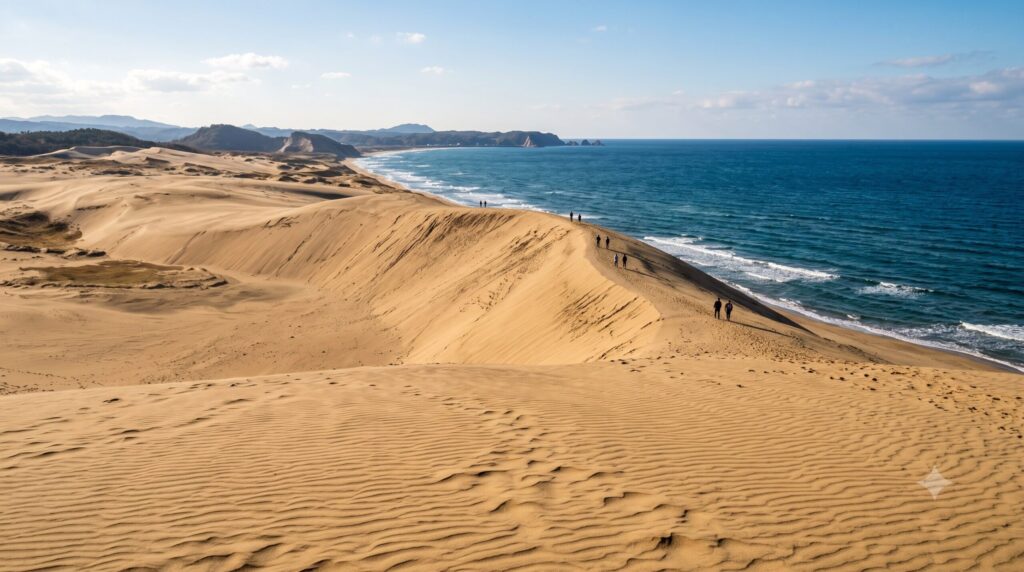
Western Honshu’s San’in coast — the Japan Sea side of Shimane and Tottori prefectures — is one of the most scenically dramatic and least-visited regions in Japan. The contrast with the Shinkansen corridor on the Pacific side is striking: fewer tourists, slower pace, and landscapes that feel genuinely wild. Getting here requires intentionality, which keeps it uncrowded.
Izumo — Where Japan’s Gods Gather
Izumo Taisha in Shimane Prefecture is arguably Japan’s most spiritually important Shinto shrine — more significant in traditional belief than the more-visited Ise Jingu. According to tradition, all of Japan’s gods (yaoyorozu no kami — literally “eight million gods”) gather here every October, the month called “Kannazuki” (month without gods) everywhere else but “Kamiari-zuki” (month with gods) in Izumo. The shrine complex is vast, with the main hall’s iconic shimenawa rope — the largest in Japan at over 13 meters long — as its centerpiece. Izumo is 2.5 hours from Hiroshima by limited express train.
Tottori Sand Dunes — Japan’s Unexpected Desert
The Tottori Sand Dunes are genuinely surprising — a 16km stretch of rolling dunes on the Japan Sea coast that doesn’t fit any mental model of Japan. The dunes rise up to 90 meters and shift constantly with the wind. Camel rides, sandboarding, and paragliding are available. The adjacent Sand Museum hosts annually changing world-class sand sculptures on a single theme. The museum alone is worth the trip for anyone interested in contemporary art. Tottori is 2.5 hours from Osaka by limited express.
Onomichi & the Shimanami Kaido
Onomichi is a small port city in Hiroshima Prefecture with an extraordinary density of hillside temples, a famous cat alley (Neko no Hosomichi), and the start of the Shimanami Kaido — one of the world’s great cycling routes. The route crosses six islands via a series of suspension bridges connecting Honshu to Shikoku over 70km. Each island has its own character: Innoshima for its castle and hydrangeas, Omishima for the Oyamazumi Shrine (which holds the largest collection of ancient armor in Japan), and Imabari as the endpoint on Shikoku. The route can be cycled in one long day by fit riders or comfortably over two days with an overnight at a cycling-focused guesthouse.
Kyushu — Beyond Fukuoka and Nagasaki
Onsen resorts, active volcanoes and castle towns
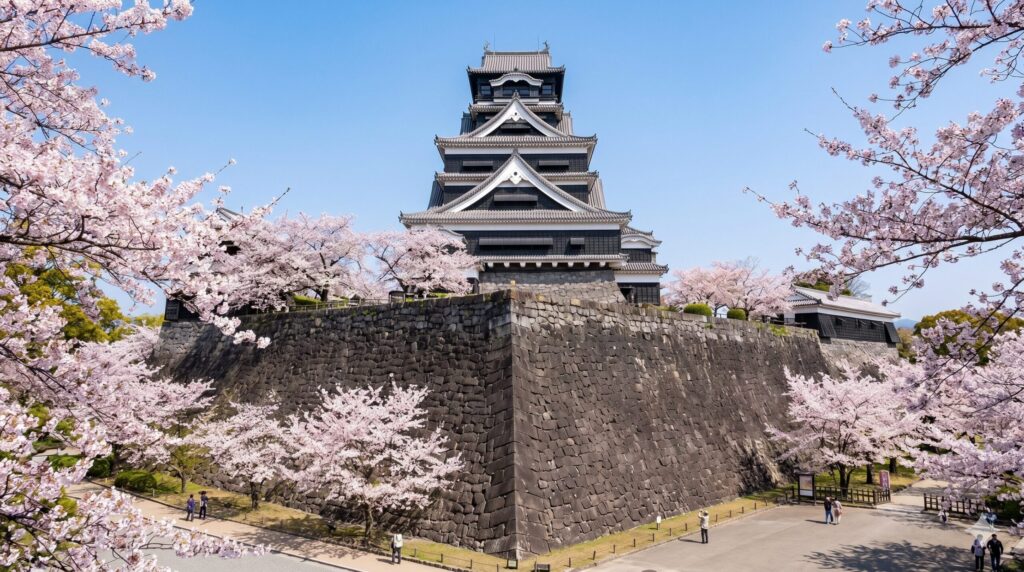
Most visitors to Kyushu stick to Fukuoka (excellent food city) and Nagasaki (essential history). But Kyushu rewards deeper exploration with an extraordinary collection of onsen towns, active volcanoes, and castle cities that see a fraction of the visitors they deserve. The JR Kyushu Rail Pass makes the whole island accessible without a car.
Yufuin — Onsen Town Done Right
Yufuin in Oita Prefecture is Kyushu’s most charming onsen resort town — small enough to walk everywhere, with a main street of independent galleries, cafes, and craft shops that manages to be tourist-friendly without feeling manufactured. The backdrop of Mt. Yufu makes every photograph effortless. The key to Yufuin is staying overnight — the town’s day-tripper population floods in by bus from Hakata and Beppu each morning and retreats by 5pm, leaving a completely different, quieter atmosphere for overnight guests. The private-bath (kashikiri) onsen options here are among Japan’s best.
Kumamoto — The Rebuilt Castle City
Kumamoto Castle, one of Japan’s three great castles, was severely damaged by the 2016 earthquakes. The ongoing reconstruction — expected to complete by 2037 — has been documented with remarkable transparency. Visitors can watch master craftspeople working with traditional materials on the castle’s restoration. The castle grounds are fully accessible, and the reconstruction process itself has become a compelling attraction. The surrounding city has excellent local food: karashi renkon (mustard lotus root), basashi (horse sashimi), and the unique Kumamoto ramen with its rich tonkotsu and mayu (black garlic oil) profile.
Takachiho Gorge — Mythology in Stone
Takachiho in Miyazaki Prefecture is where Japanese mythology says the gods descended to earth. The gorge is formed by 100-meter basalt columns carved by the Gokase River, with waterfalls plunging into the emerald-green water below. Rowboat rentals let you drift between the canyon walls beneath the waterfalls — one of Japan’s most memorable 30-minute experiences. The nightly Yokagura ritual dance performances at Takachiho Shrine continue a 1,200-year tradition and offer one of Japan’s most authentic traditional art experiences. Takachiho requires some effort to reach — about 2.5 hours by bus from Kumamoto — but that effort is precisely what keeps it genuine.
BEST ONSEN
CASTLE
MYTHOLOGY
JR Kyushu Rail Pass — unlimited travel across all 7 Kyushu prefectures
Shikoku — The Pilgrimage Island
88 temples, vine bridges and Japan’s oldest hot spring
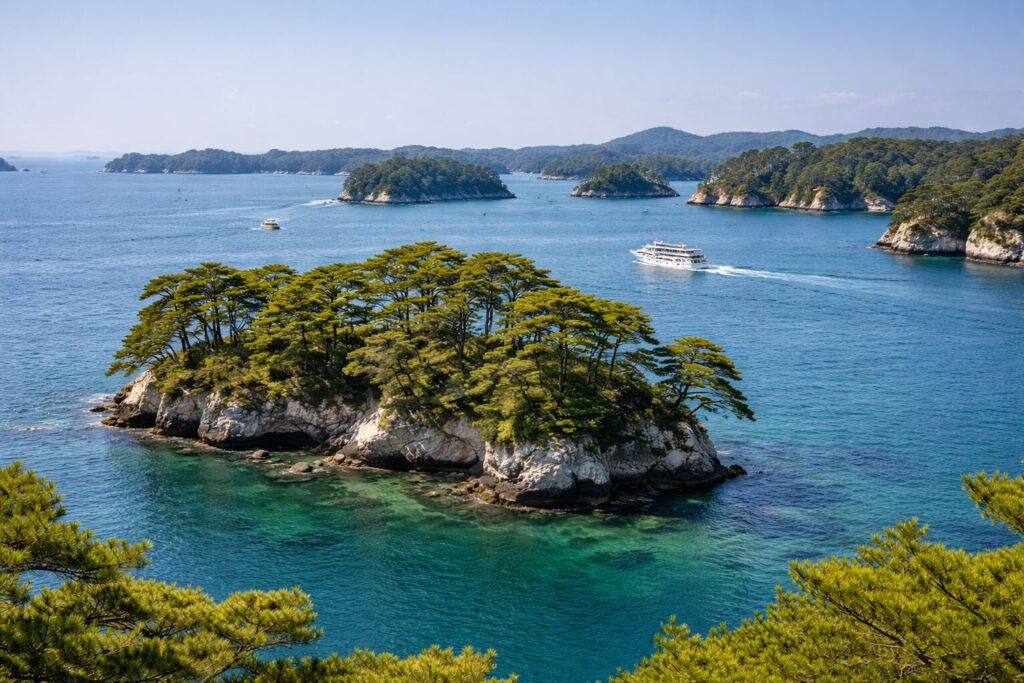
Shikoku, the smallest of Japan’s four main islands, is built around one of the world’s great pilgrimage routes: the 88-temple Ohenro circuit associated with the Buddhist monk Kobo Daishi. Walking the entire circuit takes 30–60 days and remains an active pilgrimage — you’ll encounter white-clad henro (pilgrims) at almost every temple. But even visitors who don’t attempt the full circuit find that Shikoku has a different energy from the rest of Japan: quieter, more rural, with landscapes that feel genuinely untouched.
Iya Valley — Japan’s Most Dramatic Hidden Landscape
The Iya Valley in Tokushima Prefecture is arguably the most dramatic landscape in all of Japan that most visitors never see. The valley was a refuge for the defeated Heike clan in the 12th century — so remote that they believed enemies would never find them. Today, the kazurabashi (vine bridges) still cross the gorge — rebuilt every three years using mountain wisteria vines — and farmhouses cling to near-vertical slopes at angles that seem architecturally impossible. The views from the Oboke boat tours through the gorge are extraordinary. The Iya valley requires a car or taxi to explore properly, but the effort is emphatically worthwhile.
Matsuyama — Castle, Hot Springs and Literature
Matsuyama has Japan’s oldest continuously operating onsen — Dogo Onsen, which has been welcoming bathers for over 1,300 years and is said to have inspired the bathhouse in Hayao Miyazaki’s “Spirited Away.” The main building (Dogo Onsen Honkan) is undergoing restoration, but the experience continues in adjacent modern facilities. The city also has one of Japan’s finest hilltop castles and a literary connection to Natsume Soseki’s novel “Botchan” — the famous Botchan steam tram still runs through the city center. Matsuyama is reachable from Osaka by overnight ferry or from Okayama by limited express train.
JR Pass, eSIM, ryokans, best seasons — the practical checklist
Reaching Japan’s hidden gems requires slightly more planning than a standard Tokyo–Kyoto–Osaka circuit, but not dramatically more. The rail network is comprehensive, accommodation has improved significantly in rural areas, and translation technology handles most language barriers. The key differences are: more advance booking required, more research needed per destination, and more flexibility rewarded.
Step 1 — Choose a Region, Not a List
The biggest mistake off-the-beaten-path travelers make is trying to cover too much. Japan’s regions each deserve time. Choose one or two areas and go deeper rather than racing between five “hidden gems” in five days. Tohoku in 5 days or Kyushu in 5 days produces a richer trip than all five regions in 10 days. Quality of experience beats quantity of destinations.
Step 2 — Buy Your Rail Pass Before You Leave
A JR Pass almost always pays for itself on multi-region trips, and it is essential for reaching most destinations in this guide. The critical point: it cannot be purchased in Japan by tourists — it must be bought before arrival. The 7-day pass covers a Tohoku trip or a Kyushu circuit comfortably. Regional passes (JR Kyushu, JR West All Area, JR East Tohoku) are worth calculating for focused itineraries.
| Pass | Best For | Price (adult) |
|---|---|---|
| JR Pass 7-Day | Tohoku, Chubu/Hokuriku | ~¥50,000 |
| JR Pass 14-Day | Multi-region circuits | ~¥80,000 |
| JR Kyushu 5-Day | Kyushu only | ~¥18,000 |
| JR West All Area 7-Day | Chugoku/San’in/Shikoku | ~¥20,000 |
Step 3 — Get eSIM or SIM Before Landing
Rural Japan has excellent coverage — better than many Western countries — but navigation apps and translation tools are essential for off-the-beaten-path travel. An eSIM activated before departure means you’re connected the moment you land. Sakura Mobile provides unlimited data on Japan’s major networks with English-language customer support — particularly useful when things don’t go to plan in a remote area.
Step 4 — Book Ryokans 2–3 Months Ahead
Rural ryokans — especially in Gokayama, Yufuin, and the better Tohoku onsen towns — have limited rooms and are popular with domestic Japanese travelers who book well in advance. For peak seasons (Golden Week, obon in August, autumn foliage season in October/November), 3 months’ advance booking is the minimum. The ryokan experience — dinner served in the room, private or semi-private onsen, yukata provided — is genuinely different from any hotel and worth the planning effort.
Best Seasons by Region
| Region | Spring (Mar–May) | Autumn (Sep–Nov) | Winter (Dec–Feb) |
|---|---|---|---|
| Tohoku | Cherry blossoms (late April) | Foliage + festivals | Heavy snow · onsen |
| Chubu / Alps | Kamikochi opens May | Best foliage in Japan | Skiing Hakuba / Nozawa |
| Chugoku / San’in | Cycling season opens | Cooler temps · fewer crowds | Rough seas · quiet |
| Kyushu | Mild · ideal for travel | Ideal temperatures | Warm compared to Honshu |
| Shikoku | Pilgrimage season starts | Iya Valley foliage | Quiet · uncrowded |
-

-
Japan WiFi, SIM & eSIM Guide 2026 — Stay Connected from Landing
▶ Stage 2 — Getting Ready Japan WiFi SIM eSIM 2026 — Stay Connected from the Moment You Land Japan W …
Japan Rail Pass — must be purchased outside Japan before arrival
Frequently Asked Questions
Hidden gems Japan — common questions answered
Common questions about Japan’s hidden gems, off-the-beaten-path travel, and practical logistics for exploring beyond the tourist trail.
-

-
Best Places to Visit in Japan 2026 | Go Japan Now
▶ Stage 4 — Go Deeper Best Places to Visit in Japan 2026 — Complete Destination Guide Best places to …