Japan Regional Food — Your Complete Guide to Local Dishes by Region
Japan regional food is one of the country’s greatest travel rewards. From Hokkaido’s rich miso ramen and Osaka’s street-food chaos to Kyoto’s refined kaiseki — every prefecture has a dish worth crossing the country for. This guide covers what to eat, where, and how to book food experiences before you go.
- Why Japan Regional Food Is Unlike Anywhere Else
- Hokkaido — Dairy, Seafood and Miso Ramen
- Tohoku — Mountain Vegetables, Wagyu and Cold-Weather Comfort Food
- Tokyo & Kanto — Soy-Forward and World-Class Variety
- Kyoto & Kansai — Dashi, Tofu and Kaiseki
- Osaka — Street Food Capital of Japan
- Hiroshima & Western Japan — Okonomiyaki and Oysters
- Kyushu — Tonkotsu Ramen, Mentaiko and Wagyu
- Okinawa — Champuru Culture and Longevity Food
- How to Experience Japan Regional Food Like a Local
- Frequently Asked Questions
Why Japan Regional Food Is Unlike Anywhere Else
Geography, climate and 1,200 years of culinary isolation
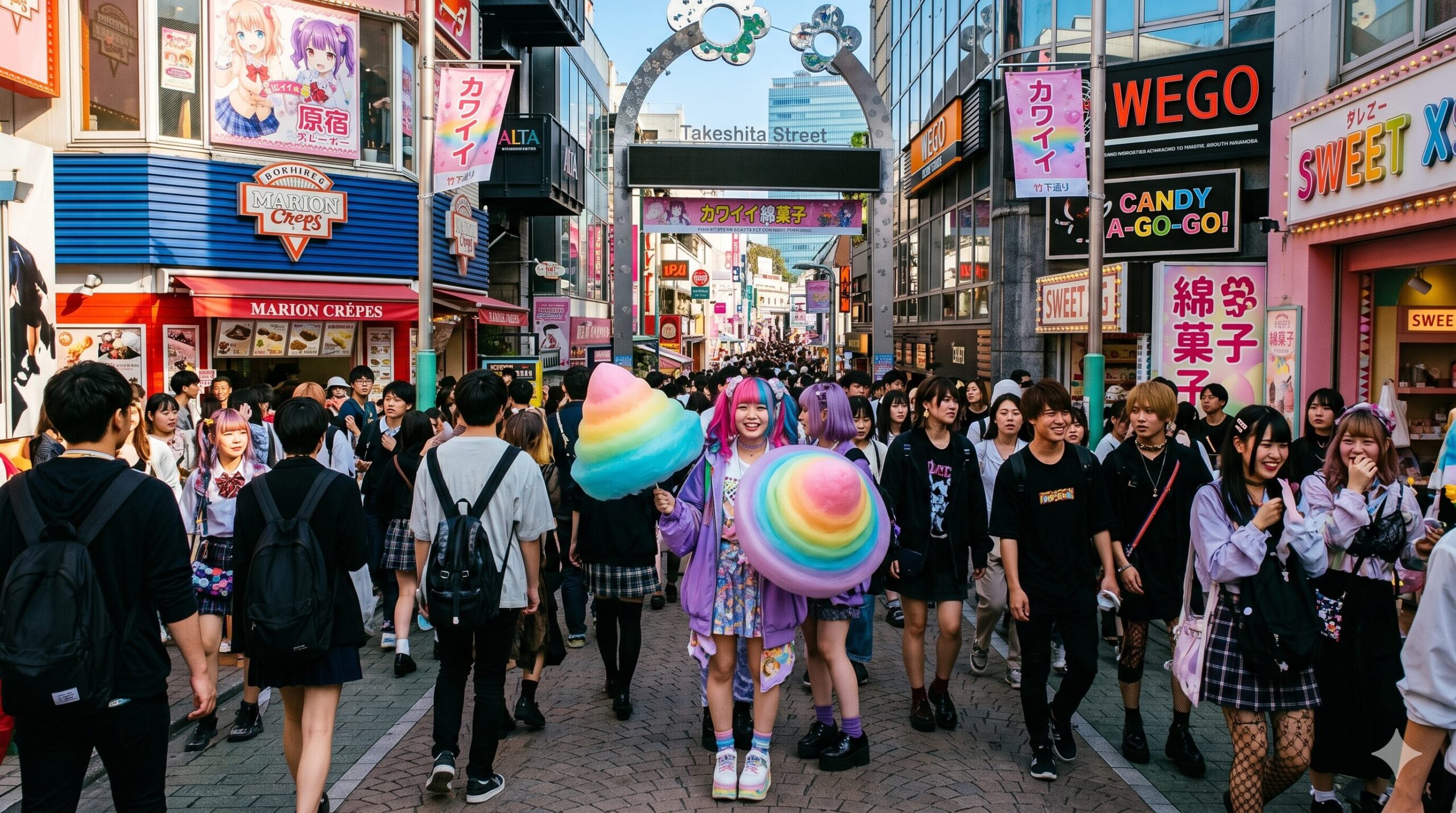
Japan Food Tours via GetYourGuide — ramen, sushi, street food and sake experiences
Japan’s archipelago stretches over 3,000 km from sub-arctic Hokkaido to subtropical Okinawa. That geography alone explains why the food is so different from one prefecture to the next — but geography is only part of the story.
For most of Japan’s history, each domain was economically and administratively self-contained. Local lords encouraged agricultural self-sufficiency, trade was limited, and ingredients were whatever the land, sea or mountains could produce nearby. The result: hyper-local food cultures that evolved independently over centuries, each with their own fermentation traditions, noodle shapes, soup bases and flavour profiles.
Even today, after bullet trains and convenience stores have connected every corner of the country, the regional differences remain sharp and proud. Osaka people will argue passionately that their dashi is superior to Tokyo’s. Fukuoka ramen shops maintain century-old broth recipes. Kyoto tofu cuisine reflects the city’s Buddhist temple cooking heritage going back to the 9th century.
The Concept of Shun — Eating in Season
Shun (旬) — the peak season for an ingredient — is fundamental to Japanese food culture. Eating out-of-season is considered wasteful at best, philistine at worst. Spring brings bamboo shoots and cherry blossom sweets; summer brings hamo (pike conger) and cold somen; autumn brings matsutake mushrooms and new-harvest rice; winter brings crab, fugu and hot-pot cuisine. Planning your trip around seasonal food is one of the highest-leverage decisions you can make as a visitor.
| Season | Key Ingredients | Signature Dishes |
|---|---|---|
| Spring (Mar–May) | Bamboo shoots, sakura, wakame, new tea | Takenoko gohan, sakura mochi, spring kaiseki |
| Summer (Jun–Aug) | Eel, cold tofu, corn, edamame | Hiyashi chuka, cold somen, unaju (eel over rice) |
| Autumn (Sep–Nov) | Matsutake, sanma (saury), chestnuts, new rice | Matsutake gohan, sanma shioyaki, kuri kinton |
| Winter (Dec–Feb) | Crab, fugu, nabe ingredients, yuzu | Kani nabe, fugu chiri, oden, zosui |
Omiyage — Regional Food as Souvenir Culture
Omiyage (土産) — buying local food products to bring home — is not optional in Japan. It is a social obligation. Japanese people bring back regional food gifts for colleagues, neighbours and family whenever they travel. Every train station sells region-specific confections, pickles and snacks in gift-ready packaging. As a visitor, participating in this culture by buying a small local product to bring home is one of the most authentic things you can do.
The Dashi Divide — Why Kanto and Kansai Taste Different
The single biggest flavour divide in Japanese regional food is dashi and soy sauce. Eastern Japan (Kanto/Tokyo) uses koikuchi soy sauce — darker, saltier, more assertive. Western Japan (Kansai/Kyoto/Osaka) uses usukuchi — lighter in colour but with a cleaner umami profile that lets the dashi ingredients speak. This means Tokyo ramen broth, soba dipping sauce and oden look and taste meaningfully different from their Kansai equivalents. Neither is better — they reflect genuinely different food philosophies developed over centuries.
Hokkaido — Dairy, Seafood and Miso Ramen
Japan’s northernmost island, coldest climate, richest produce
Hokkaido food tours via GetYourGuide — crab feasts, farm visits and Sapporo ramen experiences
Hokkaido’s cold climate produces Japan’s finest dairy, wheat, corn and potatoes — and its coastline delivers some of the world’s best seafood. The island was largely unsettled until the Meiji era, so its food culture is younger and more eclectic than the rest of Japan, blending Ainu indigenous traditions with Japanese and Western influences.
MUST TRY
SEASONAL
YEAR-ROUND
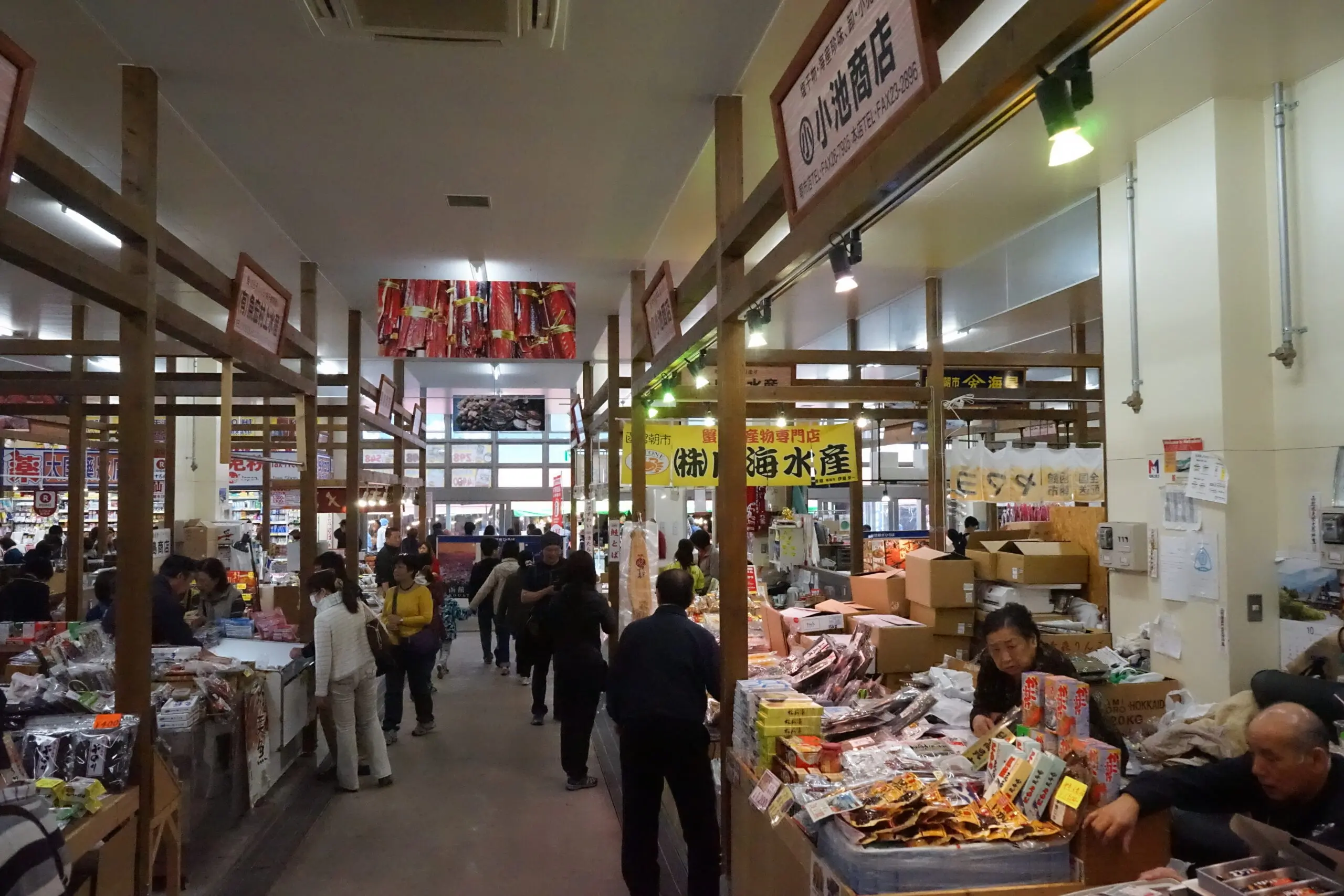
Hakodate in southern Hokkaido is Japan’s most celebrated seafood city. Its morning market opens at 5am with live crab tanks, sea urchin (uni) over rice bowls, and squid so fresh it moves on the plate. Arriving early and eating breakfast here is one of the most memorable food experiences available to visitors in Japan.
Asahikawa and Kushiro — Hokkaido’s Other Ramen Styles
Sapporo miso ramen gets the attention, but Hokkaido has two other distinct ramen traditions. Asahikawa ramen uses a double broth of pork bone and seafood with soy sauce, served with a layer of lard on top to retain heat in the cold climate. Kushiro ramen is lighter: a clear soy-based broth with thin, wavy noodles, developed for fishing communities who wanted something quick and restorative after long hours at sea.
Tohoku — Mountain Vegetables, Wagyu and Cold-Weather Comfort Food
Japan’s least-visited main region and its extraordinary produce
JR Pass for Tohoku — Sendai, Aomori, Akita and Yamagata by shinkansen
Tohoku — the six prefectures of northern Honshu — is the least-visited region of Japan’s main island, and one of its most underrated food destinations. The harsh winters, volcanic mountains and long Pacific coastline have produced a food culture built around preservation, fermentation and the extraordinary produce of cold, clean environments.
SENDAI ICON
AUTUMN RITUAL
CHALLENGE DISH
Aomori and Akita — Fermentation Powerhouses
Aomori prefecture produces Japan’s finest apples — over half the national supply — and its food culture makes heavy use of them: apple juice, apple pie, apple vinegar and even apple ramen. Aomori also produces senbei jiru, a hearty hot-pot soup with flat rice crackers (senbei) that absorb the broth and become soft and chewy — a dish unique to the Nanbu region.
Akita is Japan’s fermentation capital: shottsuru (fish sauce made from sandfish, used in hot-pot), kiritanpo (pounded rice on a skewer, grilled or simmered in nabe), and hinai-jidori (free-range chicken, one of Japan’s three great local breeds). Akita sake is also among Japan’s most respected — the cold climate and clean mountain water produce a soft, full-bodied style.
Tokyo & Kanto — Soy-Forward and World-Class Variety
The capital’s own regional traditions, plus every cuisine on earth

Tokyo Shinjuku Food Tour — 15 Dishes & 4 Eateries via GetYourGuide
Tokyo Shibuya Food Tour — 13 Dishes & 4 Eateries
Tokyo’s own regional cuisine — Edo-mae cooking — developed around the produce of Edo Bay and uses a darker, saltier soy sauce (koikuchi) compared to Kansai’s lighter style. But Tokyo’s real food story is its diversity: the city has more Michelin-starred restaurants than any other city on earth, while simultaneously offering some of Japan’s best street food in places like Asakusa, Tsukiji Outer Market and Yanaka.
ICONIC
LOCAL STYLE
TOKYO ONLY
Yokohama, Kamakura and the Greater Kanto Area
Yokohama’s Chinatown is Japan’s largest — a genuine community producing excellent Chinese food since the 1860s, not a tourist novelty. Yokohama also has its own ramen style: ie-kei ramen, a hybrid of Tokyo shoyu and Hakata tonkotsu with thick straight noodles and a rich, soy-seasoned pork broth. Kamakura, an hour from Tokyo by train, has developed a notable vegetarian and health-food culture around its Buddhist temple heritage, with several plant-based restaurants operating within the temple grounds themselves.
Kyoto & Kansai — Dashi, Tofu and Kaiseki
Japan’s ancient capital and its philosophy-driven cuisine
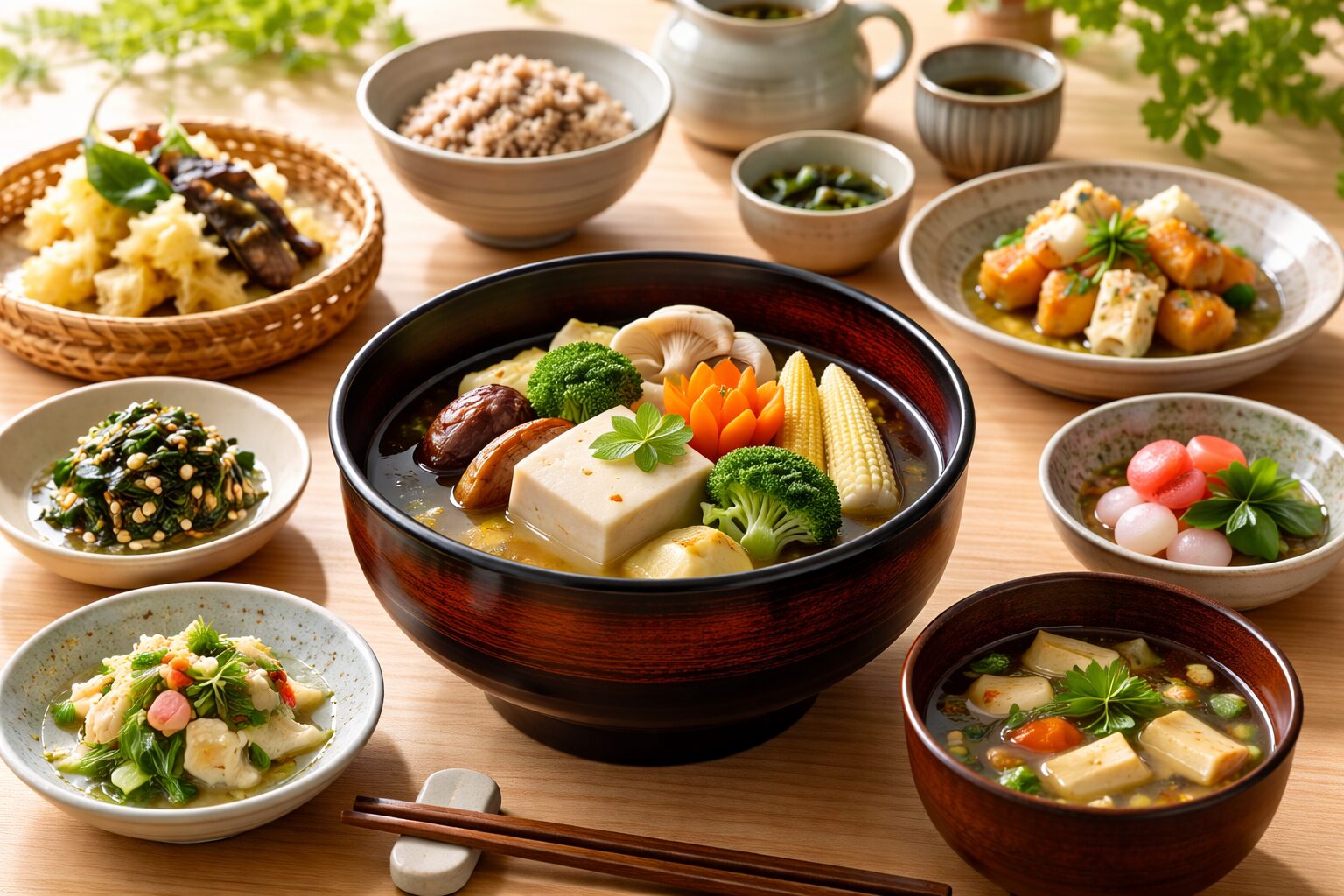
Kyoto food & cooking experiences via GetYourGuide — kaiseki, tofu, matcha and sake tours
Kyoto cuisine (Kyoryori) is built around restraint, seasonality and respect for ingredients. The city was landlocked, so its food traditions developed around preserved ingredients — tsukemono (pickles), dried tofu, fu (wheat gluten) and yudofu (hot tofu). The Buddhist temple cooking tradition (shojin ryori) runs through everything: even secular Kyoto cooking tends toward subtlety and vegetable-forward flavours.
FINE DINING
KYOTO CLASSIC
TAKE HOME
Nishiki Market — Kyoto’s Essential Food Street
Nishiki Market is a narrow 400-metre covered shopping street in central Kyoto with over 100 food stalls and specialty shops. It has operated as a food market for over 400 years. Come hungry and graze: fresh tofu, grilled skewers, matcha sweets, pickles from century-old shops, and dashi stock that smells like autumn. Most stalls are open 9am–6pm; it gets crowded by midday.
Nagoya and Aichi — Miso Everything
Nagoya has its own powerful food identity built around hatcho miso — a deeply fermented, intensely rich red miso aged for 2–3 years in large wooden barrels. This miso goes on everything: miso katsu (tonkatsu smothered in hatcho miso sauce), miso nikomi udon (thick udon simmered in miso broth), and doteni (offal braised in miso). Nagoya food is deliberately bold, sweet and confrontational — it is an acquired taste for many Japanese people outside the region, which is part of its charm.
Osaka — Street Food Capital of Japan
Kuidaore: eat until you drop is a civic philosophy, not just a saying
Osaka street food & Dotonbori tours via GetYourGuide — takoyaki, okonomiyaki and more
Osaka has a saying: kuidaore — “eat until you drop.” The city has been Japan’s commercial capital and food hub for centuries, and the food culture reflects that mercantile energy: generous portions, bold flavours, fast and informal service, and prices that won’t leave you broke. Locals eat out constantly, debate restaurant quality passionately, and treat trying new food as a civic duty.
OSAKA ONLY
WINTER ONLY
RICH & BOLD
Hiroshima & Western Japan — Okonomiyaki and Oysters
The layered pancake debate and Japan’s oyster capital
Hiroshima day trip & food tours via GetYourGuide — oysters, okonomiyaki and Miyajima
Hiroshima’s okonomiyaki is meaningfully different from Osaka’s: instead of mixing all ingredients together, Hiroshima-style layers them — crepe, cabbage, bean sprouts, noodles, and egg — building height and texture that Osaka’s mixed style doesn’t have. Locals are deeply proud of this distinction and will educate you on it immediately.
| Style | Method | Noodles? | Best Area |
|---|---|---|---|
| Osaka-style | All ingredients mixed in batter | No (optional) | Namba, Shinsaibashi |
| Hiroshima-style | Layered crepe + cabbage + noodles | Yes (soba or udon) | Okonomimura, Hiroshima |
Hiroshima prefecture produces around 60–70% of Japan’s oysters. Miyajima Island — famous for the floating torii gate — is lined with oyster restaurants grilling them over charcoal right outside their doors from October through March. An oyster lunch on Miyajima followed by an afternoon at Itsukushima Shrine is one of Japan’s great day-trip combinations.
Kanazawa — Japan’s Best Food City You’ve Never Heard Of
Kanazawa on the Sea of Japan coast is consistently rated by Japanese food critics as the country’s finest food city outside Kyoto and Tokyo. Its Omicho Market is a working seafood market with over 170 stalls, selling the extraordinary produce of the Sea of Japan: snow crab (zuwai-gani), yellowtail (buri), sweet shrimp (amaebi) and red sea bream. Kanazawa also produces exceptional sake, and its jibu-ni — a simmered duck or chicken stew thickened with wheat flour, a dish unique to the region — is one of Japan’s most underappreciated comfort foods.
Kyushu — Tonkotsu Ramen, Mentaiko and Wagyu
Japan’s southernmost main island and its bold, pork-rich cuisine
Kyushu food tours via GetYourGuide — Fukuoka ramen, Wagyu and yatai experiences
Kyushu is the spiritual home of tonkotsu ramen — the rich, cloudy pork-bone broth that became one of Japan’s most globally recognised foods. But Kyushu’s food story goes well beyond ramen. Miyazaki produces some of Japan’s finest wagyu beef. Fukuoka’s yatai (outdoor stall dining) culture is unique in Japan. Nagasaki’s cuisine bears centuries of Portuguese, Dutch and Chinese influence. Kagoshima is famous for black pork (kurobuta) and shochu.
BIRTHPLACE
FUKUOKA SPECIAL
AWARD-WINNING
Fukuoka Yatai — Japan’s Last Outdoor Stall Culture
Fukuoka is the only major Japanese city where yatai — small outdoor food stalls that set up along the riverbanks and streets at night — are still a significant part of food culture. Around 100 licensed yatai operate in Fukuoka, serving tonkotsu ramen, yakitori, oden and motsunabe (offal hotpot) under canvas canopies, lit by lanterns, to customers sitting on stools inches from the cook. It is an atmosphere that has disappeared from the rest of Japan and is genuinely worth experiencing.
Okinawa — Champuru Culture and Longevity Food
A distinct culinary tradition shaped by subtropical climate and Ryukyu history
Okinawa food & culture tours via GetYourGuide — champuru cooking, Ryukyu cuisine and markets
Okinawa’s food is Ryukyuan food — shaped by centuries of independence as the Ryukyu Kingdom, plus strong Chinese, Southeast Asian and American influences. It is less refined than mainland Japanese cuisine, more rustic and pork-forward, and makes heavy use of bitter melon (goya), tofu, seaweed and awamori rice spirit. Okinawa’s people are famously long-lived; researchers have linked this partially to their traditional diet’s high vegetable content, moderate caloric intake and emphasis on fermented foods.
OKINAWA ICON
NOT BUCKWHEAT
RYUKYU SPIRIT
How to Experience Japan Regional Food Like a Local
Markets, cooking classes, food tours and practical ordering tips
Sakura Mobile SIM — stay connected at every food market and restaurant across Japan
Eat at the depachika (department store basement)
Every major department store has a basement food hall (depachika) selling the finest regional foods from across Japan — Kyoto pickles, Hokkaido cheese, Kyushu wagyu, artisan confections. These are not tourist traps; they are where locals buy serious food. Quality and variety is extraordinary.
Visit the morning market (asa-ichi)
Cities like Hakodate, Kanazawa (Omicho Market) and Wajima have outstanding morning markets where fishermen and farmers sell directly to the public. Arrive by 7–8am for the freshest produce and the least crowded experience.
Book a local cooking class
Hands-on cooking classes are widely available in Tokyo, Kyoto and Osaka, typically ¥5,000–12,000 for 2–3 hours. You’ll learn to make ramen, sushi, tempura or regional dishes from a local instructor, eat what you cook, and take the recipes home.
Take a food tour in an unfamiliar neighbourhood
Guided food tours in local residential neighbourhoods give access to restaurants that don’t have English menus or walk-in culture. A local guide navigates language, etiquette and ordering, and you eat things you’d never find alone.
Eat at convenience stores — seriously
7-Eleven, Lawson and FamilyMart in Japan stock regionally sourced onigiri, sandwiches, hot foods and seasonal sweets that are genuinely excellent. The tuna mayo onigiri from a regional 7-Eleven using local rice is not a compromise — it is a deliberate cultural product worth experiencing.
Practical Tips: Ordering, Allergens and Etiquette
| Situation | What to Know |
|---|---|
| No English menu | Point at pictures, use Google Lens to translate, or say the dish name |
| Allergens | Japan has 8 mandatory label allergens (wheat, soy, egg, milk, shrimp, crab, buckwheat, peanut). Use a written allergen card in Japanese when eating out |
| Vegetarian / vegan | Dashi (fish stock) is in almost everything. Specifically ask for “katsuobushi nashi” (no bonito) |
| Tipping | Never. Tipping is considered rude in Japan |
| Slurping ramen/soba | Expected and polite — it cools the noodles and signals appreciation |
| Paying the bill | Usually pay at the register on the way out. Say “okaikei onegaishimasu” for the bill |
| Shared dishes | Use the provided serving chopsticks, not your own, when taking from shared plates |
Frequently Asked Questions
Japan regional food — common questions answered
Planning your Japan trip? Start with the complete Japan Experiences guide
▶ Stage 3 — Experiences Japan Experiences 2026 — Pick What to Do, Where, and Book It Choose the kind … ▶ Stage 3 — Experiences Cultural Experiences Japan 2026 — Kimono, teamLab & Food Tours cultural …

Japan Experiences 2026 — Food, Culture & Unforgettable Things to Do

Cultural Experiences Japan 2026 — Kimono, teamLab & Food Tours