Japan Shinkansen Guide 2026 — Routes, JR Pass & Booking
The Japan Shinkansen is the fastest, most reliable way to cross the country — Tokyo to Osaka in 2h 22min, Tokyo to Kyoto in 2h 15min, Tokyo to Hiroshima in under 4 hours. This complete 2026 guide covers every active Shinkansen line, JR Pass coverage rules, how to book seats, luggage rules, and when express trains beat the bullet train on cost.
- What is the Japan Shinkansen?
- All 9 Active Shinkansen Lines (2026)
- JR Pass Coverage — What’s In, What’s Out
- How to Buy & Book Shinkansen Tickets
- Seat Reservation & Car Types Explained
- Express Trains — When They Beat the Shinkansen
- Luggage Rules — Including the Oversized Baggage Trap
- Onboard Experience — What to Expect
- Most Useful Routes for International Visitors
- Shinkansen vs Express Trains — Quick Comparison
- Frequently Asked Questions
What is the Japan Shinkansen?
The Japan Shinkansen network — known worldwide as the bullet train — is the backbone of long-distance travel in Japan. With 9 active lines, top speeds of 320 km/h, and an average delay of under 60 seconds per train, it’s also the single most punctual high-speed rail system in the world. For international visitors, mastering the Shinkansen is the difference between a stressful trip and a smooth one. This guide gives you every active route, exactly what the JR Pass covers (and doesn’t), how to book seats, luggage rules, and the cheaper express train alternatives that locals actually use.
- First-time visitors planning their first Shinkansen ride
- Travelers deciding between JR Pass vs individual tickets
- Anyone unsure whether the Nozomi or Hikari is the right choice
- Multi-city itinerary planners (Tokyo–Kyoto–Osaka–Hiroshima)
Speed, punctuality, and one ticket for the whole network

Before the details, the case for the Japan Shinkansen in five lines:
- Speed — Up to 320 km/h. Tokyo to Hiroshima in under 4 hours, Tokyo to Aomori in just over 3.
- Punctuality — Average annual delay per train: under 60 seconds. The most reliable high-speed network in the world.
- Safety record — Zero fatalities from derailment or collision since 1964.
- Coverage — One JR Pass covers 9 lines, 280+ stations, from Kagoshima to Sapporo.
- Comfort — Reclining seats, power outlets, free WiFi, and a 5-minute snack run is enough — every major station has an ekiben (station bento) shop.
Once you understand how it works — which services the JR Pass covers, how seat reservations work, and which luggage rules apply — the Shinkansen becomes the easiest part of any Japan trip.
A 60-year-old engineering icon, still upgrading in 2026
Buy JR Pass directly — official price, instant e-voucher
The Japan Shinkansen launched on October 1, 1964, just nine days before the Tokyo Olympics. The first line — the Tokaido Shinkansen between Tokyo and Osaka — cut a 6.5-hour journey down to 4 hours. Today the same trip takes 2 hours 22 minutes on a Nozomi service, and the network has expanded to cover Hokkaido in the north, Kyushu in the south, and the Sea of Japan coast via Kanazawa.
What makes the Shinkansen unique isn’t just speed. It’s the combination: dedicated tracks (no sharing with local trains), automatic train control systems, and a culture of operational precision that produces an annual average delay of under 1 minute per train across the entire network. Earthquakes, typhoons, and snowstorms shut it down — but rarely otherwise.
Shinkansen at a glance — key facts for 2026
| Metric | 2026 Status |
|---|---|
| Top operating speed | 320 km/h (Tohoku Shinkansen) |
| Active lines | 9 lines + 4 mini-shinkansen branches |
| Annual passengers | ~440 million (pre-COVID baseline restored) |
| Fatality from a derailment | Zero in 60 years |
| Average delay per train | 54 seconds (JR Central, FY2024) |
| Operators | JR East / JR Central / JR West / JR Kyushu / JR Hokkaido |
7-Day JR Pass — Unlimited Shinkansen across Japan from ¥50,000
Routes, top speeds, and what each line connects
All 9 Active Shinkansen Lines (2026)
Buy JR Pass directly — official price, instant e-voucher
Here’s the complete 2026 Shinkansen map in plain English. Note that each operator runs different fleets, so the train name you see at the platform depends on which company runs that section.
| Line | Route | Top Speed | Operator |
|---|---|---|---|
| Tokaido | Tokyo ⇄ Shin-Osaka | 285 km/h | JR Central |
| Sanyo | Shin-Osaka ⇄ Hakata (Fukuoka) | 300 km/h | JR West |
| Kyushu | Hakata ⇄ Kagoshima-Chuo | 260 km/h | JR Kyushu |
| Nishi-Kyushu | Takeo-Onsen ⇄ Nagasaki | 260 km/h | JR Kyushu |
| Tohoku | Tokyo ⇄ Shin-Aomori | 320 km/h | JR East |
| Hokkaido | Shin-Aomori ⇄ Shin-Hakodate-Hokuto | 260 km/h | JR Hokkaido |
| Joetsu | Tokyo ⇄ Niigata | 275 km/h | JR East |
| Hokuriku | Tokyo ⇄ Tsuruga | 260 km/h | JR East/West |
| Yamagata / Akita (mini) | Branches off Tohoku Shinkansen | 130 km/h on local sections | JR East |
Tokaido Shinkansen — the busiest line in the world
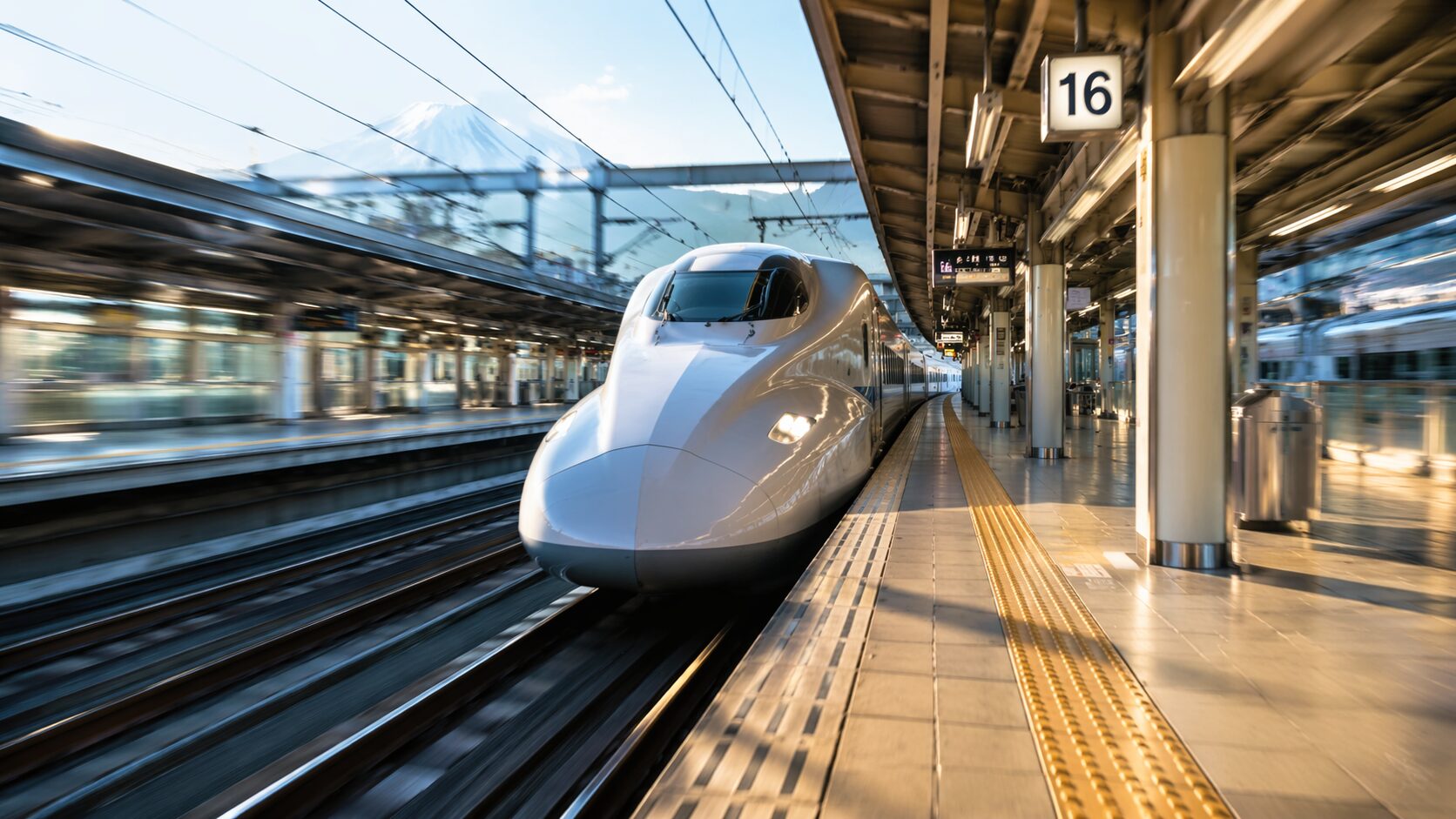
Tokyo to Shin-Osaka via Shin-Yokohama, Nagoya, and Kyoto. This is the line most travelers use, with a train departing Tokyo Station every 3 to 5 minutes during the day. Three service tiers run: Nozomi (fastest, 2h 22min Tokyo–Osaka, not covered by JR Pass), Hikari (2h 50min, covered), and Kodama (every station, 4 hours, covered).
Sanyo Shinkansen — west to Hiroshima and Fukuoka
From Shin-Osaka onward to Hakata. Many trains run through from the Tokaido line, so you can ride Tokyo to Hiroshima (3h 50min on Nozomi, 4h 25min on Hikari) without changing. The Sakura service is shared with Kyushu Shinkansen trains and is fully JR Pass eligible.
Tohoku Shinkansen — Japan’s fastest line
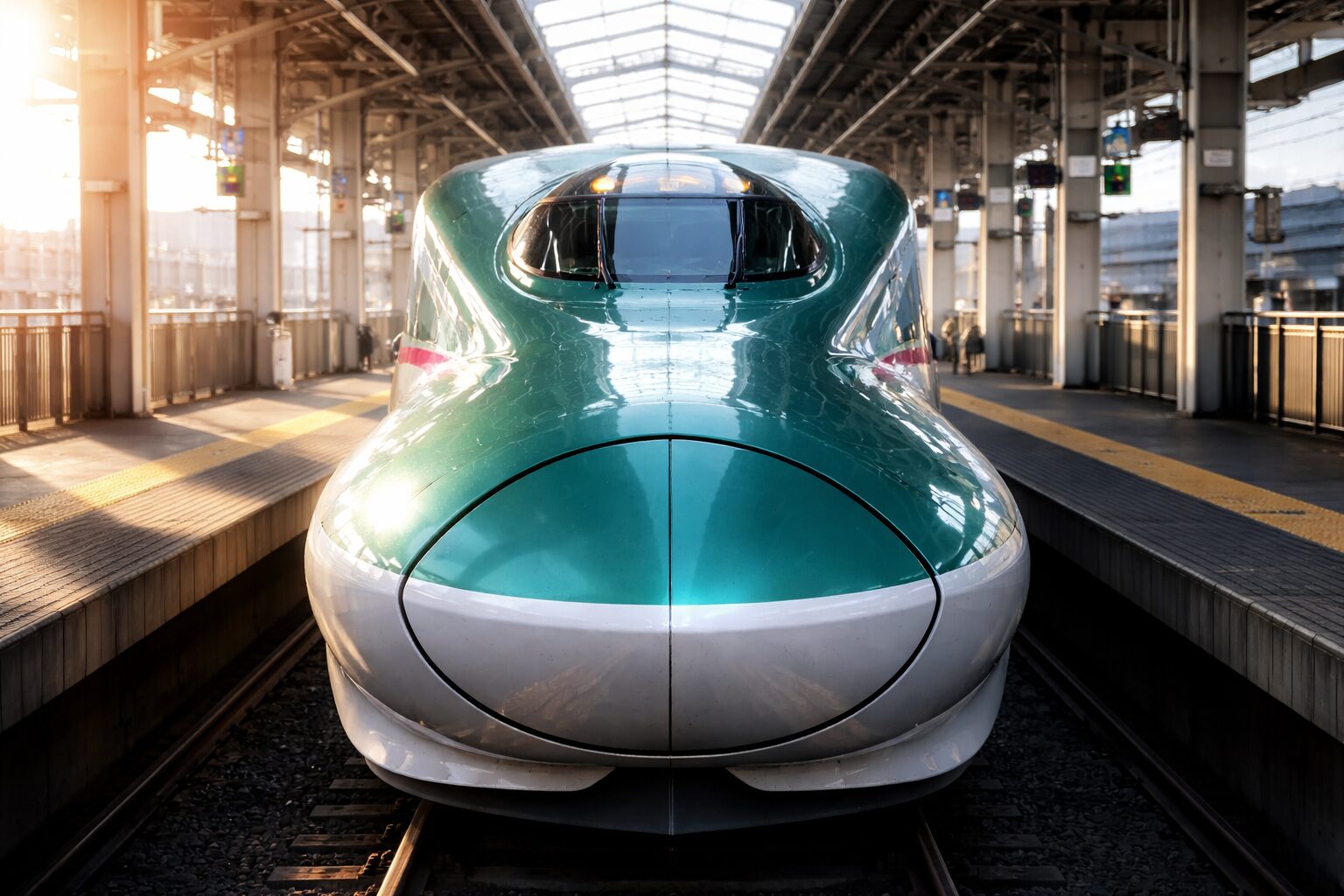
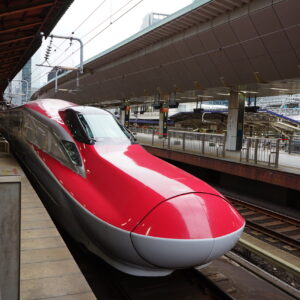
Tokyo to Aomori, with branches to Yamagata and Akita. The Hayabusa service runs at 320 km/h between Utsunomiya and Morioka, reaching Sendai in 1h 30min and Aomori in just over 3 hours. Hayabusa is fully covered by the JR Pass with a free seat reservation.
Hokuriku Shinkansen — the Kanazawa & Fukui line
Tokyo to Tsuruga via Nagano, Toyama, Kanazawa, and Fukui. The 2024 extension to Tsuruga made Fukui Prefecture much more accessible. Travel time Tokyo to Kanazawa is 2h 30min on the Kagayaki service. Fully JR Pass eligible.
Need just the Kansai region? A regional pass may be cheaper than the national JR Pass
JR Pass covers Tokaido, Sanyo, Tohoku, Hokuriku & more — one ticket, unlimited rides
The Nozomi rule, the Mizuho rule, and how to use the pass
JR Pass Coverage — What’s In, What’s Out
Buy JR Pass directly — official price, instant e-voucher
The Japan Rail Pass gives unlimited rides on JR-operated trains — including most Shinkansen — for 7, 14, or 21 consecutive days. The catch: two specific Shinkansen services are excluded. Knowing them in advance saves you embarrassment at the gate and lost money.
The Nozomi rule (Tokaido & Sanyo lines)
The Nozomi is the fastest service on Tokaido and Sanyo. JR Pass holders cannot ride it without paying the full ticket price. Since October 2023, there’s been a paid Nozomi upgrade option (~¥4,180 surcharge for Tokyo–Osaka one way), but most travelers just use the Hikari instead. The Hikari is the next service tier — only 30 minutes slower on Tokyo–Osaka, and it leaves every 10 to 15 minutes during peak hours.
The Mizuho rule (Sanyo & Kyushu lines)
Same logic applies to the Mizuho service running between Shin-Osaka and Kagoshima-Chuo. Use the Sakura instead — same train type, only marginally slower, fully covered.
Everything else is covered
| Service | JR Pass | Notes |
|---|---|---|
| Nozomi (Tokaido/Sanyo) | ❌ Excluded | Paid upgrade available |
| Mizuho (Sanyo/Kyushu) | ❌ Excluded | Use Sakura instead |
| Hikari (Tokaido/Sanyo) | ✅ Fully covered | 30 min slower than Nozomi |
| Kodama (Tokaido/Sanyo) | ✅ Fully covered | Every station, much slower |
| Sakura (Sanyo/Kyushu) | ✅ Fully covered | Tsubame/Sakura interchangeable |
| Hayabusa (Tohoku) | ✅ Fully covered | Reservation required, free for pass holders |
| Komachi (Akita) | ✅ Fully covered | Reservation required |
| Kagayaki / Hakutaka (Hokuriku) | ✅ Fully covered | Most run as reserved-seat only |
| All other Shinkansen | ✅ Fully covered | Yamagata, Joetsu, Hokkaido, Kyushu, Nishi-Kyushu |
When the JR Pass actually saves money
The 2023 price increase pushed the 7-day pass to ¥50,000. The break-even calculation changed:
Full JR Pass purchase guide — including Klook vs JR official price comparison
7-Day JR Pass — pays for itself with one round trip Tokyo–Kyoto–Hiroshima
Online, at station, with JR Pass — the right method for each case
How to Buy & Book Shinkansen Tickets
Buy JR Pass directly — official price, instant e-voucher
There are four ways to ride the Japan Shinkansen, and the right one depends on whether you have a JR Pass, how far ahead you’re booking, and whether you want to skip lines at the station.
Method 1 — JR Pass + free seat reservation
If you have a JR Pass, every reservation is free. The fastest way is the official JR-WEST Online Train Reservation or JR-EAST app — both let you reserve seats from your phone and pick up a paper ticket from JR machines at the station. You can also reserve at any green-windowed JR Midori-no-Madoguchi counter. Reservations open one month before departure.
Method 2 — Single tickets online (no JR Pass)
For travelers not buying a pass, single ticket reservations are available through:
- JR-WEST Online Train Reservation — covers Tokaido, Sanyo, Kyushu Shinkansen
- Eki-net (JR East) — covers Tohoku, Hokkaido, Joetsu, Hokuriku Shinkansen
- SmartEX app — Tokaido/Sanyo with credit card, no foreign-card restrictions
Method 3 — At the station
Every major JR station has Shinkansen ticket machines with full English support. The JR Midori-no-Madoguchi staffed counters can issue every ticket type but expect a 15–30 minute queue at Tokyo Station during peak periods.
Method 4 — Convenience store pickup
Some online reservations let you pay and pick up at 7-Eleven, Lawson, or FamilyMart kiosks. This works for tourists without Japanese credit cards but requires Japanese-language input on the kiosk screen — fine if you have the reservation code, awkward otherwise.
Choose your service tier first
Check if your train is Nozomi/Mizuho (JR Pass excluded) or Hikari/Sakura/Hayabusa (included). For Tokyo–Osaka, default to Hikari with a JR Pass.
Reserve at least 1 day in advance during peak season
Cherry blossom (late March–early April), Golden Week (April 29–May 5), Obon (mid-August), and New Year (Dec 28–Jan 3) sell out fast.
Pick up your paper ticket before boarding
Even with an online reservation, most Shinkansen still require a physical ticket through the gate. SmartEX is the exception — fully paperless.
Arrive at the platform 5–10 minutes early
Shinkansen leave on the second. The 09:00 train leaves at 09:00:00, not 09:00:30. Late means missed.
Skip the queue at the station — order your JR Pass online and pick up on arrival
Ordinary, Green, Gran Class — and the reservation system
Seat Reservation & Car Types Explained
Buy JR Pass directly — official price, instant e-voucher
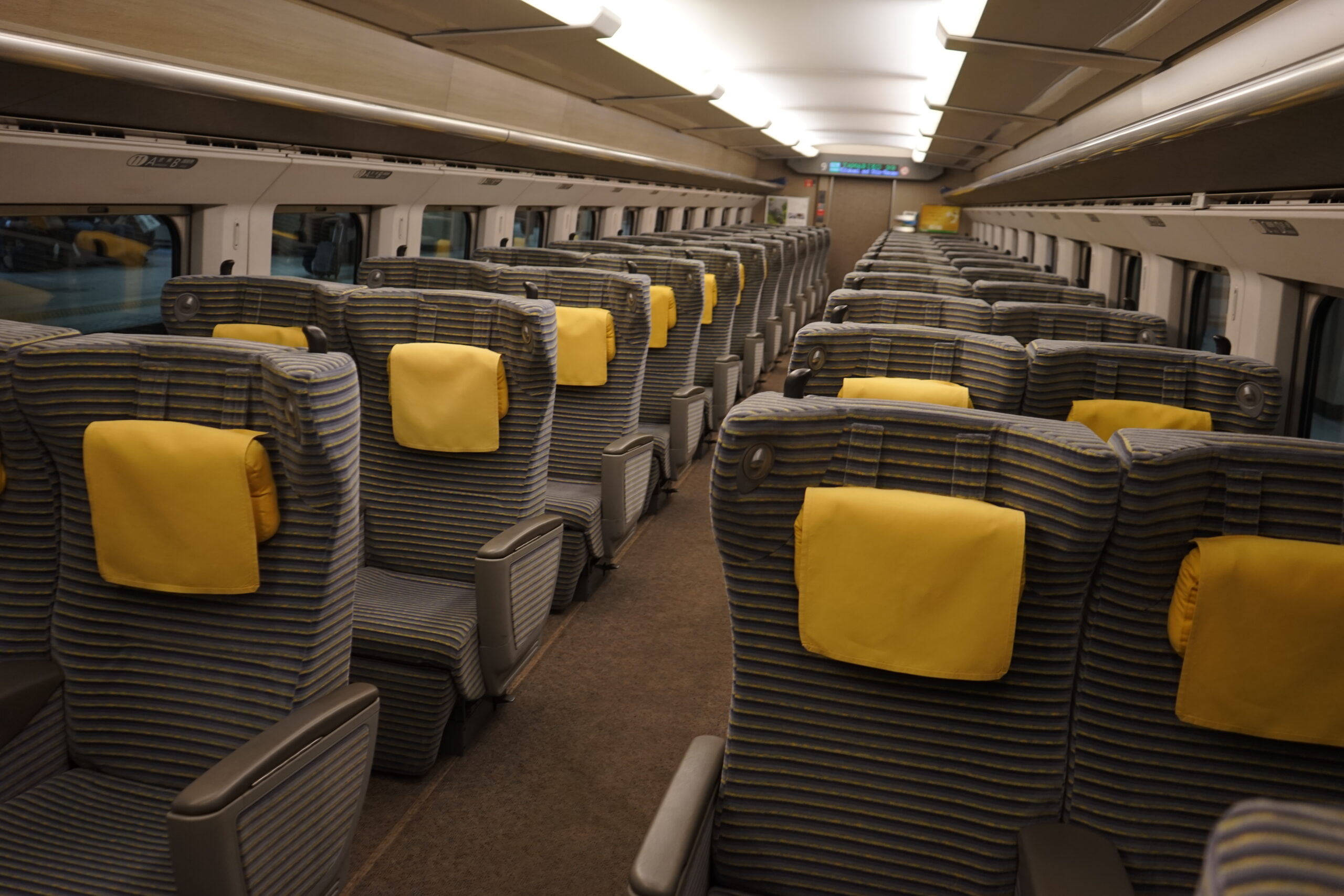
Every Shinkansen has three possible car classes. Knowing them helps decide whether to upgrade or stay in standard.
DEFAULT
UPGRADE
PREMIUM
Reserved vs non-reserved cars
Tokaido, Sanyo, and most other Shinkansen have a mix of reserved (指定席) and non-reserved (自由席) cars. Non-reserved is usually cars 1–3, marked with green signs on the platform. During Golden Week and Obon, non-reserved is standing-room only — always reserve a seat in advance.
Tohoku Shinkansen Hayabusa, Komachi, and Hokuriku Kagayaki are 100% reserved-seat only. No non-reserved option exists. JR Pass holders must make a free seat reservation before boarding — boarding without one risks being directed off the train.
JR Pass includes free seat reservations — even Green Car on covered services
Limited Express, Joyful Trains, and the regional alternative
Express Trains — When They Beat the Shinkansen
Not every Japanese intercity train is a Shinkansen. Limited Express trains (特急, tokkyu) run on conventional tracks at 100–160 km/h and serve routes the Shinkansen doesn’t cover — coastal Sea of Japan, central Kyushu, scenic mountain routes. They’re cheaper, slower, and often more visually rewarding.
When to take an express train instead
| Route | Train | Why use it |
|---|---|---|
| Narita Airport → Tokyo | Narita Express (N’EX) | Direct airport access, JR Pass covered |
| Kansai Airport → Kyoto/Osaka | Haruka | Direct airport service, JR Pass covered |
| Kyoto → Kinosaki Onsen | Kinosaki / Kounotori | No Shinkansen serves Kinosaki |
| Osaka → Shirahama | Kuroshio | Pacific coastal scenery |
| Tokyo overnight → Takamatsu/Izumo | Sunrise Seto / Izumo | Last regular sleeper train in Japan |
| Tokyo → Nikko | Tobu Spacia | Faster than going via Shinkansen + transfer |
Joyful Trains — themed sightseeing services
JR runs a category called “Joyful Trains” — themed sightseeing services that prioritize experience over speed. Examples include the Hello Kitty Shinkansen (Sanyo line, weekends), Seven Stars in Kyushu (luxury overnight, ¥1.4M+), and the SL Banetsu Monogatari steam train through Niigata. Joyful Trains usually require advance reservations and many are JR Pass covered.
For Kansai-only or Kyushu-only trips, regional passes cover express trains too — often half the JR Pass price
Tokaido/Sanyo/Kyushu have strict rules since 2020
Luggage Rules — Including the Oversized Baggage Trap
Since May 2020, the Tokaido, Sanyo, and Kyushu Shinkansen lines enforce oversized baggage rules that catch many international travelers off guard.
Baggage size categories
| Total size (H+W+D) | Status | What to do |
|---|---|---|
| Under 160 cm | No restriction | Use overhead rack or end-of-car space |
| 160–250 cm | Oversized | Reserve last-row seat with luggage space |
| Over 250 cm | Prohibited | Use luggage forwarding (takkyubin) instead |
The takkyubin alternative
Japan’s nationwide luggage forwarding network — usually called takkyubin — is the best-kept secret for stress-free Shinkansen travel. Hand over your suitcase at your hotel front desk, pay ¥1,500–¥2,500, and it arrives at your next hotel the following day. You ride the Shinkansen with just a day bag. Yamato Transport (Kuroneko) and Sagawa run this service from virtually every major hotel.
Skip the luggage hassle entirely — same-day hotel-to-hotel forwarding from ¥1,500
WiFi, food, etiquette, and the famous ekiben
Onboard Experience — What to Expect
Riding the Shinkansen for the first time is its own small ceremony. Here’s what to expect.
WiFi & connectivity
Free WiFi (Shinkansen Free Wi-Fi) is available on Tokaido, Sanyo, Tohoku, Hokuriku, and Kyushu services. Each session is limited to 30 minutes and reconnection is easy. The reality: in long tunnels (and there are many between Tokyo and Osaka) the connection drops. Most regular commuters use their own cellular data via pocket WiFi or eSIM.
Food onboard — ekiben culture
The Shinkansen has no full dining cars (except Gran Class). Instead, the Japanese tradition is to buy an ekiben — a station bento box — and eat it at your seat. Every major Shinkansen station has ekiben shops selling regional specialties: salmon ikura over rice at Niigata, beef tongue at Sendai, eel at Hamamatsu. Ekiben range ¥1,000–¥2,500 and are part of the experience.
Etiquette — what to do, what to avoid
- Speak quietly, especially on calls
- Recline slowly and check behind you
- Eat ekiben at your seat (it’s normal)
- Take phone calls in the deck area between cars
- Have video calls at your seat (huge faux pas)
- Play music or videos without headphones
- Put bags on the seat next to you
- Eat strong-smelling food (avoid extra-pungent ekiben)
Free onboard WiFi is patchy in tunnels — bring your own SIM or pocket WiFi for reliable connection
The classic 3 itineraries — Tokyo–Osaka, Golden Route, Tohoku
Most Useful Routes for International Visitors
Buy JR Pass directly — official price, instant e-voucher
Route A — Tokyo ⇄ Osaka (the express trip)
The most common first-time Shinkansen trip. Tokyo to Shin-Osaka on a Hikari is 2h 50min, with stops at Shin-Yokohama, Nagoya, and Kyoto. The view of Mount Fuji on the right-hand side around the 40-minute mark — seat E in 5-seat cars — is the iconic Shinkansen view. Fully covered by the JR Pass on Hikari/Kodama.
Route B — Golden Route (Tokyo–Kyoto–Osaka–Hiroshima)
The classic Japan first-trip itinerary. Tokyo to Hiroshima with stops in Kyoto and Osaka takes about 6 days at minimum. The Shinkansen ride Tokyo–Hiroshima (Hikari + Sakura transfer) is roughly 4h 30min, and Hiroshima–Miyajima Island is a 30-minute extension. The 7-day JR Pass is perfect for this — pays for itself with the round trip alone.
Route C — Tohoku discovery (Tokyo–Sendai–Aomori)
The Tohoku Shinkansen is the fastest line in Japan and runs through one of its least-touristy regions. Tokyo to Sendai is 1h 30min on the Hayabusa; continue to Aomori in another 1h 45min. This is the route to Hiraizumi (UNESCO site), Matsushima Bay (one of Japan’s top three scenic views), and Aomori’s Nebuta Festival in August.
Plan your full Japan transport strategy — from airport to last train
All three routes below are JR Pass covered — one pass, full coverage for 7+ days
Which is right for which type of trip
Shinkansen vs Express Trains — Quick Comparison
FASTEST
REGIONAL
Rule of thumb: over 300 km, take the Shinkansen. Under 200 km or to non-Shinkansen destinations, take a Limited Express.
Top questions on the Japan Shinkansen for 2026
Frequently Asked Questions
-
-
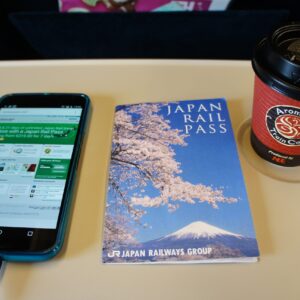
Japan Rail Pass 2026 — Is It Worth It? Complete Guide
▶ Stage 2 — Getting Ready Japan Rail Pass 2026 — Complete Guide to Prices, Types & Buying The J …
続きを見る
-
-
JR Regional Pass Japan 2026 — Kansai, Kyushu, Hokkaido & More
▶ Stage 2 — Getting Ready JR Regional Pass Japan 2026 — Save More, Explore Deeper The right JR regio …
続きを見る