Michelin Green Guide Toyama — Three Three-Star Sights and How to Cover All 24 Starred Sights
The Michelin Green Guide awards stars to 24 sights in Toyama. Three of them hold three stars: the Tateyama Kurobe Alpine Route and the Yuki-no-Otani snow corridor (2020 edition), and the gassho-style villages of Gokayama (2015 edition). This guide gives the edition behind every star, then adds the 2026 fares and operating dates and realistic one-, two- and three-day routes.
- What the Michelin Green Guide is — 24 starred sights in Toyama
- Three-star 1: the Tateyama Kurobe Alpine Route and Yuki-no-Otani
- Three-star 2: the gassho villages of Gokayama
- Two-star Kurobe Dam, Zuiryu-ji and the Toyama Glass Art Museum
- The 14 one-star sights — Takaoka, Toyama, Kurobe, Nanto
- Model routes by length, with access and costs
- Michelin Green Guide Toyama — FAQ
What the Michelin Green Guide is — 24 starred sights in Toyama
It rates landscapes, buildings and culture, not restaurants
When people hear “Michelin stars” they think of restaurants. This is the other book: the Green Guide (Le Guide Vert), which rates destinations themselves. The Japan volume is published in France and revised periodically — the 4th edition in 2015, the 6th in 2020, and the current one in 2025.
Throughout this guide, every star is given with the edition that awarded it, because ratings are reviewed with each new edition.
| Rating | Meaning | Toyama |
|---|---|---|
| ★★★ | Worth a special journey | 3 sights |
| ★★☆ | Worth a detour | 7 sights |
| ★☆☆ | Interesting | 14 sights |
Toyama collects so many stars because of its geography: 3,000 m peaks and a bay 1,000 m deep sit within a few dozen kilometres of each other. The mountains hold a snow corridor and a giant dam, the valleys hold thatched gassho villages, and the plain holds craft towns of cast metal and wood carving — and most of it is reachable by train and bus.
See Japan region by region, then decide where Toyama fits.
Sakura Mobile keeps your maps working in Toyama’s mountains.
-

-
Best Places to Visit in Japan 2026 | Go Japan Now
▶ Stage 4 — Go Deeper Best Places to Visit in Japan 2026 — Build Your Route, City by City Pick the r …
続きを見る
Two three-star entries on a single day’s journey
Three-star 1: the Tateyama Kurobe Alpine Route and Yuki-no-Otani
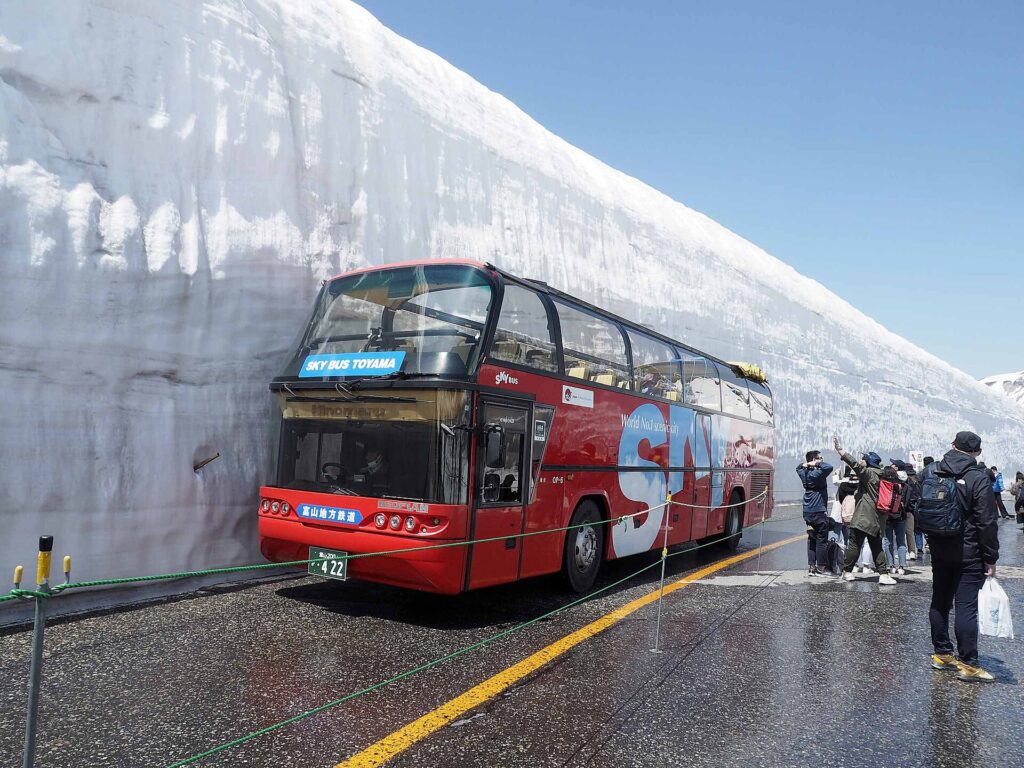
The 2020 edition gave three stars to both the Tateyama Kurobe Alpine Route and the Yuki-no-Otani snow corridor at Murodo. The route runs 37 km from Tateyama Station in Toyama to Ogizawa in Nagano, strung together from six kinds of transport — cable car, highland bus, electric bus, ropeway and more. Private cars cannot cross.
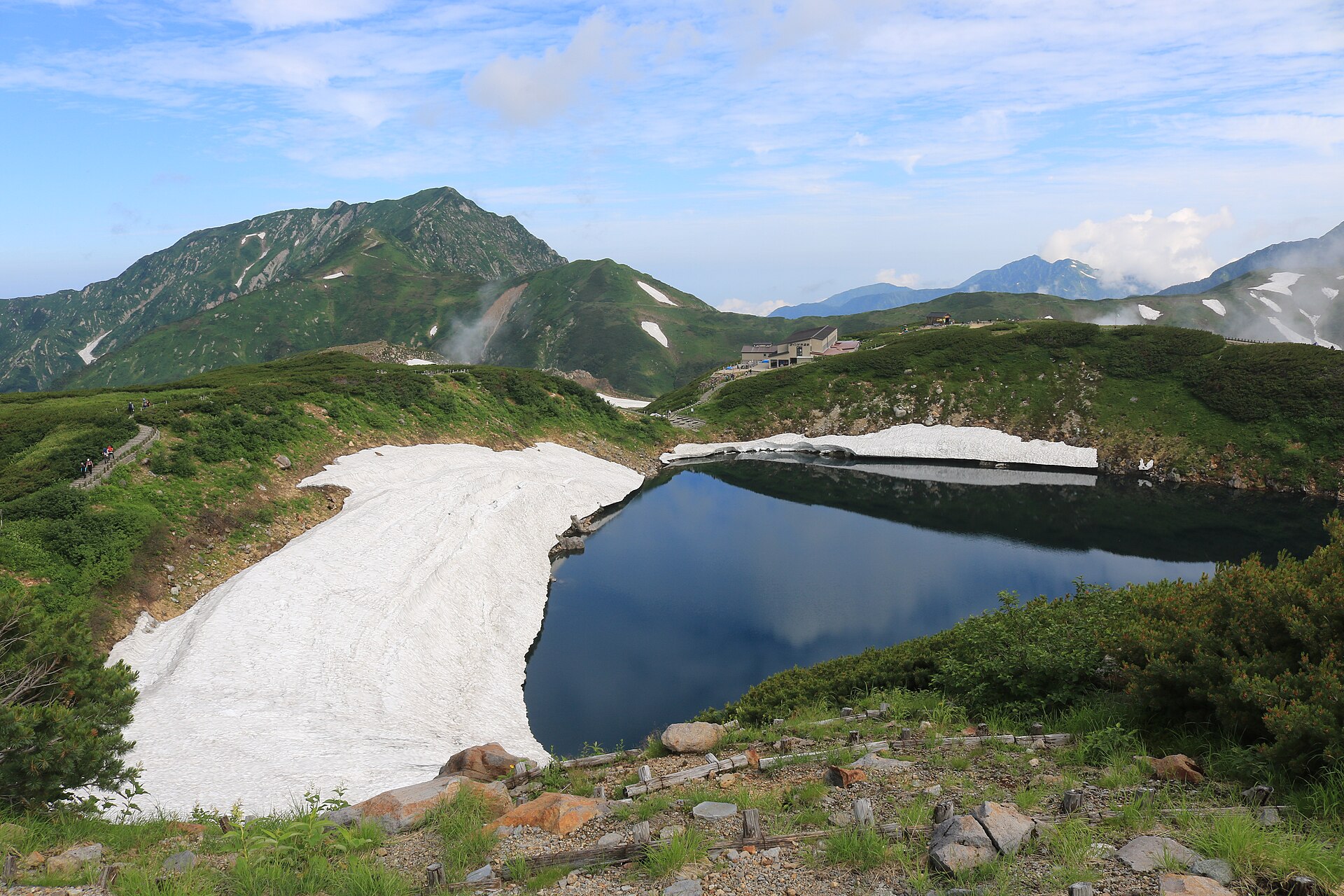
Around Murodo (2,450 m), you walk between snow walls cut open by snowploughs. Their height changes every year: in 2026 the highest point was about 12 m (in snowy years they approach 20 m). Here are the practical numbers the book does not carry.
| 2026 | What happens |
|---|---|
| 15 April – 30 November | Route open (fully closed in winter) |
| 15 April – 25 June | Yuki-no-Otani snow walk, scheduled |
| Late April – mid-May | Wall height and weather line up best. Also the busiest |
Murodo can sit near 0°C while the lowlands are in summer heat, and the wind is strong. In any season, bring a windproof warm layer, gloves, sunglasses, strong sunscreen for the glare off the snow, and waterproof shoes you can walk on snow in.
Six rides and how long each takes
The crossing is the experience. From Tateyama Station on the Toyama side to Ogizawa on the Nagano side, the scenery changes with every ride. Both tunnel sections are now run by electric buses.
| Section | Ride | Time (approx.) |
|---|---|---|
| Tateyama → Bijodaira | Tateyama Cable Car | 7 min |
| Bijodaira → Murodo | Tateyama Highland Bus | 50 min |
| Murodo → Daikanbo | Tateyama Tunnel Electric Bus | 10 min |
| Daikanbo → Kurobedaira | Tateyama Ropeway | 7 min |
| Kurobedaira → Kurobeko | Kurobe Cable Car | 5 min |
| Kurobe Dam → Ogizawa | Kanden Tunnel Electric Bus | 16 min |
Time on board adds up to only about two hours, but with transfers and stops at Murodo, Daikanbo and Kurobe Dam the crossing takes five to seven hours. Most people spend longest at Murodo: the snow corridor in spring, walks around Mikurigaike Pond in summer. Daikanbo is a lookout over the Kurobe valley, and the Tateyama Ropeway crosses the valley on a single span with no towers in between. You can walk across the top of Kurobe Dam, and from late June to mid-October it puts on its sightseeing water discharge.
Fares, and which passes work
You can buy tickets section by section, but most people buy a through ticket. Fares are set by the route operator and can change, so check the official site before you go.
| Section (adult) | One way | Round trip |
|---|---|---|
| Tateyama ⇄ Ogizawa (full route) | ¥10,940 | ¥19,680 |
| Murodo ⇄ Ogizawa | ¥6,850 | ¥12,300 |
The Japan Rail Pass is not valid on the Alpine Route, which is run by private companies. It does cover the Hokuriku Shinkansen from Tokyo or Kanazawa to Toyama, so ride to the gateway city on the pass and buy route tickets separately. If you enter and leave via Nagoya, JR West’s Alpine-Takayama-Matsumoto Area Tourist Pass (adult ¥24,500, 5 days) covers the whole Alpine Route plus JR lines between Nagoya and Toyama and between Shinano-Omachi and Nagoya. In 2026 it can be used from April 15 to November 10.
Getting there from Tokyo, Osaka and Kanazawa
There are two entrances: Tateyama Station on the Toyama side and Ogizawa on the Nagano side. First-timers usually enter from Toyama and exit to Nagano, or go up to Murodo and return the same way. Private cars cannot cross, so if you drive, either return to your starting side or use the paid car-forwarding service to have your car moved to the other side.
- 🚄 From Tokyo: Hokuriku Shinkansen to Toyama in about 2–2.5 hours, then the Toyama Chiho Railway to Tateyama Station in about 1 hour.
- 🚄 From Osaka or Kyoto: Limited Express Thunderbird to Tsuruga, then the Hokuriku Shinkansen to Toyama. About 4–4.5 hours to Tateyama Station in total.
- 🚄 From Kanazawa: about 20 minutes to Toyama on the Hokuriku Shinkansen. Stay the night before and set off first thing to beat the crowds at Murodo.
- 🚌 From the Nagano side: bus from JR Shinano-Omachi Station to Ogizawa. You can also enter at Ogizawa and exit on the Toyama side.
For the night before, Toyama city or Kanazawa work best on the Toyama side, and Omachi Onsen near Ogizawa on the Nagano side. In snow-corridor season, places to stay along the route fill up weeks ahead, so book your room as soon as your dates are set.
Viator tours with transfers and route tickets sell out in snow-wall season.
Doing the route on your own? Book Alpine Route tickets on Klook.
-

-
Japan WiFi, SIM & eSIM Guide 2026 — Stay Connected from Landing
▶ Stage 2 — Getting Ready Japan WiFi, SIM & eSIM 2026 — Pick One Before You Fl …
続きを見る
Ainokura, Suganuma, the Iwase House and the Murakami House are all two-star
Three-star 2: the gassho villages of Gokayama
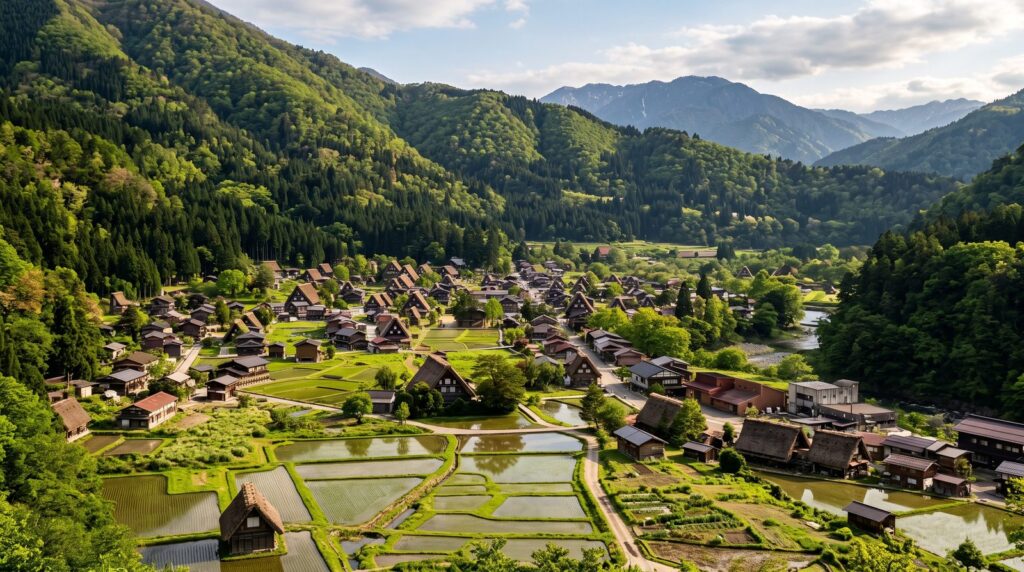
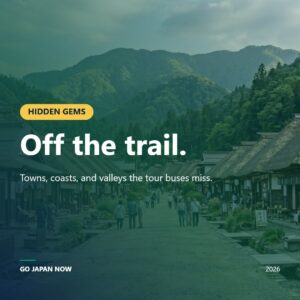
Toyama’s three stars are not all up in the mountains. The 2015 edition gave three stars to Gokayama, a group of gassho-style villages in the hills of Nanto that form, together with Shirakawa-go in Gifu, the UNESCO World Heritage site “Historic Villages of Shirakawa-go and Gokayama”.
In the same edition, the hamlets of Ainokura and Suganuma and the gassho farmhouses Iwase House and Murakami House each hold two stars. Ainokura is the larger settlement, with about 20 thatched houses on a slope; Suganuma is a small cluster by the Shogawa river. The Iwase House is one of the biggest gassho buildings in Gokayama and you can go inside.
Gokayama’s advantage is that it never fills up the way Shirakawa-go does. The 2020 edition added the Shogawa pleasure boat and Omaki Onsen as one-star — riding up the gorge to a hot spring reachable only by boat, a different way to spend the day from village-hopping.
A Klook day tour from Kanazawa: Gokayama, Shirakawa-go and Inami.
-
-
Hidden Gems Japan 2026 — Secret Spots Beyond the Tourist Trail
▶ Stage 4 — Go Deeper Hidden Gems in Japan 2026 — Secret Spots Beyond the Tourist Trail These hidden …
続きを見る
One on the route, two down on the plain
Two-star Kurobe Dam, Zuiryu-ji and the Toyama Glass Art Museum
The 2020 edition awards two stars to three sights. For planning, the distinction that matters is on the route or down on the plain.
| Sight | Where | Getting there |
|---|---|---|
| Kurobe Dam | On the Alpine Route | You pass it while crossing |
| Zuiryu-ji | Takaoka | About 10 minutes on foot from Takaoka Station |
| Toyama Glass Art Museum | Toyama city | A few minutes by tram from Toyama Station |
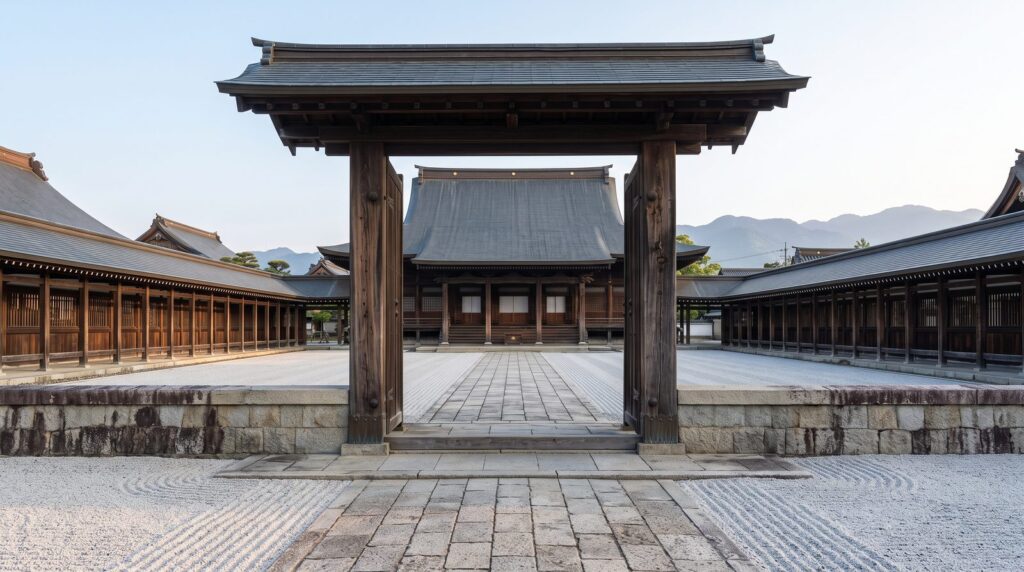
Kurobe Dam is a 186 m arch dam, with scheduled water releases from late June to mid-October. Zuiryu-ji is an early-Edo Zen temple whose gate, Buddha hall and Dharma hall are National Treasures, laid out in strict symmetry. The Toyama Glass Art Museum is worth it for the Kengo Kuma building itself, shared with the city library.
How to choose a ryokan or hotel in Toyama and Takaoka.
-

-
Where to Stay in Japan 2026 — Hotels, Ryokan & Budget Guide
▶ Stage 2 — Getting Ready Where to Stay in Japan 2026 — Stay Types, Best Areas, Ryokan, Capsules, Re …
続きを見る
Craft towns, hot springs and coastline. The densest cluster is Takaoka
The 14 one-star sights — Takaoka, Toyama, Kurobe, Nanto
Grouped by area, the one-star sights fall into four clusters.
| Area | One-star (edition) |
|---|---|
| Takaoka | Takaoka / Kanayamachi / Takaoka Mikurumayama Museum / Amaharashi Coast (2020) |
| Toyama city | Toyama Prefectural Museum of Art and Design / Mori Memorial Shusui Museum / the Yatsuo district (2020) |
| Kurobe & Tateyama | Unazuki Onsen / Kurobe Gorge Railway torokko train / Tateyama Museum (2020) |
| Nanto | Zuisen-ji / Johana Hikiyama Museum / Shogawa pleasure boat / Omaki Onsen (2020) |
Takaoka holds four one-star sights plus two-star Zuiryu-ji — five stars in one town. In half a day you can walk the 400-year-old metal-casting quarter of Kanayamachi and stand on the Amaharashi Coast, where the Tateyama range rises across the bay. The Kurobe Gorge Railway torokko train leaves from Unazuki Onsen, but it runs up a different valley from the Alpine Route, so the two cannot be combined in one day. The Yatsuo district is known for the Owara Kaze-no-Bon festival, held every year on 1–3 September.
-
-
Michelin Green Guide Hokkaido — Three-Star Shiretoko, Lake Mashu and Lake Akan, and How to Cover All 90 Starred Sights
Michelin Green Guide Hokkaido — Three-Star Shiretoko, Lake Mashu and Lake Akan, and How to Cover All …
続きを見る
Ordered by how you actually travel, not by how the book lists them
Model routes by length, with access and costs
| Days | Route | Stars collected |
|---|---|---|
| 1 day | Night in Toyama → cross the Tateyama Kurobe Alpine Route | ★★★2 ★★☆1 |
| 2 days | Above, plus Takaoka the day before (Zuiryu-ji, Kanayamachi, Amaharashi) | ★★★2 ★★☆2 ★☆☆4 |
| 3 days | Above, plus Gokayama (Ainokura and Suganuma) | ★★★3 ★★☆4 ★☆☆4 |
Crossing the Alpine Route takes five to seven hours including waits and stops, so a day trip from Tokyo is not realistic — stay the night before. Gokayama and Unazuki lie in opposite directions, so on a third day pick one.
Tokyo to Toyama is about 2 to 2.5 hours on the Hokuriku Shinkansen, and that leg is covered by the Japan Rail Pass. The Alpine Route, the Toyama Chiho Railway and the Kurobe Gorge Railway are not covered. A one-way through ticket from Tateyama to Ogizawa runs about ¥10,940 in 2026. Use the pass for the long haul and buy locally inside the prefecture.
The Japan Rail Pass covers the Hokuriku Shinkansen to Toyama.
-
-
Japan Rail Pass 2026: 7, 14 & 21-Day Prices + Shinkansen Rules
▶ Stage 2 — Getting Ready Japan Rail Pass 2026 — Prices, Which Shinkansen You Can Ride, and Whether …
続きを見る
Michelin Green Guide Toyama — FAQ
Is the Green Guide the same as the Michelin restaurant guide?
No, it is a different book. The Michelin Guide rates restaurants; the Green Guide rates destinations — landscapes, buildings, gardens, festivals and nature. The Japan volume is published in France as the Michelin Green Guide Japan.
Which sights in Toyama have three stars?
The Tateyama Kurobe Alpine Route and the Yuki-no-Otani snow corridor at Murodo in the 2020 edition, and Gokayama in the 2015 edition. There are 24 starred sights in total.
Are these the current ratings?
Each star is given with the edition that awarded it. Ratings are reviewed with every edition, so these are presented as the ratings from the 2015 and 2020 editions.
How many starred sights can I see in a day?
Crossing the Alpine Route alone takes in two three-star entries and passes two-star Kurobe Dam. Add Takaoka the day before and you reach eight stars in two days; add Gokayama on a third day and you have all three three-star sights.
Can I use the Japan Rail Pass?
Yes for the Hokuriku Shinkansen from Tokyo, Osaka or Kanazawa to Toyama. The Alpine Route, the Toyama Chiho Railway and the Kurobe Gorge Railway are privately run and not covered, so buy those separately.
When are the snow walls highest?
The 2026 Yuki-no-Otani walk is scheduled for 15 April to 25 June, and the walls are highest from mid to late April. Late April to mid-May gives the best combination of wall height and weather.
Can I do the Alpine Route and the Kurobe Gorge Railway on the same day?
No. They run up separate valleys and are not connected, so plan them on different days.
-
-
Michelin Green Guide Japan — Every Starred Place, Region by Region
Michelin Green Guide Japan — Every Starred Place, Region by Region The Michelin Green Guide awards s …
続きを見る
Star ratings: ★★★ worth a special journey / ★★☆ worth a detour / ★☆☆ interesting. Stars come from the 4th (2015) or 6th (2020) edition of the Michelin Green Guide Japan, as noted for each sight, and are reviewed with every edition. “Starred sights” counts every entry the guide awards stars to — including buildings inside a site, museum pieces, viewpoints and routes — so it is not a count of separate locations.
Photo credits: Snow Corridor on the Tateyama Kurobe Alpine Route with a bus: Comyu, CC BY-SA 4.0 (Wikimedia Commons) / Mikurigaike pond at Murodo on the Tateyama Kurobe route: Alpsdake, CC BY-SA 4.0 (Wikimedia Commons)