History of Japan
From Samurai to Modern Society
The history of Japan spans over 2,000 years of recorded civilization — and what sets it apart for travelers is how visibly that history still exists. Castle walls, bullet trains, temple gardens, and ancient shrines all make sense once you know the story behind them.
The history of Japan is visible everywhere you go as a traveler — in castle walls built by rival warlords, in wooden post towns that survived the Meiji modernization, in ancient pilgrimage routes still walked today. Japan doesn’t archive its past: it inhabits it. This guide gives you the historical context that makes every site you visit click.
- You want to understand why Japan looks and feels the way it does before you arrive
- You’re visiting Kyoto, Nara, Hiroshima, or any of Japan’s major historical sites
- You want the traveler-first version — enough context to make everything make sense, without the textbook
- Ancient Japan — Mythology, Rice, and the Roots of Shinto
- The Classical Era — Nara, Heian, and the Birth of Japanese Culture
- Feudal Japan — Samurai, Shoguns, and Centuries of Conflict
- The Edo Period — Peace, Isolation, and Cultural Flowering
- Meiji to Modern — The World’s Most Dramatic National Transformation
- Japan’s History in Your Itinerary
- FAQ — History of Japan
Ancient Japan — Mythology, Rice, and the Roots of Shinto
Mythology, Rice, and the Roots of Shinto
Book Japan history & culture tours — castles, shrines & samurai experiences
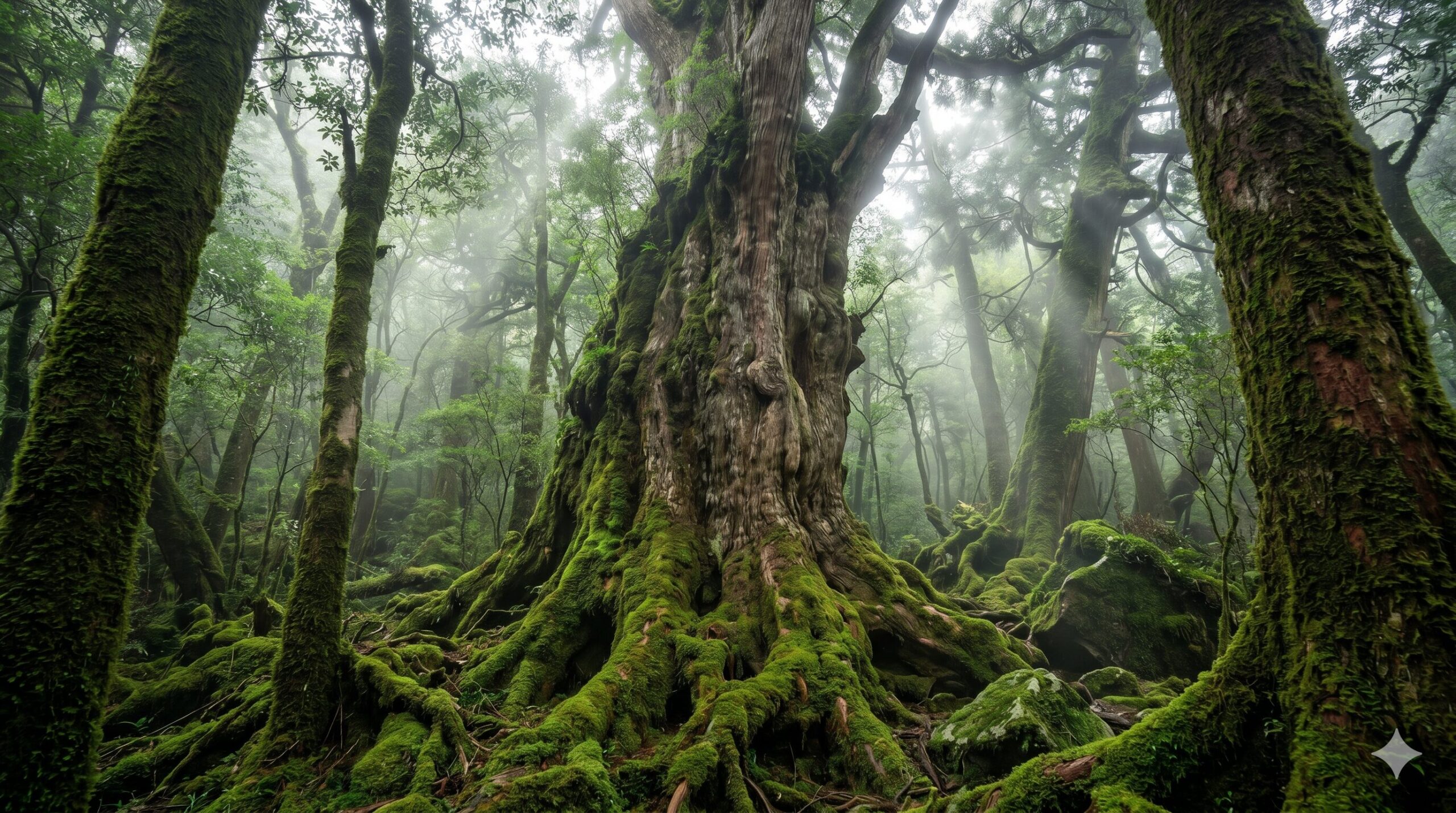
Japan has been continuously inhabited for over 30,000 years. The Jomon period (roughly 14,000–300 BCE) represents one of the world’s earliest pottery-making cultures — the cord-pattern ceramics left behind are among the oldest fired clay objects ever found anywhere on earth. This isn’t just an archaeological footnote: the Jomon relationship with nature, spirits, and place directly shaped the animist worldview that evolved into what we now call Shinto.
Rice agriculture arrived from mainland Asia around 300 BCE with the Yayoi people, transforming Japan from a hunter-gatherer society into an agrarian one. Rice became the economic foundation, the cultural currency, and the measure of wealth it would remain for centuries. The Japanese words for “meal” (gohan) and “cooked rice” are the same word today — a linguistic echo of that original transformation.
The earliest Japanese state emerged in the Yamato period (roughly 3rd–7th centuries CE), centered in the Nara region of Honshu. The imperial system — still functioning in the same unbroken lineage today — dates to this era. Shinto, Japan’s indigenous animist tradition, was formalized during this period as a system of reverence for nature spirits (kami), ancestors, and sacred places. Every torii gate you pass in modern Japan marks the boundary of a sacred space whose origins reach back here — including the Ise Grand Shrine, considered Shinto’s holiest site, whose architectural design has remained unchanged for over 1,300 years.
Buddhism arrived from Korea and China in the 6th century CE and was adopted enthusiastically by the Yamato court — as both a spiritual system and a political technology. The elaborate temple complexes visible across Japan today are partly monuments to state power as much as religious devotion. The fusion of Shinto and Buddhism created a distinctly Japanese spiritual landscape that still shapes modern culture: Shinto for life events, nature, and seasonal celebration; Buddhism for philosophical contemplation and death rituals. Both remain active in everyday Japanese life.
The Classical Era — Nara, Heian, and the Birth of Japanese Culture
Nara, Heian, and the Birth of Japanese Culture
Explore ancient Kyoto & Nara — temple tours, deer parks & imperial gardens
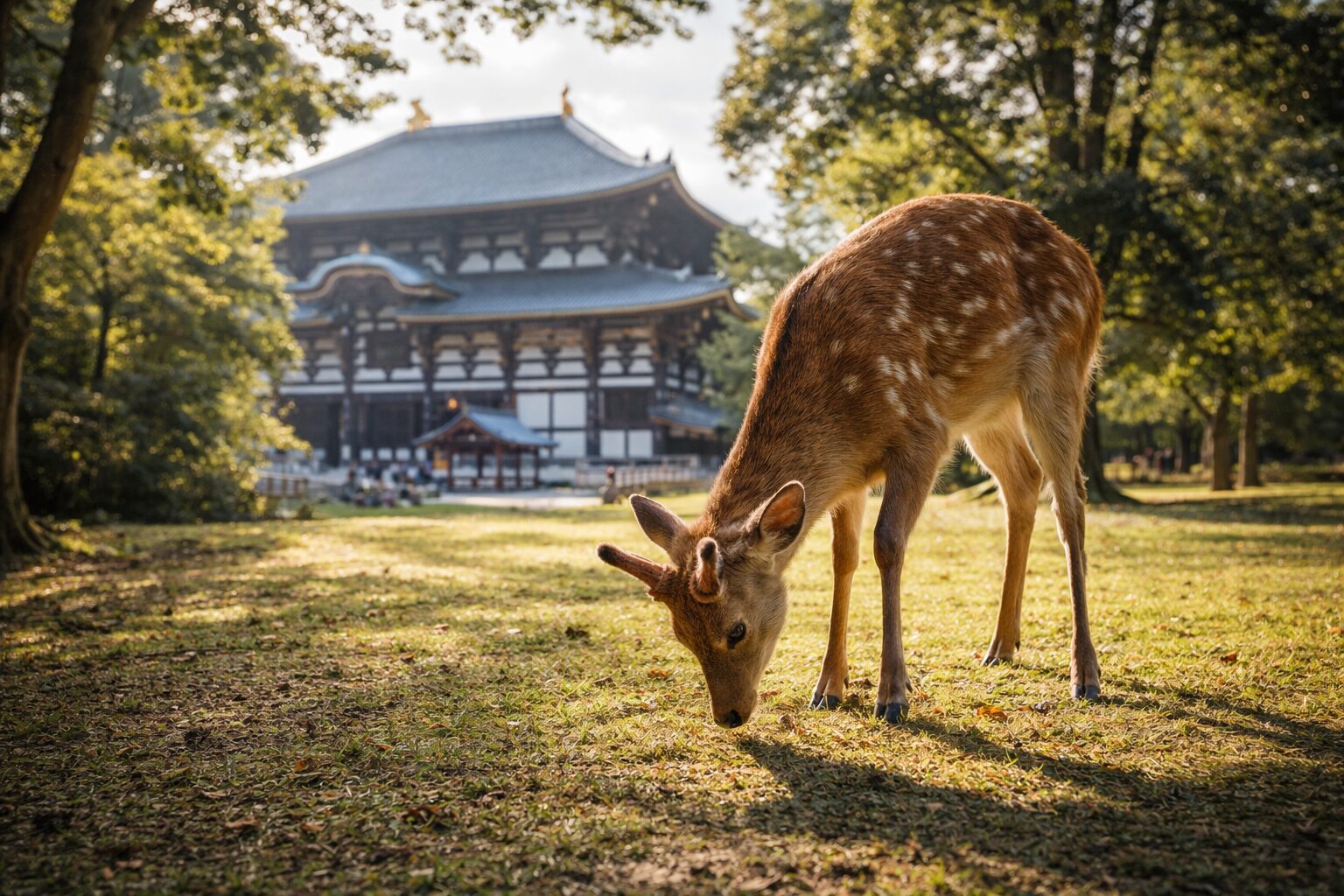
Japan’s first permanent capital was established at Nara in 710 CE, beginning a period of intensive cultural borrowing from Tang Dynasty China. The court adopted Chinese writing systems, administrative structures, urban planning grids, and artistic forms — then proceeded to transform all of them into something distinctly Japanese. The great Todai-ji temple, completed in 752 CE, houses the world’s largest bronze Buddha and remains one of the most awe-inspiring structures in Japan. The 1,200 semi-wild sika deer that roam Nara Park today are considered sacred messengers of the gods, and they have been protected for as long as the temple has stood.
The capital moved to Kyoto (then called Heian-kyo) in 794 CE, beginning the Heian period (794–1185) — widely considered the golden age of Japanese court culture. The aristocratic court produced literary and artistic achievements that remain central to Japanese cultural identity. The Tale of Genji, written by court lady Murasaki Shikibu around 1000 CE, is considered the world’s first novel. The aesthetic sensibility of the Heian era — refinement, indirection, sensitivity to seasonal change, atmosphere over direct statement — became embedded in Japanese cultural DNA. The concept of mono no aware (the bittersweet awareness of impermanence) comes from this period and still shapes how the Japanese describe and experience beauty.
For travelers, Kyoto is the living museum of this entire era. The Gion district, the imperial palace grounds, Kinkaku-ji (the Golden Pavilion), Arashiyama’s bamboo groves, and the densely layered temple districts all trace their origins to patronage and urban development that began in the Heian period. The imperial palace is still geographically at the center of the city — a reminder that Kyoto served as Japan’s capital for over a thousand years.
Feudal Japan — Samurai, Shoguns, and Centuries of Conflict
Samurai, Shoguns, and Centuries of Conflict
Samurai & castle experiences — sword training, ninja tours & castle walks
The Heian period ended as provincial military clans accumulated power that eventually eclipsed the court aristocracy. The Kamakura shogunate (1185–1333) established Japan’s first military government, marking the beginning of nearly 700 years of warrior rule that would only end in 1868. The samurai class and its governing code of bushido — emphasizing loyalty, martial skill, honor, frugality, and the acceptance of death — became the dominant social and cultural force in Japan for this entire period, and left an imprint on Japanese values that remains clearly visible in modern workplaces and social behavior.
The cultural output of the feudal era is extraordinary given its violent context. Zen Buddhism, introduced from China in the 12th century, became deeply influential on samurai culture and gave rise to some of Japan’s most distinctive and recognizable art forms: the tea ceremony (chado), ink painting (sumi-e), Noh theater, and the dry landscape garden (karesansui). These forms were developed in direct relationship to Zen ideas about presence, impermanence, and the value of empty space. The famous rock garden at Ryoan-ji in Kyoto — fifteen stones, raked white gravel, and nothing else — dates to this era and remains one of the most analyzed works of art in the world.
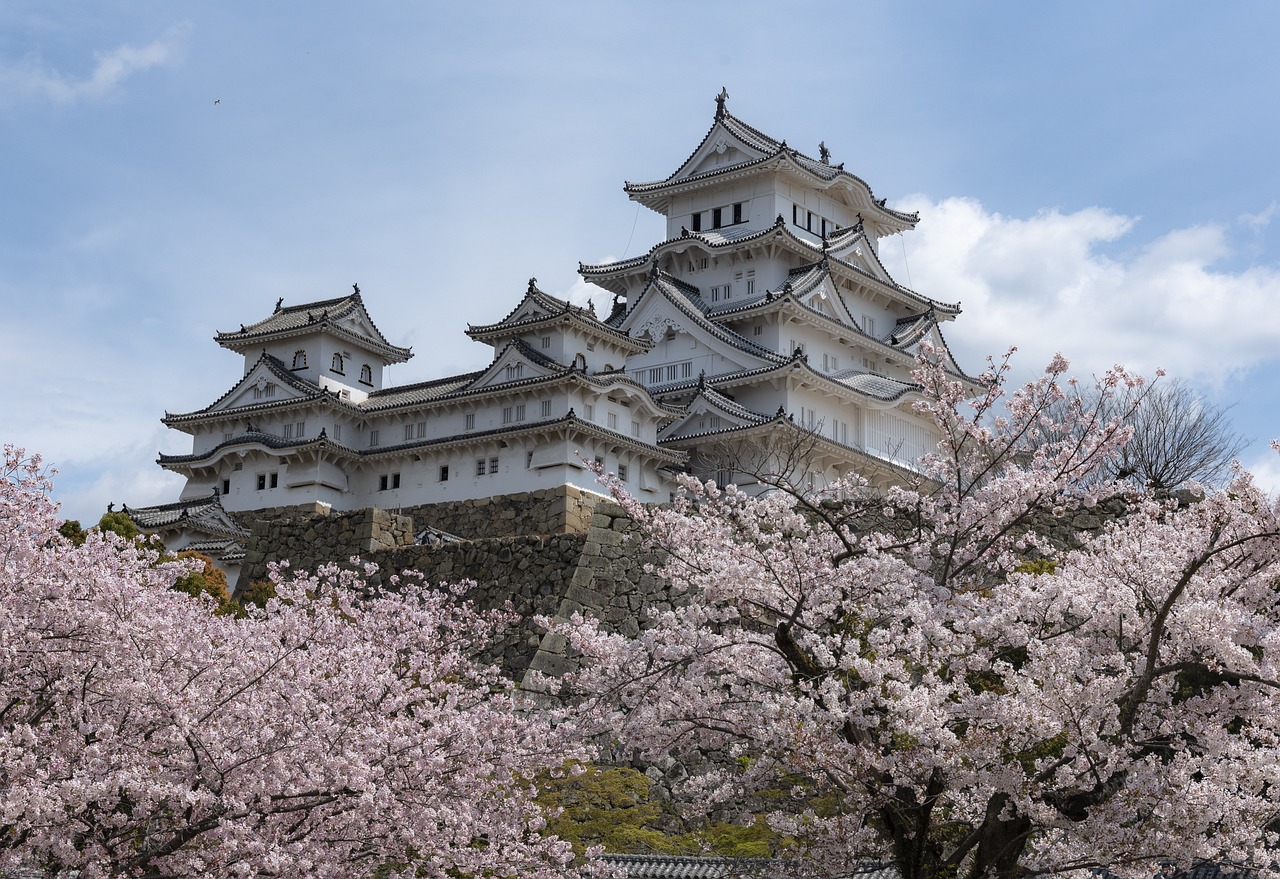
The 15th and 16th centuries brought the Sengoku period — a century of near-constant civil war as rival warlords (daimyo) battled for control of Japan. This era produced Japan’s most famous historical figures: Oda Nobunaga, whose ruthless military innovations unified much of Japan before his assassination in 1582; Toyotomi Hideyoshi, a peasant-born general who completed unification; and Tokugawa Ieyasu, who won the decisive Battle of Sekigahara in 1600 and established the dynasty that would rule for the next 268 years. The castles built during this period — Himeji, Osaka, Nagoya, Matsumoto — are among Japan’s most magnificent architectural achievements, and all are still standing.
The Edo Period — Peace, Isolation, and Cultural Flowering
Peace, Isolation, and Cultural Flowering
Discover Edo-era Japan — Asakusa, shitamachi neighborhoods & traditional crafts
The Tokugawa shogunate established its capital at Edo (modern Tokyo) in 1603 and governed Japan for 268 years of extraordinary stability. The defining policy was sakoku — deliberate isolation from the outside world. Foreign trade was restricted to a single Dutch trading post on an artificial island in Nagasaki harbor. Christianity was banned and persecuted. Japanese citizens could not travel abroad or build ocean-going vessels. The policy was designed to prevent European colonial influence and the political destabilization that came with Christianity — and it worked: Japan remained fully independent while most of Asia came under European colonial control.
The cultural consequences of this isolation were profound. Freed from external influence, Japanese culture developed with unusual internal coherence and self-reference. The merchant class (chonin), newly prosperous under Edo’s stable economy, became major cultural patrons. Ukiyo-e woodblock prints — now iconic in world art history — were originally mass-market consumer goods sold at Edo’s markets. Kabuki theater evolved from street performance into a spectacular, highly codified art form. Sumo wrestling formalized into the institution it remains today. The literary and visual culture of the Edo period is extraordinary by any standard, produced at remarkable volume and quality by a literate, urbanized population living under conditions of deliberate isolation.
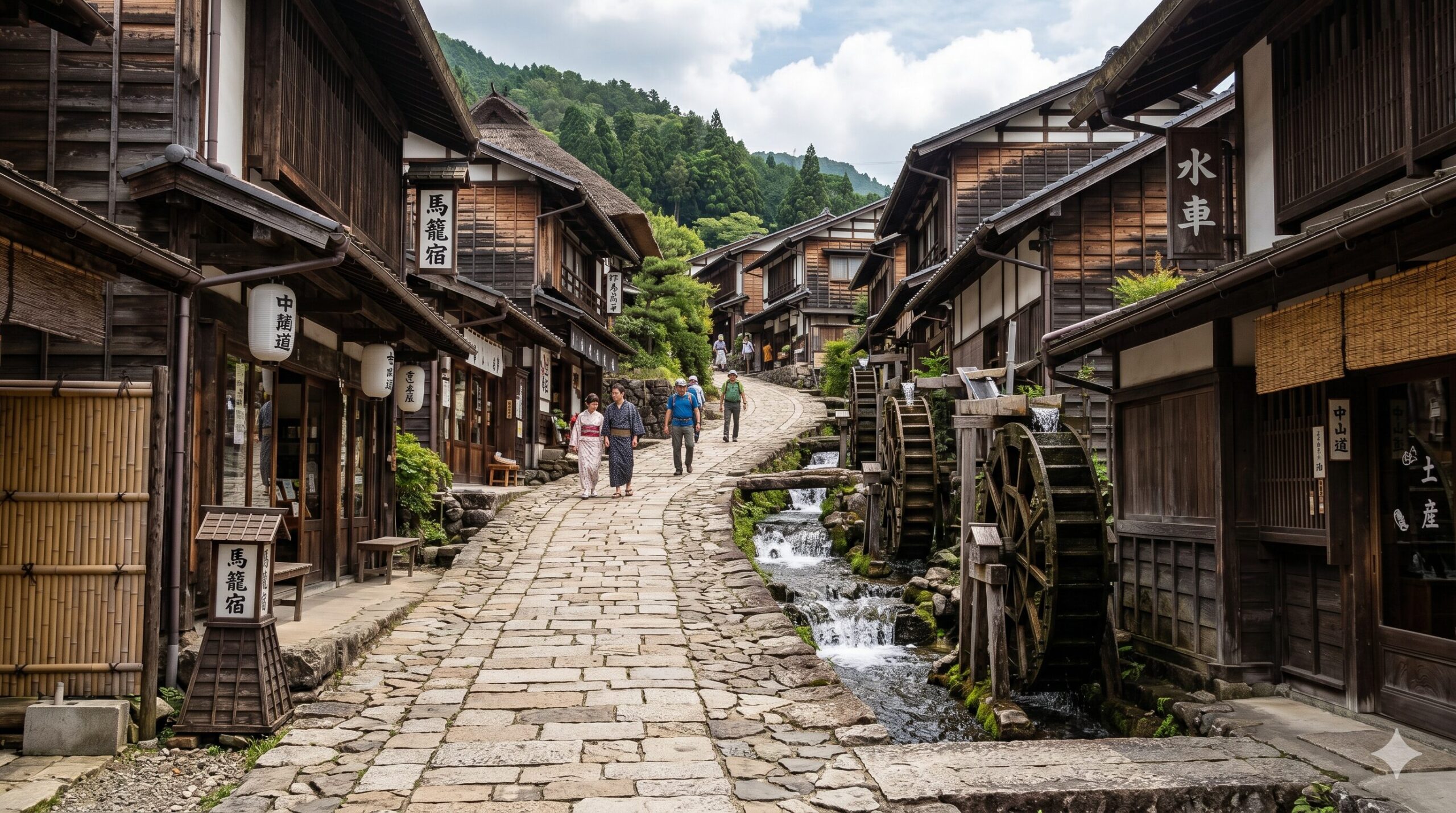
Edo itself grew into one of the world’s largest cities — with an estimated population of one million by the 18th century, larger than London or Paris at the time. For travelers, the Edo era is visible in Tokyo’s Asakusa district, in the well-preserved post towns along the old Nakasendo highway (Narai-juku and Magome remain almost entirely Edo-period in appearance), and in the geisha districts of Kyoto’s Gion and Pontocho neighborhoods.
Meiji to Modern — The World’s Most Dramatic National Transformation
The World’s Most Dramatic National Transformation
Stay connected across modern Japan — SIM & eSIM for foreign visitors, no contract
US Commodore Matthew Perry’s arrival with his “Black Ships” in 1853 — demanding Japan open its ports to foreign trade — ended the Edo era’s isolation and triggered one of history’s most extraordinary national transformations. The Meiji Restoration of 1868 abolished the shogunate, restored imperial rule, and launched Japan’s deliberate modernization on Western models with astonishing speed and determination.
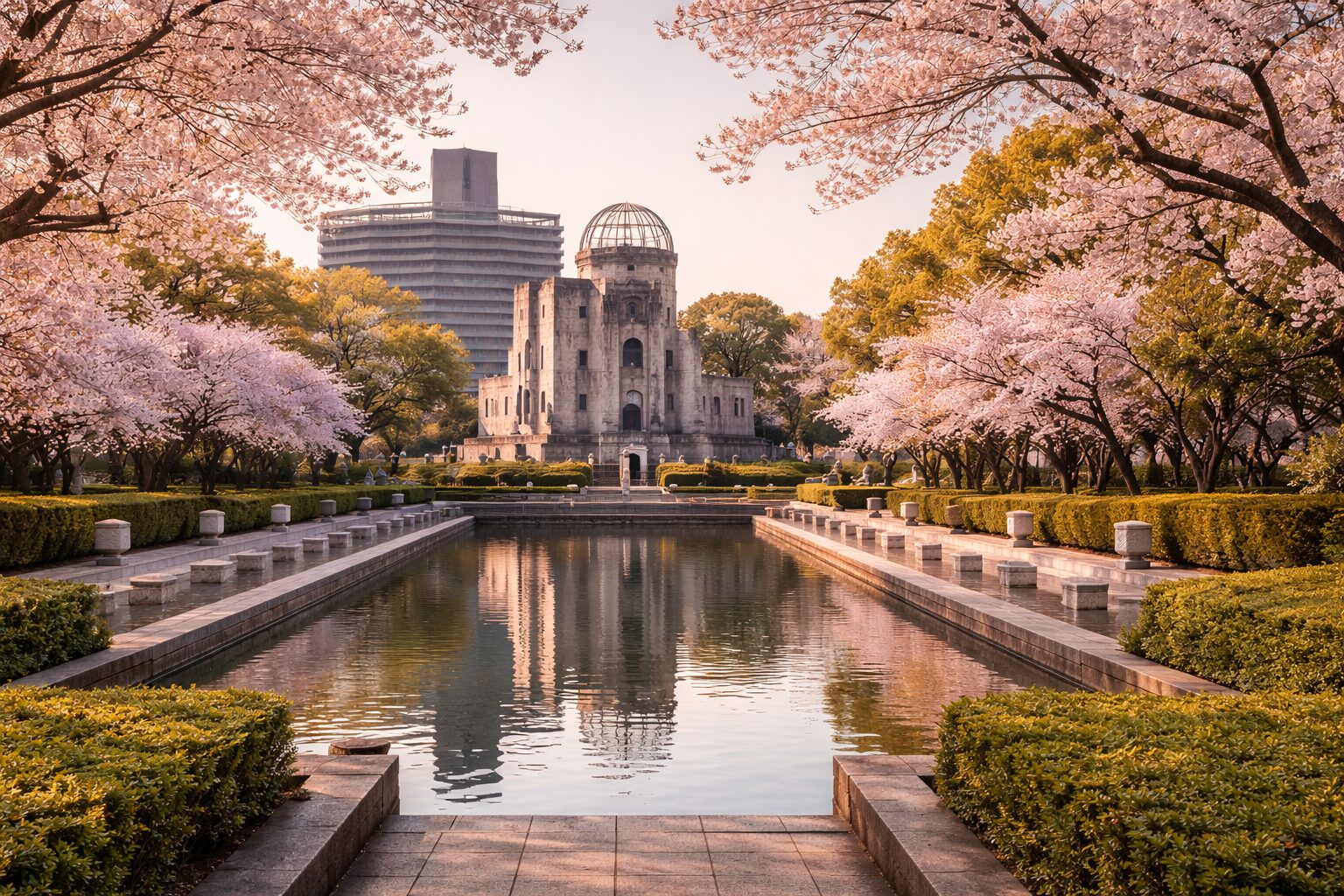
Within decades, Japan had a modern constitution (1889), a national railway network, universal compulsory education, a professional military modeled on European armies, and was successfully competing industrially and militarily with European powers. By 1905, Japan had defeated Russia in the Russo-Japanese War — the first time an Asian nation had defeated a European power in a modern conflict. The following decades brought colonial expansion, militarism, and ultimately catastrophic defeat in World War II. The atomic bombings of Hiroshima (August 6, 1945) and Nagasaki (August 9, 1945) are among the most significant events in 20th-century history. Their sites are now among Japan’s most visited destinations — particularly Hiroshima’s Peace Memorial Park, which receives over one million visitors annually and remains one of the most emotionally powerful sites in the world.
Japan’s post-war recovery was equally remarkable. Under US occupation, Japan rebuilt its institutions, redirected military spending into manufacturing, and created an economic miracle that made it the world’s second-largest economy by the 1980s. The country also emerged as one of the world’s most significant cultural exporters — manga, anime, video games, design, and food culture — completing an arc from feudal isolation to global cultural influence in roughly 150 years. The Shinkansen bullet train, launched in 1964 for the Tokyo Olympics, became one of the defining symbols of that transformation, and you can ride it today between cities that were still largely feudal a century and a half ago.
Japan’s History in Your Itinerary
Where each era is most visible today
| Era | Best Destination | What to See |
|---|---|---|
| Ancient Japan before 710 CE |
Ise / Nara / Yakushima | Ise Grand Shrine, kofun burial mounds, ancient cedar forests, early Shinto sites |
| Classical Era 710–1185 CE |
Nara / Kyoto | Todai-ji, Horyu-ji, Nara deer park, imperial palace, Gion district |
| Feudal Japan 1185–1600 |
Kyoto / Himeji / Osaka | Himeji Castle, Osaka Castle, Ryoan-ji rock garden, samurai districts |
| Edo Period 1603–1868 |
Tokyo / Nakasendo towns | Asakusa, Edo-Tokyo Museum, Narai-juku & Magome post towns, Matsumoto Castle |
| Meiji–Modern 1868–present |
Tokyo / Hiroshima / Nagasaki | Meiji Jingu, Peace Memorial Park, Dejima island, Shinkansen routes |
Plan your Japan trip — from ancient cities to hidden gems
FAQ — History of Japan
Common questions answered for travelers