Tateyama Kurobe Alpine Route: The 2026 Snow Wall & Travel Guide
The Tateyama Kurobe Alpine Route is Japan’s most spectacular mountain crossing — famous for 20-metre snow walls, a chain of six mountain transport modes, and alpine views from 2,450 m at Murodo. This 2026 guide covers opening dates, fares, each leg of the journey, and exactly how to reach it from Tokyo, Osaka and Kanazawa.
What Is the Tateyama Kurobe Alpine Route?
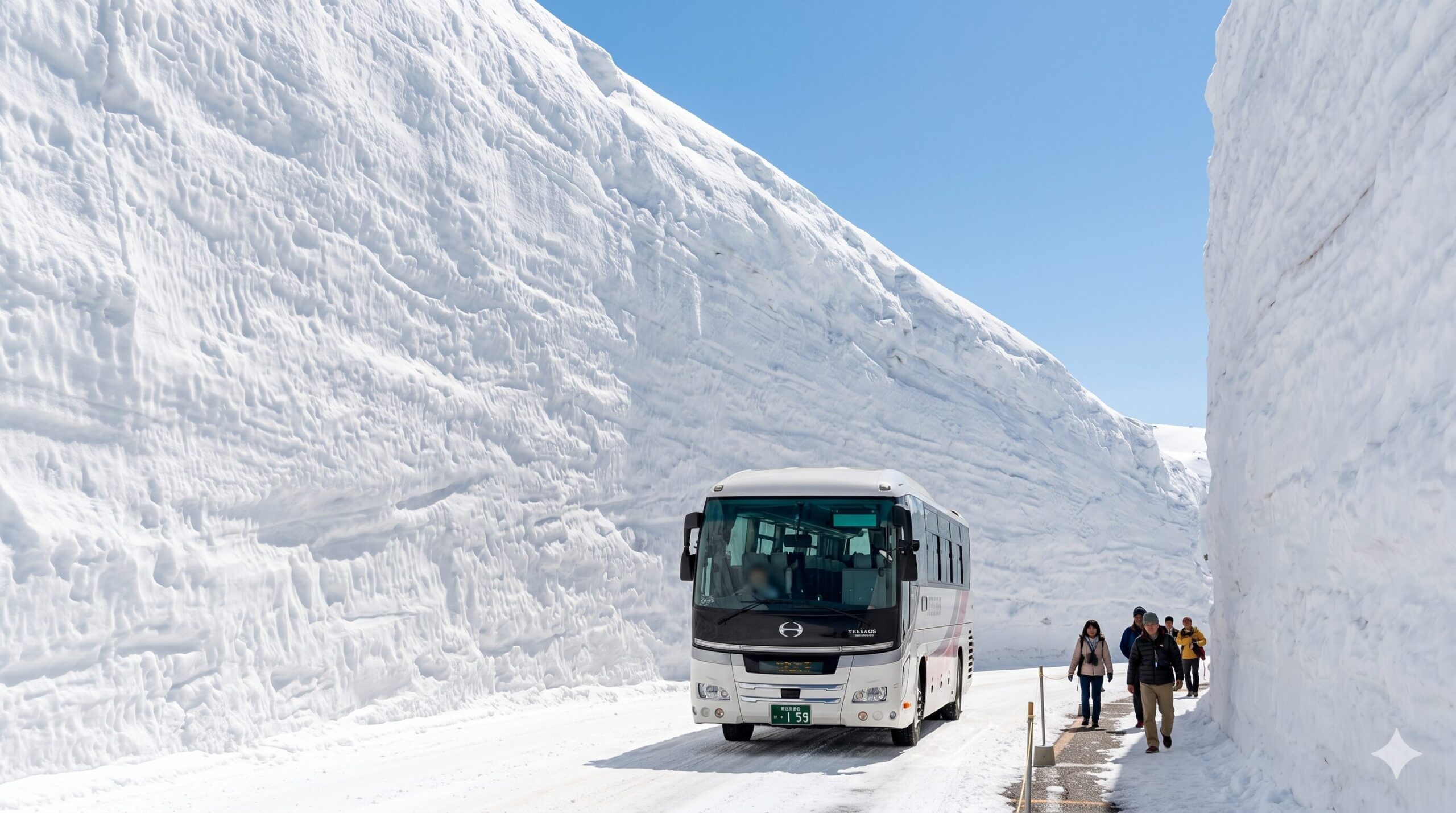
The Tateyama Kurobe Alpine Route is a 37-kilometre sightseeing corridor that climbs straight through the Northern Japan Alps, linking Tateyama in Toyama Prefecture with Ōmachi in Nagano Prefecture. Opened in 1971, it was carved across terrain so steep and so deeply buried in snow that no ordinary road could ever cross it. Instead, travellers are carried over the mountains by a relay of cable cars, a highland bus, electric tunnel buses and a single-span ropeway — switching vehicles as the scenery shifts from beech forest to alpine tundra.
The high point is Murodo, at 2,450 metres — the highest station on the route and the launch pad for the snow walls, volcanic ponds and easy alpine walks that make this trip famous. Along the way you also pass the 186-metre Kurobe Dam, Japan’s tallest, whose thunderous summer water discharge is a spectacle in its own right. Because private cars cannot drive the route, the whole crossing has a relaxed, car-free rhythm that suits first-time visitors and seasoned hikers alike.
Why it belongs on your Japan itinerary
Few places let you go from a city train platform to a 2,450-metre alpine plateau in a single morning, without hiking boots or a guide. The route packs glaciated-looking snow corridors, hot-spring valleys, a giant dam and panoramic ropeway rides into one ticketed journey that is fully signposted in English. It pairs naturally with nearby Kanazawa, Takayama and the Toyama coast, making it an easy add-on to a Central Japan trip.
Planning a wider trip? The Alpine Route slots neatly into a Central Japan loop.
Best Time to Visit and the 2026 Snow Walls
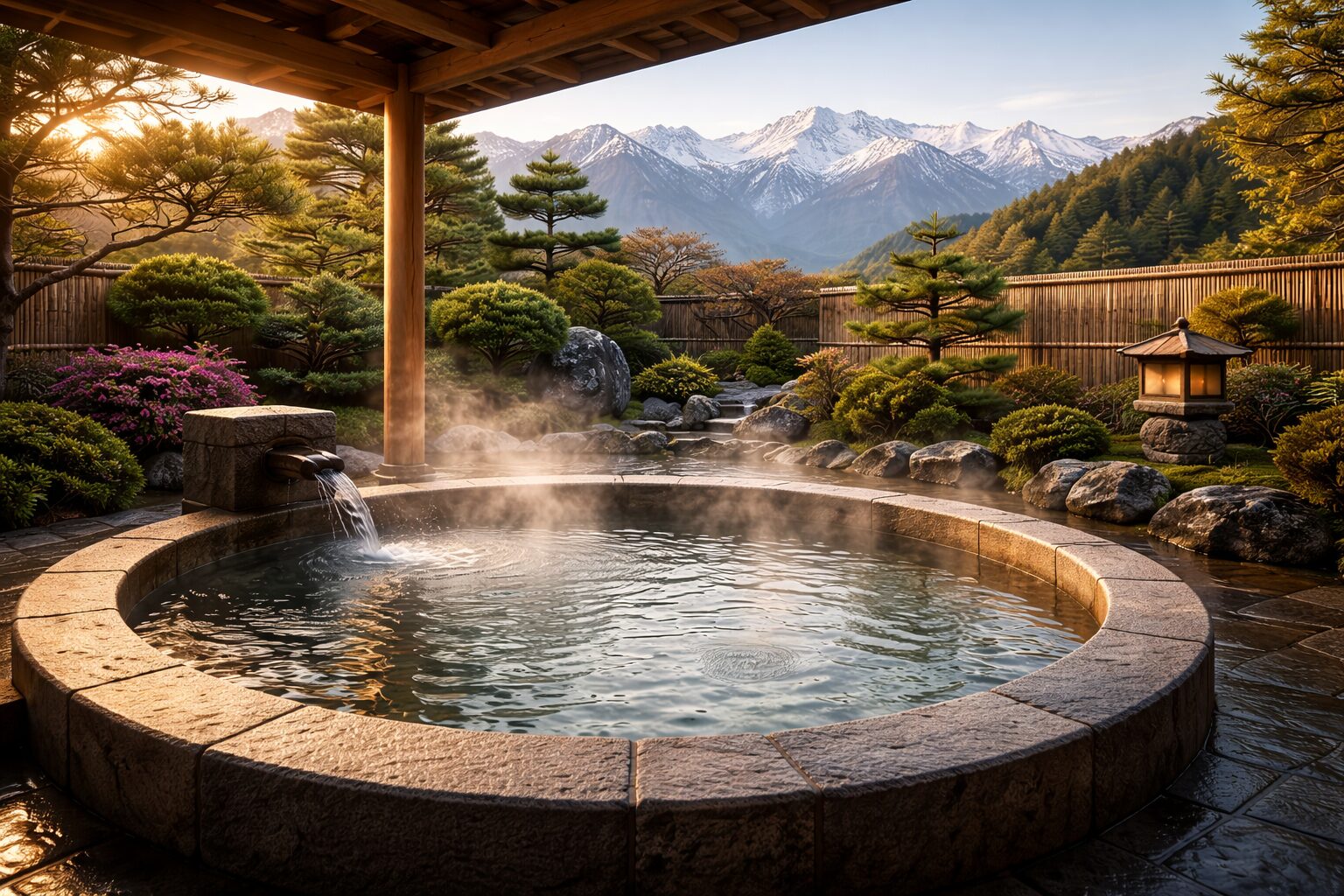
The route runs seasonally. For 2026 the Alpine Route is open from 15 April to 30 November, then closes for winter. The single most popular reason to come is the Yuki-no-Otani Snow Wall Walk near Murodo, where ploughs cut a corridor through snow that can stand up to 20 metres high. In 2026 the snow corridor is scheduled to be walkable from 15 April to 25 June, with the walls at their tallest in mid-to-late April and gradually shrinking through June.
Season-by-season at a glance
| Season | What to expect | Crowds |
|---|---|---|
| Mid-Apr – late Jun | The 20 m snow walls and the Snow Wall Walk; cold, bright alpine air | Very high |
| Jul – Aug | Green alpine meadows, wildflowers, easy hiking, dam water discharge | High |
| Late Sep – early Nov | Japan’s earliest autumn colours sweeping down the mountainsides | High |
| Dec – mid-Apr | Route closed for winter | Closed |
If the snow walls are your goal, aim for late April to mid-May: the walls are near their peak and the weather is more settled than at the mid-April opening, when storms can briefly suspend services. Whatever the month, pack layers — Murodo can sit near freezing even when Toyama city is in T-shirt weather.
See the snow walls without the logistics — guided day tours sell out fast in April–May.
-
-
Japan festivals 2026: Complete Seasonal Guide to Cherry Blossoms, Matsuri & Koyo
▶ Stage 3 — Experiences Japan Festivals 2026 — Pick Your Season, Festival and Stay Choose when to go …
続きを見る
The Transport Modes, Stop by Stop
The crossing is the experience. Between Tateyama Station (Toyama side) and Ōgizawa (Nagano side) you change vehicles six times, each leg revealing a different face of the mountains. Note that the route’s last trolleybus was retired at the end of 2024 — both tunnel sections now run on battery electric buses.
| Leg | Mode | Approx. time |
|---|---|---|
| Tateyama → Bijodaira | Tateyama Cable Car | 7 min |
| Bijodaira → Murodo | Highland Bus (Snow Corridor) | ~50 min |
| Murodo → Daikanbō | Tateyama Tunnel Electric Bus | ~10 min |
| Daikanbō → Kurobedaira | Tateyama Ropeway (single span) | 7 min |
| Kurobedaira → Kurobeko | Kurobe Cable Car (underground) | 5 min |
| Kurobe Dam → Ōgizawa | Kanden Tunnel Electric Bus | ~16 min |
The highlights you’ll actually stop for
Murodo (2,450 m) is where most travellers spend the longest. It is the trailhead for the snow walls in spring and gentle walks past the Mikuriga-ike volcanic ponds in summer. Daikanbō offers a sweeping observation deck over the Kurobe valley, while the Tateyama Ropeway crosses the gorge in a single span with no support towers — an unobstructed, postcard-perfect ride. Finally, you walk across the crest of the Kurobe Dam; from late June to mid-October it releases a roaring, rainbow-flecked curtain of water.
New to Japan’s mountain transport? Our transport hub explains passes, IC cards and how the regional networks connect.
Tickets, Fares and Passes 2026
You can buy tickets leg by leg, but almost everyone buys the through ticket that covers the whole crossing in one go. As a 2026 guide, the full one-way traverse (Tateyama → Ōgizawa) costs around ¥10,940, with a round trip back to your starting side closer to ¥21,880. Prices are set by the route operator and can change, so always confirm at the official counter or your booking platform.
| Ticket | Guide price (2026) | Best for |
|---|---|---|
| One-way traverse | ~¥10,940 | Crossing to the other side (e.g. Toyama → Nagano) |
| Round trip | ~¥21,880 | Returning to the same side |
| Murodo round trip (snow walls) | From ~¥7,500 | Snow Wall Walk visitors short on time |
Does the Japan Rail Pass cover it?
No. The Alpine Route is run by private mountain operators, so the Japan Rail Pass does not cover the crossing itself. What the pass does do is get you to the gateway cities — Toyama and Nagano — on the Hokuriku Shinkansen for free, which is where most of the long-distance cost sits. Many visitors pair a rail pass for the journey there with a separate Alpine Route ticket for the mountain section.
Skip the ticket queue. Book the full Alpine Route transportation set (inc. highland bus & cable car) before you arrive.
How to Get There from Tokyo, Osaka and Kanazawa

The route has two gateways: Tateyama Station (Toyama side) and Ōgizawa (Nagano side, via Shinano-Ōmachi). Most first-timers enter from the Toyama side and exit toward Nagano, or simply return the way they came.
From Tokyo
Take the Hokuriku Shinkansen from Tokyo to Toyama (about 2 to 2.5 hours), then transfer to the Toyama Chihō Railway to Tateyama Station (around 60–65 minutes). A March 2026 timetable revision added faster limited-express services toward Tateyama with better Shinkansen connections.
From Osaka & Kyoto
The simplest path is the Thunderbird limited express to Tsuruga, then the Hokuriku Shinkansen to Toyama, before the local line to Tateyama. Allow roughly 4 to 4.5 hours from Osaka.
From Kanazawa
Kanazawa is the closest major city: a short Hokuriku Shinkansen hop to Toyama (about 20 minutes) puts you on the local line to Tateyama. It makes Kanazawa an ideal overnight base before an early start.
Getting to the gateway cities is the big cost. A rail pass covers the Shinkansen to Toyama and Nagano.
-

-
Japan Rail Pass 2026 — Is It Worth It? Complete Guide
▶ Stage 2 — Getting Ready Japan Rail Pass 2026 — Does It Pay Off? Pick and Buy in 4 Steps Check whet …
続きを見る
WiFi and What to Pack for the Mountains

Stay connected
A pocket WiFi router or a Japan travel SIM/eSIM keeps your maps, tickets and translation apps working from the city all the way to Murodo. Sakura Mobile is the option we recommend for visitors — English support, unlimited data plans, and airport or hotel pickup. Order it before you fly so it’s waiting on arrival; you can check Sakura Mobile’s traveller plans here.
What to pack
Even in spring, Murodo can hover around freezing with strong wind. Bring a warm windproof layer, gloves, sunglasses and high-SPF sunscreen (the snow glare is intense), plus sturdy waterproof shoes for the snow corridor.
Don’t risk dead zones on the mountain. Sakura Mobile delivers unlimited data with English support.
Where to Stay Near the Alpine Route
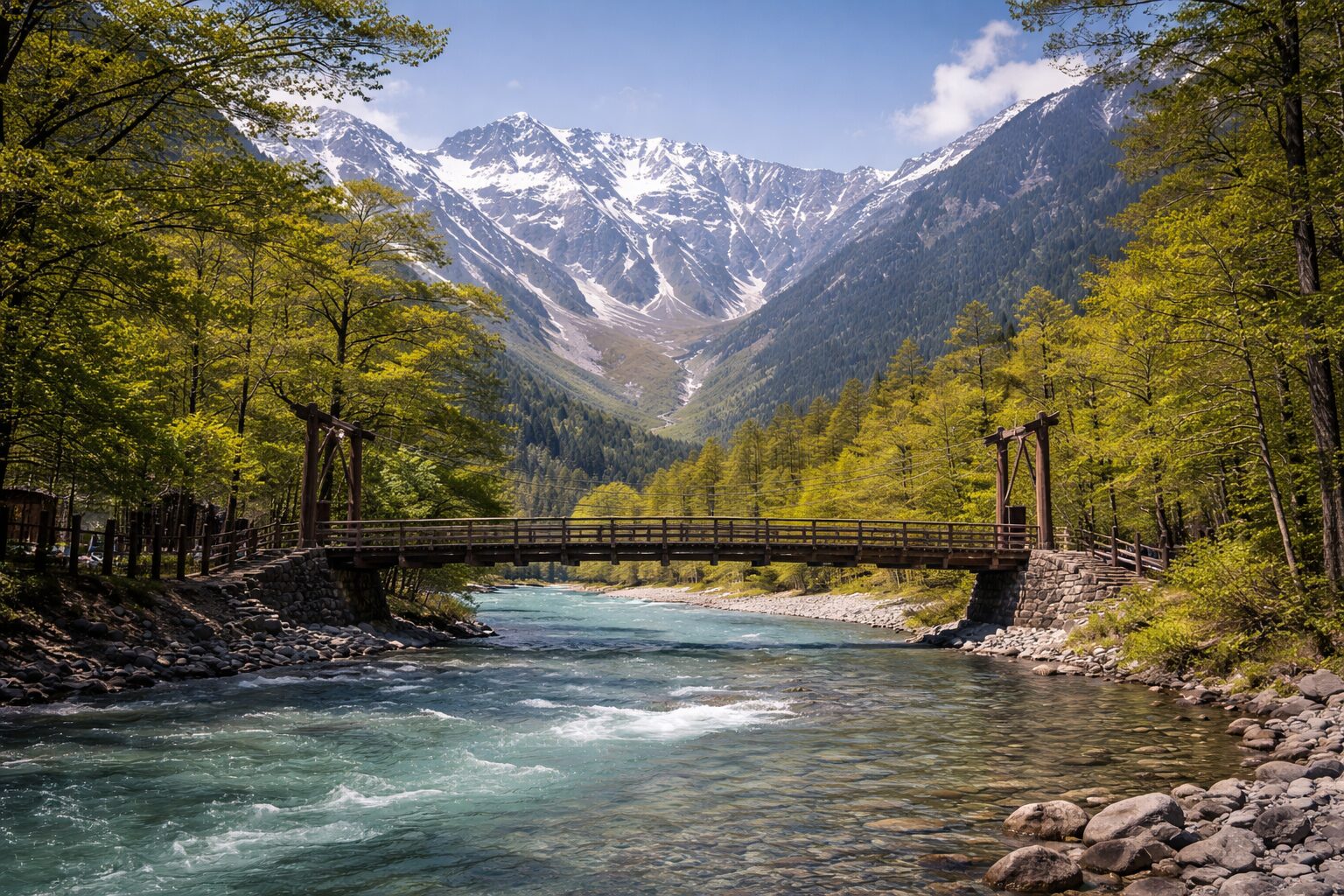
You can cross the route in a single long day, but staying overnight near a gateway lets you start early and beat the tour-bus crowds at Murodo. Toyama city and Kanazawa are the most convenient bases on the western side, with frequent trains and a full range of hotels. On the Nagano side, Ōmachi Onsen offers hot-spring inns close to Ōgizawa.
For a more memorable night, the Tateyama foothills and nearby valleys are dotted with traditional ryokan where you can soak in an onsen and dine on Toyama Bay seafood before your mountain crossing. Booking ahead is essential in the spring snow-wall season, when rooms near the route fill weeks in advance.
Pick the right base. Our where-to-stay guide breaks down ryokan, onsen inns and city hotels.
Tateyama Kurobe Alpine Route FAQ
When does the Tateyama Kurobe Alpine Route open in 2026?
The route is open from 15 April to 30 November 2026. The Yuki-no-Otani Snow Wall Walk near Murodo is scheduled to be open from 15 April to 25 June 2026, with the walls tallest in mid-to-late April.
How tall are the snow walls?
The snow corridor at Murodo can reach up to about 20 metres at the start of the season. Heights vary year to year depending on winter snowfall and shrink steadily from late April through June.
How much does the Alpine Route cost?
As a 2026 guide, a full one-way traverse from Tateyama to Ōgizawa is around ¥10,940, and a round trip is roughly ¥21,880. A shorter Murodo round trip for the snow walls starts from about ¥7,500. Confirm current fares with the operator before travelling.
Does the Japan Rail Pass cover the Alpine Route?
No. The route is operated by private mountain companies and is not covered by the Japan Rail Pass. The pass does cover the Hokuriku Shinkansen to the gateway cities of Toyama and Nagano, which is where most of the travel cost lies.
How long does it take to cross the route?
Allow a full day. The transport legs themselves total under two hours, but with waiting times, photo stops and time at Murodo and the Kurobe Dam, most visitors spend five to seven hours on the crossing.
Can I drive my own car across the route?
No. Private vehicles cannot cross the Alpine Route.