Vegetarian Food Japan 2026 — Vegan & Halal Guide for Every Traveler
Japan’s food scene is extraordinary — but if you’re vegetarian, vegan, or halal-observant, it takes strategy. Hidden dashi in “vegetable” soups, soy sauce with alcohol, pork fat in ramen broth: the pitfalls are real. This guide cuts through the confusion with city-by-city restaurant picks, ordering phrases, app recommendations, and the insider knowledge you need to eat with full confidence across Japan in 2026.
- Vegetarian Food Japan — The Hidden Challenge
- Best Vegan & Vegetarian Restaurants by City
- Halal Food in Japan — Complete Guide for Muslim Travellers
- Essential Japanese Phrases for Dietary Restrictions
- Apps & Tools for Dietary-Restricted Travellers
- Convenience Stores & Supermarkets — Hidden Vegan Goldmines
- Buddhist Temple Dining — Shojin Ryori
- Staying Connected — Essential for Real-Time Food Research
- Frequently Asked Questions
Vegetarian Food Japan — The Hidden Challenge
Explore Japan’s food scene with expert-guided tours — cooking classes, market walks & tasting tours
What looks plant-based often isn’t
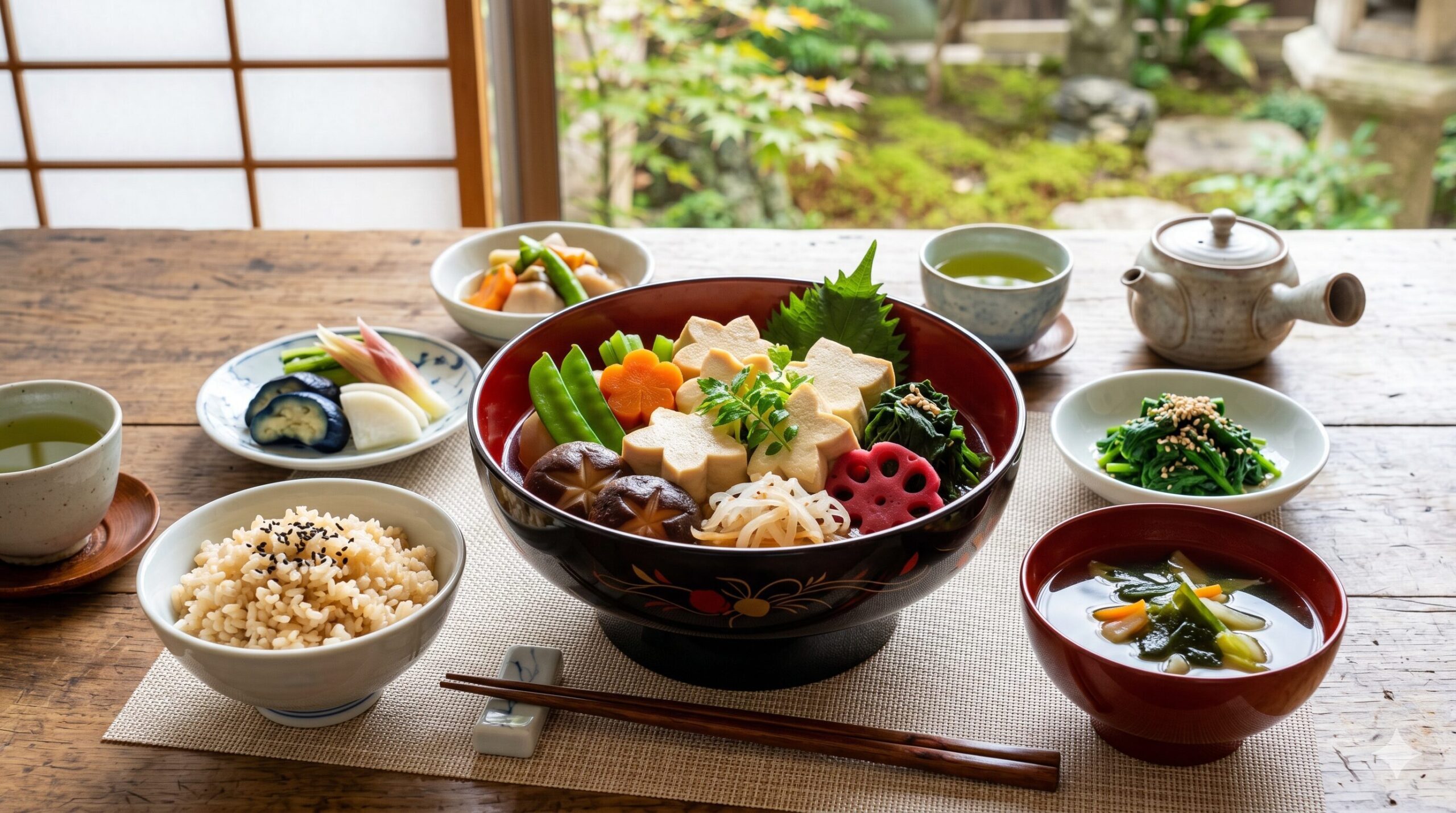
Navigating vegetarian food Japan requires one critical insight that most guides miss: Japanese cuisine is built on invisible animal ingredients. Dashi — the foundational stock in miso soup, sauces, noodle broths and even some pickles — is typically made from dried tuna flakes (katsuobushi) or dried sardines (niboshi). A dish can be entirely plant-based in its visible ingredients yet contain fish stock in every drop of sauce.
This is not a labelling failure. It is simply how Japanese cooking has worked for centuries. The good news is that once you know what to ask for, and how to ask, Japan’s food scene becomes incredibly welcoming.
The Big Four Hidden Ingredients
| Ingredient | Japanese Name | Where It Hides |
|---|---|---|
| Tuna dashi stock | かつおだし (katsuo dashi) | Miso soup, noodle broth, sauces, rice seasonings |
| Sardine dashi | にぼしだし (niboshi dashi) | Ramen, udon, dipping sauces |
| Pork fat / lard | ラード (rādo) | Ramen broth, fried rice, stir-fry woks |
| Alcohol in soy sauce | みりん (mirin) / 酒 (sake) | Most seasoned dishes — critical for halal |
Tokyo Shinjuku Food Tour — 15 dishes, expert guide, dietary accommodations available
Curated picks for Tokyo, Kyoto, Osaka and beyond
Best Vegan & Vegetarian Restaurants by City

Tokyo — Largest Plant-Based Scene in Japan
Tokyo has the most developed vegan and vegetarian dining ecosystem in Japan, concentrated in Shinjuku, Shimokitazawa, Harajuku and Shibuya. Dedicated vegan ramen, entirely plant-based izakayas and Michelin-starred Buddhist cuisine are all within reach.
VEGAN RAMEN
VEGAN BRUNCH
BUDDHIST CUISINE
Kyoto — Shojin Ryori Capital of Japan
Kyoto is arguably the easiest city in Japan for vegetarian travellers. Buddhist temple cuisine (shojin ryori) has been perfected here over centuries — entirely vegan by design, using seasonal vegetables, tofu, yuba and kombu dashi. Many temples offer set-course lunches.
SHOJIN RYORI
VEGAN CAFÉ
Kyoto Sushi Cooking Class — historic bathhouse setting, vegetarian options on request
Osaka — Street Food Capital with Growing Vegan Options
Osaka is famously a meat-forward city — “kuidaore” (eat until you drop) culture centres on takoyaki, okonomiyaki and kushikatsu. But the plant-based scene has expanded sharply since 2022. Namba and Shinsaibashi now have dedicated vegan restaurants, and many street food stalls can prepare versions without meat on request.
- Dotonbori okonomiyaki — ask for “niku nashi, tamago nashi, dashi wa kombu de” for a vegan version
- Paprika Shokudo Vegan — central Osaka, entirely plant-based set meals from ¥1,000
- Falafel Garden — Namba, halal-friendly falafel and Middle Eastern dishes
- Weekend farmers markets at Tennoji Park often have vegan food stalls
Osaka Ramen & Gyoza Cooking Class — dietary adaptations available on request
Certified halal, Muslim-friendly and alcohol-free dining
Halal Food in Japan — Complete Guide for Muslim Travellers
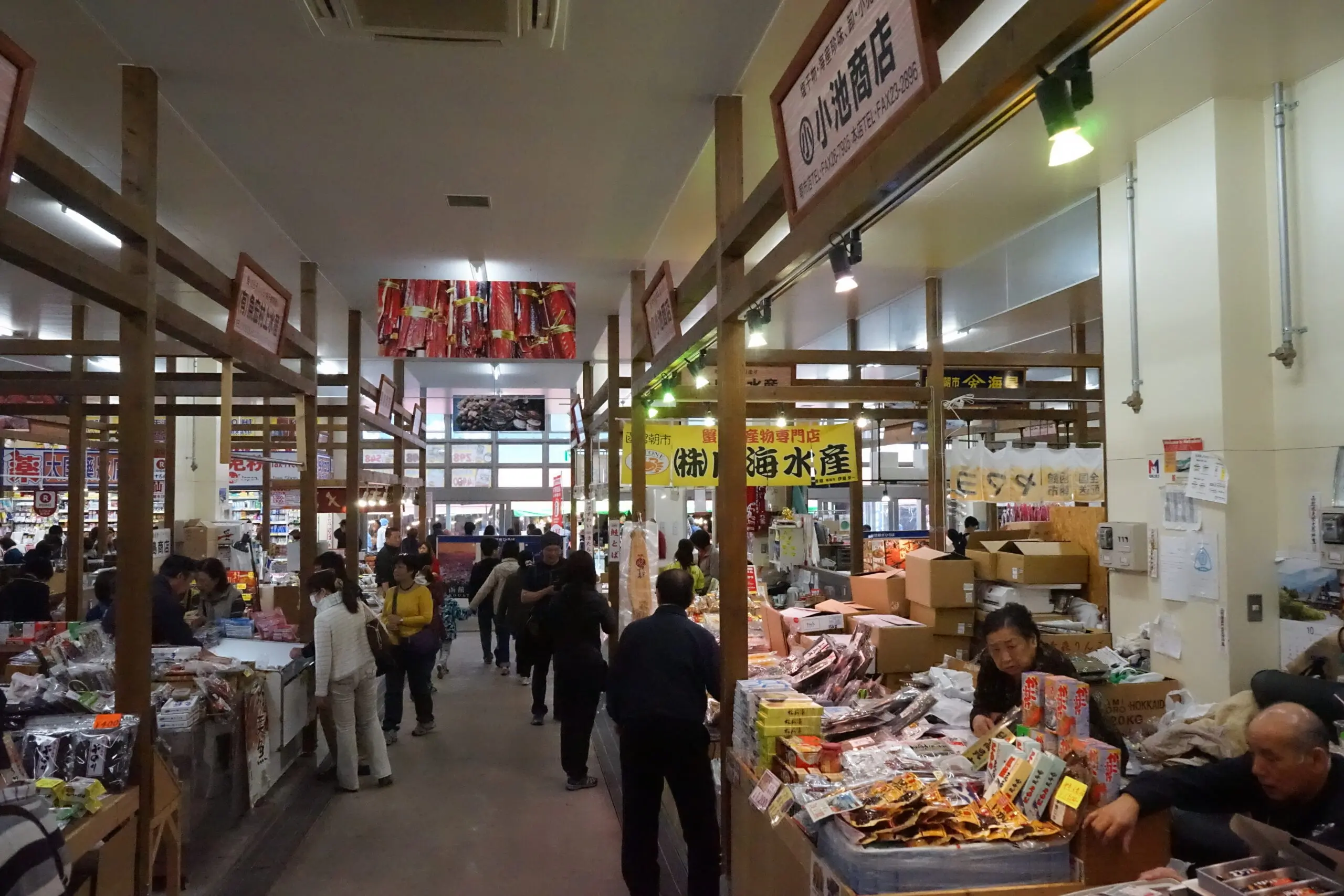
Japan’s halal food infrastructure has grown dramatically since 2015, driven by the surge of Muslim visitors from Southeast Asia, the Middle East and beyond. While full halal certification remains rare outside major cities, the “Muslim-friendly” category — meaning no pork, alcohol-free preparation and clear ingredient disclosure — is now widely available in Tokyo, Osaka, Kyoto and Hiroshima.
Understanding Japan’s Halal Certification Levels
| Level | What It Means | Availability |
|---|---|---|
| Fully Halal Certified | Meat from halal-slaughtered animals, no alcohol in any form | Tokyo, Osaka, Kyoto — specialist restaurants |
| Muslim-Friendly | No pork, alcohol minimised or disclosed, prayer space nearby | Growing nationwide — many chain restaurants |
| Pork-Free | No pork ingredients, but may use cooking alcohol or shared surfaces | Very common — useful baseline |
| Vegetarian / Vegan | No meat at all — default safe for many halal needs | Cities and tourist areas |
Best Halal Restaurants — Tokyo
HALAL RAMEN
HALAL BEEF
Use the Japan Halal Guide app or HalalNavi to find nearby prayer rooms (musalla) in major train stations, shopping centres and airports. Narita and Haneda both have dedicated prayer rooms airside and post-security.
Sakura Mobile SIM — stay connected to HalalNavi, Google Maps & halal restaurant apps throughout Japan
Print these or screenshot for offline use
Essential Japanese Phrases for Dietary Restrictions
Having the right phrases — or a printed card — can transform your dining experience in Japan. Most restaurant staff are genuinely willing to help once they understand the specific restriction. The key is precision: “I don’t eat meat” in Japanese needs to include fish if you mean it.
| Situation | Japanese Phrase | Pronunciation Guide |
|---|---|---|
| Vegetarian (no meat/fish) | 肉と魚は食べません。だしも避けてください。 | Niku to sakana wa tabemasen. Dashi mo sakete kudasai. |
| Vegan (no animal products) | 動物性食品は一切食べません。 | Dōbutsusei shokuhin wa issai tabemasen. |
| No dashi / fish stock | かつおだし・にぼしだしは使わないでください。 | Katsuo dashi / niboshi dashi wa tsukawanaide kudasai. |
| No pork or alcohol (halal) | 豚肉とアルコールは食べられません。 | Butaniku to arukōru wa taberaremasen. |
| Nut allergy | ナッツアレルギーがあります。 | Nattsu arerugī ga arimasu. |
| Gluten-free | グルテンを含む食べ物は食べられません。 | Guruten o fukumu tabemono wa taberaremasen. |
Japan Cultural Experiences 2026 — tea ceremony, cooking classes & authentic food experiences
Find safe food anywhere in Japan in real time
Apps & Tools for Dietary-Restricted Travellers
Sakura Mobile — unlimited data SIM for using HappyCow, HalalNavi and Google Maps throughout Japan
7-Eleven, FamilyMart and Lawson have more than you think
Convenience Stores & Supermarkets — Hidden Vegan Goldmines
Japan’s convenience stores (konbini) are the unsung heroes of dietary-restricted travel. Every 7-Eleven, FamilyMart and Lawson carries a rotating selection of items that are reliably vegetarian or vegan — if you know where to look.
| Item | Vegan? | Halal? |
|---|---|---|
| Onigiri (plain rice + nori) | ✓ Usually | Check filling — some contain tuna |
| Edamame (frozen / packaged) | ✓ Yes | ✓ Yes |
| Natto (fermented soy) | ✓ Yes | ✓ Yes |
| Steamed vegetables (heat & eat) | ✓ Usually | ✓ Usually |
| Cup noodles | ❌ Most contain meat/dashi | ❌ Check label carefully |
| Chilled tofu | ✓ Yes | ✓ Yes |
| Fruit cups | ✓ Yes | ✓ Yes |
Supermarkets (Aeon, Seiyu, Summit) go further — look for the organic (有機 / yūki) and natural food sections for a wider range of certified-ingredient products. Whole Foods equivalent doesn’t exist in Japan, but natural food stores like Bio c’ Bon (Tokyo, 10+ locations) carry a curated vegan range with English labelling.
Japan Regional Food 2026 — must-try local specialties by region, from Hokkaido to Okinawa
Japan’s original plant-based cuisine, perfected over 1,200 years
Buddhist Temple Dining — Shojin Ryori

Shojin ryori (精進料理) is the culinary tradition of Japanese Buddhist monasteries — entirely plant-based, free of meat, fish and the “five pungent roots” (garlic, onions, leeks, shallots, chives), and rooted in the principle of minimising harm to all living beings. For vegetarian and vegan travellers, it represents Japan’s finest dining experience.
Flavour comes not from animal products but from the depth of kombu seaweed dashi, careful seasonality and precision technique applied to ingredients like yuba (tofu skin), fu (wheat gluten), mountain vegetables (sansai) and perfectly aged miso.
Where to Experience Shojin Ryori
Koyasan, Wakayama
Stay overnight at a temple lodge (shukubo) on sacred Mount Koya — breakfast and dinner are full shojin ryori sets included. The most authentic experience available in Japan. Book months in advance for weekend stays.
Eiheiji Temple, Fukui
One of Japan’s most important Zen training monasteries offers occasional shojin ryori meals to visitors. Reserve in advance through the temple office.
Daitokuji Temple, Kyoto
Multiple sub-temples within this complex offer shojin ryori lunch sets in traditional garden settings. Izusen (¥3,300+) is the most accessible — no reservation needed for lunch on weekdays.
Precision Booking — Bon Restaurant, Tokyo
For those who can’t travel to Kyoto or Koyasan, Bon in Ueno brings Michelin-level shojin ryori to Tokyo. Reservation essential — full courses from ¥5,000. Seasonal kaiseki-style presentation.
Kyoto Table Tea Ceremony at a Machiya — traditional setting, vegan-friendly matcha and sweets
HappyCow and HalalNavi only work with live data
Staying Connected — Essential for Real-Time Food Research
Every app in this guide — HappyCow, HalalNavi, Google Maps, Google Translate for menus — requires a live data connection to function. Japan’s public WiFi is patchy outside major train stations and shopping centres. A dedicated SIM or eSIM is essential, not optional, for dietary-restricted travellers who need real-time restaurant lookups.
Vegetarian, vegan & halal food in Japan
Frequently Asked Questions
▶ Stage 3 — Experiences Cultural Experiences Japan 2026 — Kimono, teamLab & Food Tours cultural … 続きを見る ▶ Stage 3 — Experiences Japan Regional Food — Your Complete Guide to Local Dishes by Region Japan re … 続きを見る

Cultural Experiences Japan 2026 — Kimono, teamLab & Food Tours
Japan Regional Food 2026 — Must-Try Local Dishes by Region