About Japan Culture, History & First-Visit Essentials — 2026 Travel Guide
About Japan culture is everything a first-time visitor needs before landing — etiquette, history, religion, social norms, and the practical context that turns a confusing arrival into a smooth, memorable journey across one of the world’s most rewarding countries.
- What This Guide Covers
- Why Japan Culture Feels Unlike Anywhere Else
- A 5-Minute History of Japan
- Japanese Culture & Core Values
- Religion & Spirituality in Japan
- Japanese Etiquette for First-Time Visitors
- Practical Japan — First-Visit Essentials
- Social Norms in Japan
- What to Expect as a First-Time Visitor
- FAQ About Japan
- Continue Your Japan Journey
What This Guide Covers
- About Japan culture — the unspoken values that shape every interaction you’ll have
- A 5-minute history — temples, samurai districts, and skyscrapers in context
- Religion & spirituality — Shinto, Buddhism, and how to visit shrines and temples
- Etiquette dos and don’ts — the 12 rules locals genuinely notice
- Practical first-visit basics — currency, transit, connectivity, language
The mindset behind convenience stores and centuries-old temples
Why Japan Culture Feels Unlike Anywhere Else
About Japan culture, the most honest thing you can say is this: no country consistently delivers surprise, depth, and quiet delight the way Japan does. First-time visitors frequently describe a sensation of arriving in a place that feels simultaneously familiar — from films, anime, and ramen shops abroad — and utterly different from anything they expected. That gap between expectation and reality is almost always positive. Japan doesn’t just meet the hype; it exceeds it.
What makes Japan culture feel singular is a combination of traits that rarely coexist elsewhere. Safety so thorough that it reshapes your behavior — you stop clutching your bag, you leave a laptop on a café table when you go to the bathroom, and nothing happens. Efficiency so precise that a two-minute train delay triggers a public apology over the station PA. Aesthetic sensibility so deeply embedded that even a 130-yen convenience store rice ball has been considered, packaged, and presented with care. And hospitality — omotenashi — that operates not as performance but as sincere cultural orientation toward the comfort of guests.
For first-time visitors in 2026, the practical context is also unusually favorable. The Japanese yen sits at multi-decade lows against major currencies, with one US dollar purchasing roughly 155 yen. That translates to extraordinary value at street level — world-class dining at prices that feel implausibly cheap, hotels and ryokan that overdeliver on quality, and cultural experiences like tea ceremonies and sumo viewings that were once treated as splurges now sitting within reach of a mid-range traveler.
Japan is also geographically more diverse than most maps suggest. The country’s 6,852 islands include only four main landmasses — Honshu, Hokkaido, Kyushu, and Shikoku — but the terrain within those islands ranges from alpine wilderness to tropical coastline, from volcanic desert to dense cedar forest. The country stretches from subtropical Okinawa in the southwest to sub-arctic Hokkaido in the north, a distance equivalent to flying from Miami to Montreal. Between those extremes you’ll find megacities, mountain villages, hot-spring towns, surf beaches, ski fields, and quiet farming valleys.
The cultural software is equally layered. Japan is simultaneously one of the world’s most traditional and most technologically advanced societies. Ancient Shinto rituals coexist seamlessly with cutting-edge robotics; thousand-year-old temple gardens sit a short walk from neon arcades. Understanding this doesn’t require academic study — just openness and attention. Japan rewards curious visitors who slow down enough to notice.
First time in Japan? Begin with our complete pre-trip checklist — visa, JR Pass, budget, and what to book before you fly.
Why temples, samurai streets and skyscrapers share neighborhoods
A 5-Minute History of Japan
You do not need a history degree to enjoy Japan, but a thin layer of context dramatically improves what you’ll see. Almost every famous site traces back to one of five turning points, and recognizing them turns “another temple” into a meaningful story.
The Five Eras That Built Modern Japan
| Era | Years | Why It Matters Today |
|---|---|---|
| Heian | 794–1185 | Kyoto becomes capital. Tea, aesthetics, and court refinement take root. |
| Kamakura & Muromachi | 1185–1573 | Rise of the samurai class. Zen Buddhism reshapes architecture and gardens. |
| Edo (Tokugawa) | 1603–1868 | Roughly 250 years of peace and isolation. Edo becomes one of the world’s largest cities. |
| Meiji | 1868–1912 | Rapid modernization. Trains, parliament, and Western dress arrive in a single generation. |
| Postwar Showa & Heisei | 1945–2019 | Economic miracle. Reconstruction, bullet trains, global pop culture. |
The reason this matters when you travel: Kyoto’s quiet temples are Heian and Muromachi. Himeji Castle and the samurai districts of Kanazawa are Edo. The grand boulevards of Tokyo, Yokohama’s brick warehouses, and Hokkaido’s grid-pattern cities are Meiji. The neon, the bullet trains, the anime — all postwar. Once you can place a place in time, the country stops blurring together.
Three Things to Remember
- Japan was closed for roughly 250 years under the Edo shogunate (1603–1868). That extreme isolation is why so much traditional culture survived intact.
- Modernization happened fast — Japan went from feudal samurai society to industrial naval power in roughly 40 years after 1868, one of the fastest national transformations in history.
- The postwar recovery is recent. Tokyo was largely rubble in 1945; the clean, hyper-organized country you see today was built in living memory.
History of Japan — the full timeline from samurai to modern society, written for travelers.
The mental model behind every interaction
Japanese Culture & Core Values
Japan culture rests on a handful of unspoken values that, once you recognize them, explain almost everything you’ll see — why staff bow when you leave a shop, why locals fall silent on packed trains, why a restaurant might refuse to seat you not from rudeness but to protect the experience of guests already inside.
None of this is performative. Japan culture for tourists is the same culture Japanese people live inside daily; you are simply meeting it as a guest. The bar for visitors is low — make a visible effort, and you’ll be met with disproportionate warmth.
Japanese Culture & Core Values — wa, omotenashi, wabi-sabi explained in depth with examples you’ll encounter.
Two traditions woven into every neighborhood
Religion & Spirituality in Japan
Most visitors are surprised to learn that Japan culture treats religion less as identity and more as practice. The vast majority of Japanese people will tell you they are “not religious,” yet the same person will visit a Shinto shrine on New Year’s Day, hold a Buddhist funeral for a relative, and possibly have a Christian-style wedding. The two main traditions, Shinto and Buddhism, have coexisted for over a thousand years.
Shinto — Japan’s Indigenous Tradition
Shinto is Japan’s native belief system, centered on kami — sacred presences in mountains, rivers, ancient trees, and specific places. Shinto sites are shrines (神社, jinja) and are recognized by red torii gates. Famous examples include Meiji Jingu in Tokyo, Fushimi Inari in Kyoto, and Itsukushima — the “floating torii” — in Hiroshima.
Buddhism — Arrived Around the 6th Century
Buddhism arrived via Korea and China and was woven into Japanese life by aristocrats, then samurai. Buddhist sites are temples (寺, tera or ji) and feature pagodas, incense, and statues of buddhas and bodhisattvas. Famous examples include Senso-ji in Tokyo’s Asakusa, Kinkaku-ji — the Golden Pavilion — in Kyoto, and Todai-ji in Nara.
How to Visit a Shrine or Temple
Bow lightly at the gate
A small bow before entering the torii (shrine) or sanmon (temple gate) acknowledges you’re crossing into sacred ground.
Purify at the water basin (chozuya)
Scoop water with the ladle, rinse your left hand, then your right, then pour into your left palm to rinse your mouth. Never drink straight from the ladle.
At the main hall — different protocols
Shinto: toss a coin, bow twice, clap twice, make your wish silently, bow once. Buddhist temple: toss a coin, bow once, palms together in silent prayer, bow once. No clapping at temples.
Photography rules vary
Outdoor areas are usually fine. Inside halls, look for signs — many prohibit photography around altars or sacred objects.
If you see a red torii gate, it’s a Shinto shrine. If you see a pagoda or incense burner, it’s a Buddhist temple. Some sites have both — the two traditions were officially separated only in the 19th century.
Authentic tea ceremony at a Kyoto machiya — a hands-on entry into the spiritual side of Japan culture.
Visiting Japan first time? These are the ones locals notice
Japanese Etiquette for First-Time Visitors
Foreign visitors are not expected to know every rule, and minor mistakes are forgiven instantly. But a handful of basics will dramatically improve every interaction, and getting them right is genuinely appreciated.
Do
- Remove shoes when entering homes, ryokan, some restaurants and temples
- Carry small cash — many places still don’t take cards
- Stand on one side of escalators (left in Tokyo, right in Osaka)
- Bow lightly when greeting or thanking someone
- Use both hands when receiving a business card or change
- Keep your voice low on trains and in restaurants
Don’t
- Tip at restaurants, hotels or taxis — it confuses staff
- Eat or drink while walking on busy streets
- Talk on your phone on trains
- Stick chopsticks vertically into rice (funeral imagery)
- Blow your nose in public — step away first
- Touch or photograph people without asking
Try
- Learn three phrases — sumimasen, arigato gozaimasu, onegai shimasu
- Carry a small hand towel — public restrooms rarely have paper towels
- Use the IC card tap-in lanes correctly to avoid blocking
- Slurp ramen and soba — it signals enjoyment
- Bring a small souvenir if invited to a home
The Rules That Actually Matter
Shoes off. If you see slippers, a step up, or a row of shoes, take yours off. This applies to homes, ryokan, temple interiors, some restaurants (especially tatami-mat rooms), and most fitting rooms. Slippers are usually provided — never wear them onto tatami matting, and switch to dedicated toilet slippers when you use the restroom in someone’s home.
Cash still matters. Japan is increasingly card-friendly, but small restaurants, temple ticket booths, taxis outside major cities, and many smaller shops are still cash-only. Carry 10,000–20,000 yen in small bills at all times. ATMs at 7-Eleven, Lawson, and Family Mart accept foreign cards 24/7.
Train silence. Phone calls on trains are strongly discouraged. Set your phone to silent (“manner mode”). Speak quietly with companions. This is one of the cultural rules Japanese people care about most, and one tourists most often break without realizing.
Bowing. A small bow (10–15 degrees) is the default greeting. Shaking hands is increasingly common but never assume — let the other person initiate. When in doubt, a small bow is always correct.
Japanese Etiquette Guide 2026 — every rule explained with restaurant, onsen, temple and train scenarios.
The five things to sort before you fly
Practical Japan — First-Visit Essentials
Visiting Japan first time, the cultural learning curve is mostly forgiving. The logistical one is steeper, and that’s where most travelers waste their first day. Solve these five before you land and your trip starts smoothly.
The Five Things to Sort Before You Fly
Connectivity — book before boarding
Airport Wi-Fi is fine for 30 minutes but useless beyond that. Order an eSIM (instant QR activation) or pocket Wi-Fi with airport pickup before you fly.
Rail Pass decision — calculate, don’t assume
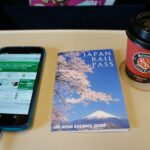
The JR Pass is worth it for long-distance multi-city itineraries like Tokyo–Kyoto–Hiroshima. It is not worth it if you’re staying within one region. Calculate against your actual route.
IC card — the city transit must-have
Suica, Pasmo, or ICOCA cards work on virtually all trains, buses, and at convenience stores nationwide. Add to Apple Wallet on iPhone for tap-and-go.
Airport transfer — pre-book if arriving late
Narita and Haneda have late-night trains, but if you land after 22:00 with luggage, pre-booked transfer is worth the small premium.
Language — three apps and three phrases
Google Translate with camera mode for menus, Google Maps for transit, and a translation phrasebook. Learn sumimasen (excuse me), arigato gozaimasu (thank you), onegai shimasu (please).
Suica IC Card — pre-loaded, ready at Tokyo airport pickup. Skip the JR machine queue.
The unspoken rhythms that shape every conversation
Social Norms in Japan
Beyond the bowing and the shoes, Japan culture runs on a layer of social rhythm that’s invisible until you notice it. You don’t need to master it, but a couple of frames make almost every interaction smoother.
Indirect Refusal
Japanese people rarely say “no” directly. Phrases like chotto muzukashii desu (“it’s a little difficult”), a sharp inhale through the teeth, or “let me think about it” almost always mean no. Pressing harder won’t change the answer, and it makes the other person uncomfortable. Accept the soft no and move on.
Reading the Room
The phrase kuuki wo yomu — “reading the air” — describes the cultural skill of sensing the unspoken mood. If everyone around you is quiet, match that. If a queue forms, join the end. If a seat is empty next to a stranger on a packed train and you have a backpack, take it off your back and hold it. None of this is rules-based; it’s situational awareness, and locals do it constantly.
Service Without Hovering
Japanese restaurant and shop staff aim to be present without being intrusive. They won’t come over to ask “how is everything?” mid-meal. To get attention, look up and make eye contact — many places have a small call button on the table for exactly this. Saying sumimasen (excuse me) is the universal polite trigger.
Group Over Individual
In family, work, and friend dynamics, Japanese culture leans toward consensus and group cohesion. Restaurant orders are often communal — one person ordering for the table is normal. Speaking up to disagree in a group setting is rare. Travelers don’t need to imitate this, but recognizing it explains a lot about why decisions sometimes seem slow or indirect.
Social Norms & Communication in Japan — honne, tatemae, and how to navigate awkward moments.
Mental adjustments that turn a good trip into a great one
What to Expect as a First-Time Visitor
It’s Easier Than Most Travel Blogs Suggest
Japan has a reputation for being intimidating — language barrier, strict rules, complicated trains. In practice it’s one of the easiest countries on earth to travel. Signage at major stations is in English. Convenience stores are 24/7 and stock everything from sushi to phone chargers. Crime is essentially zero. The trains run on time. Most rules can be figured out by watching what the people around you are doing.
But Plan a Bit More Than You Normally Would
The flip side — some experiences require advance booking. Top sushi counters, the Ghibli Museum, popular ryokan in peak season, and shinkansen reserved seats during Golden Week or Obon all fill up. The country is built around courteous queue management, but it doesn’t squeeze in walk-ins the way some destinations do.
Pace Yourself
Tokyo alone has more neighborhoods than most countries have cities. A common first-visit mistake is trying to do Tokyo, Kyoto, Osaka, Hiroshima, Mt. Fuji, and Hakone in 7 days. You’ll see a blur. Better — pick two or three regions and let yourself sit still long enough to notice small details. That’s where Japan rewards you.
Budget — More Approachable Than Its Reputation
| Style | Per Day (¥) | Notes |
|---|---|---|
| Budget | ¥8,000–12,000 | Hostels, conbini meals, IC card transit, free temples |
| Mid-range | ¥15,000–25,000 | 3-star business hotels, casual restaurants, paid attractions |
| Comfort | ¥30,000–50,000 | 4-star hotels, ryokan stays, taxis, sushi counters |
| Luxury | ¥80,000+ | Aman, top ryokan, kaiseki, private guides |
The yen’s weakness in 2026 means even comfort-tier travel costs less than equivalent stays in Europe or the US. Many travelers are surprised by how much more they can afford here than expected.
First Time in Japan — the complete 2026 planning guide, from visa to itinerary templates.
The questions every first-timer asks
FAQ About Japan
The next pages in the Go Japan Now planning sequence
Continue Your Japan Journey
This hub covers the cultural and practical ground floor. From here, the planning sequence branches into three deeper directions — culture, history, and the trip itself.
-
-
Japanese Culture & Core Values — What Every Visitor Should Know
ABOUT JAPAN · CULTURE Japanese Culture & Core ValuesWhat Every Visitor Should Know Japanese cult …
続きを見る
-
-
History of Japan — From Samurai to Modern Society | Go Japan Now
ABOUT JAPAN · HISTORY History of JapanFrom Samurai to Modern Society The history of Japan is visible …
続きを見る
-
-
Japanese Etiquette Guide 2026 — Manners, Customs & Cultural Rules for Travelers
▶ Travel Tips & Hacks — Cultural Essentials Japanese Etiquette Guide 2026 — Manners, Customs &# …
続きを見る
-
-
First Time in Japan: The Ultimate 2026 Guide for First-Time Visitors
▶ Stage 1 — Planning First Time in Japan — The Ultimate 2026 Guide for First-Time Visitors Everythin …
続きを見る