Religion in Japan — Shinto, Buddhism & the Quiet Spirituality of Daily Life
Religion in Japan rarely looks like religion elsewhere. Most Japanese don’t call themselves religious, yet shrines, temples, festivals and seasonal rituals shape almost every part of life. This guide explains Shinto and Buddhism in plain English, shows you how to behave at shrines and temples, and helps you read the spiritual side of Japan that locals take for granted.
- Religion in Japan at a Glance
- Shinto — Japan’s Indigenous Belief in Kami
- Buddhism in Japan — From China via Korea, 6th Century
- Shrine & Temple Etiquette — A Step-by-Step Guide
- Charms, Fortunes & Wish Plaques — The Souvenirs of Faith
- Spiritual Festivals You Can Actually Attend
- What Religion in Japan Means for Daily Life
- Other Religions in Japan — Christianity, Islam & More
- Visiting Spiritual Sites — Practical Travel Tips
- Going Deeper — Stay at a Temple, Try Zazen, Learn the Way
- Frequently Asked Questions
Religion in Japan at a Glance
First time in Japan? Start with our complete planning guide before reading deeper culture pieces.
Why “religious” doesn’t mean what you think it means here
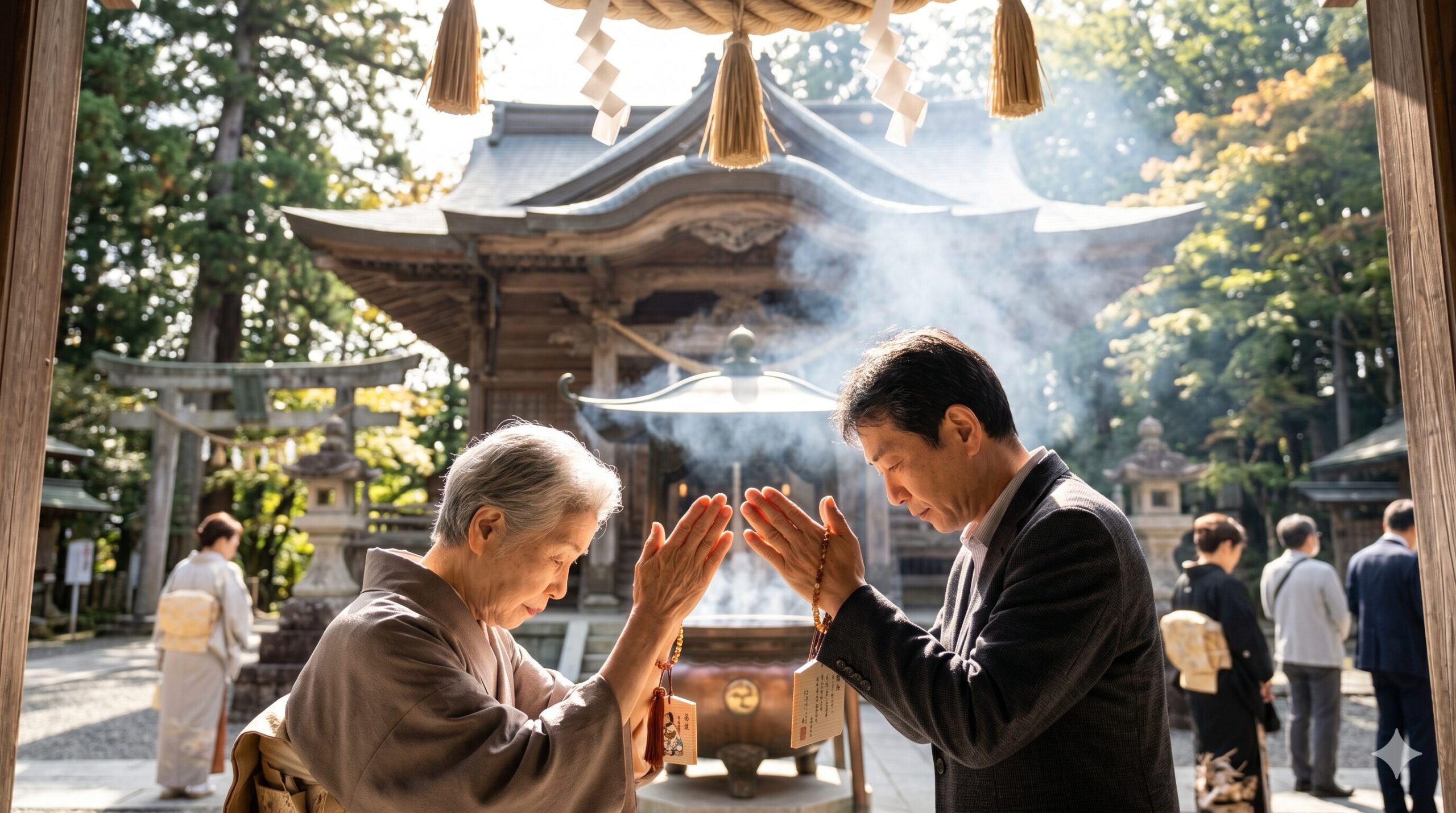
Religion in Japan is famously hard to pin down. In surveys, fewer than 30% of Japanese people say they “have a religion,” yet over 70% will visit a shrine on New Year’s Day, most weddings borrow Shinto rites, and the vast majority of funerals are Buddhist. The contradiction makes sense once you understand that Japanese spirituality is built around practice and place, not belief and doctrine.
The two dominant traditions — Shinto and Buddhism — have coexisted for over 1,400 years. Rather than competing, they divide life between them: Shinto handles birth, marriage, harvest and new beginnings, while Buddhism handles ancestors, death, mindfulness and the cycle of rebirth. Most families participate in both without thinking it strange.
| Tradition | What it handles | Where you meet it |
|---|---|---|
| Shinto | Birth, weddings, harvest, new ventures, purification | Shrines (jinja) with torii gates |
| Buddhism | Funerals, ancestors, meditation, philosophy | Temples (tera / -ji) with pagodas |
| Christianity | ~1% of population, mostly Christmas as secular celebration | Churches in big cities |
| Folk beliefs | Yokai, fortune, taboos, daily luck | Everyday talismans and customs |
Understanding this layered approach is the first step to reading Japan correctly. When a Japanese friend says “I’m not religious,” they usually mean they don’t subscribe to a single doctrine — but they almost certainly still keep an omamori charm in their wallet and bow at the local shrine.
Want to see how spirituality shapes everyday Japanese values?
Nature spirits, torii gates, and 80,000+ shrines
Shinto — Japan’s Indigenous Belief in Kami

Shinto (神道, “the way of the kami”) is Japan’s native spiritual tradition. It has no founder, no scripture, no commandments, and no afterlife doctrine. What it has instead is kami — spirits that inhabit mountains, rivers, ancient trees, rocks, ancestors and even abstract concepts like rice harvest or marital harmony. Estimates put the number of kami at “eight million,” a Japanese phrase that simply means “countless.”
Practising Shinto means showing respect at the places where kami are believed to dwell — most commonly at a jinja (shrine). There are more than 80,000 Shinto shrines registered in Japan, from massive city institutions like Tokyo’s Meiji Jingu to roadside shrines no bigger than a phone booth.
The torii gate — entering sacred space
The red or wooden torii gate at the entrance marks the boundary between the everyday world and sacred ground. Walking through one is symbolically purifying. By convention, you slightly bow before passing under it, and walk to one side rather than down the centre — the centre path is reserved for the kami.
Visiting a shrine — what to look for
- Temizuya (water pavilion) — for purifying hands and mouth before approaching the main hall
- Honden (main hall) — where the kami is enshrined; usually closed to the public
- Haiden (worship hall) — where visitors pray; this is where you’ll do the bell-bow-clap ritual
- Komainu — pairs of lion-dog statues guarding the entrance
- Ema — wooden plaques where visitors write wishes and hang them for the kami to read
Want a deeper Shinto experience? Join a small-group temple & shrine tour in Kyoto with an English-speaking guide.
The other half of Japanese spirituality
Buddhism in Japan — From China via Korea, 6th Century

Buddhism arrived in Japan in the 6th century via Korea and China, originally as a court religion. Over 1,400 years it has absorbed local Shinto elements and produced uniquely Japanese schools — Zen, Pure Land (Jodo), Nichiren, Shingon and Tendai among them. Today there are roughly 77,000 Buddhist temples in Japan, often physically close to (or even sharing grounds with) Shinto shrines.
Buddhism in Japan is most visible at three moments: funerals, the Obon festival in August (when ancestor spirits are believed to return home), and quiet meditative practice. Many Japanese people identify with the sect their family is registered to — a system dating back to the Edo period — without attending temple services regularly.
| Famous temple | City | Why it matters |
|---|---|---|
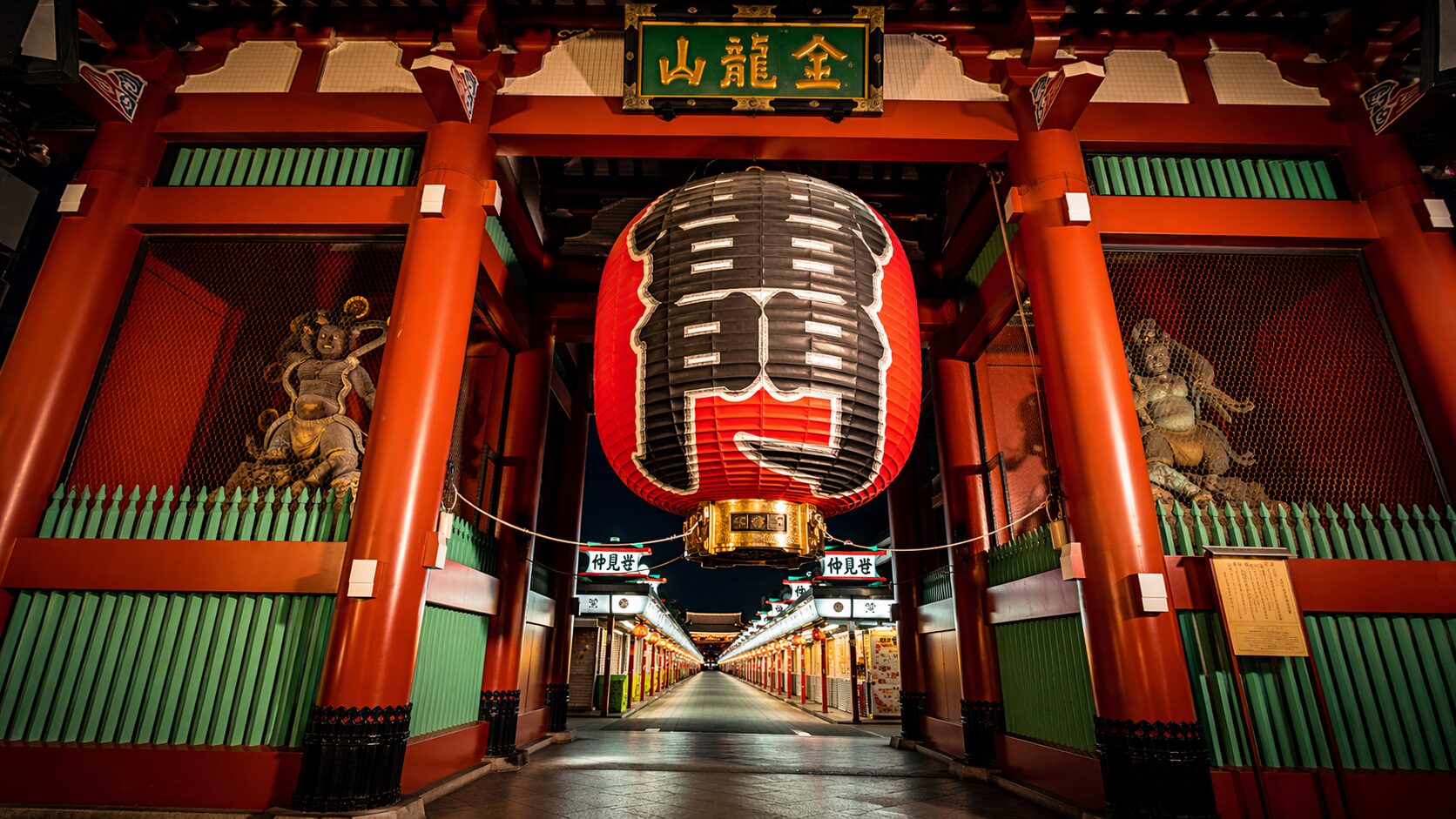
| Senso-ji | Tokyo | Tokyo’s oldest temple (645 AD), iconic red lantern |
| Kiyomizu-dera | Kyoto | UNESCO site, wooden veranda over a hillside |
| Todai-ji | Nara | Houses the Great Buddha (15m bronze statue, 752 AD) |
| Ryoan-ji | Kyoto | Most famous Zen rock garden in the world |
| Koyasan | Wakayama | Mountain temple complex; stay overnight as a pilgrim |
Zen — the export Japan is most famous for
Zen is the school of Buddhism most familiar to Western visitors, partly because it shaped tea ceremony, calligraphy, ikebana flower arrangement and even sushi presentation. The core idea is direct experience — wisdom isn’t found in scripture but in disciplined attention to the present moment, often through seated meditation (zazen). Many Kyoto temples offer drop-in zazen sessions to foreign visitors.
Experience Zen tea culture in a restored Kyoto townhouse — 1-hour matcha preparation with an English-speaking master.
What to do (and not do) when you visit
Shrine & Temple Etiquette — A Step-by-Step Guide
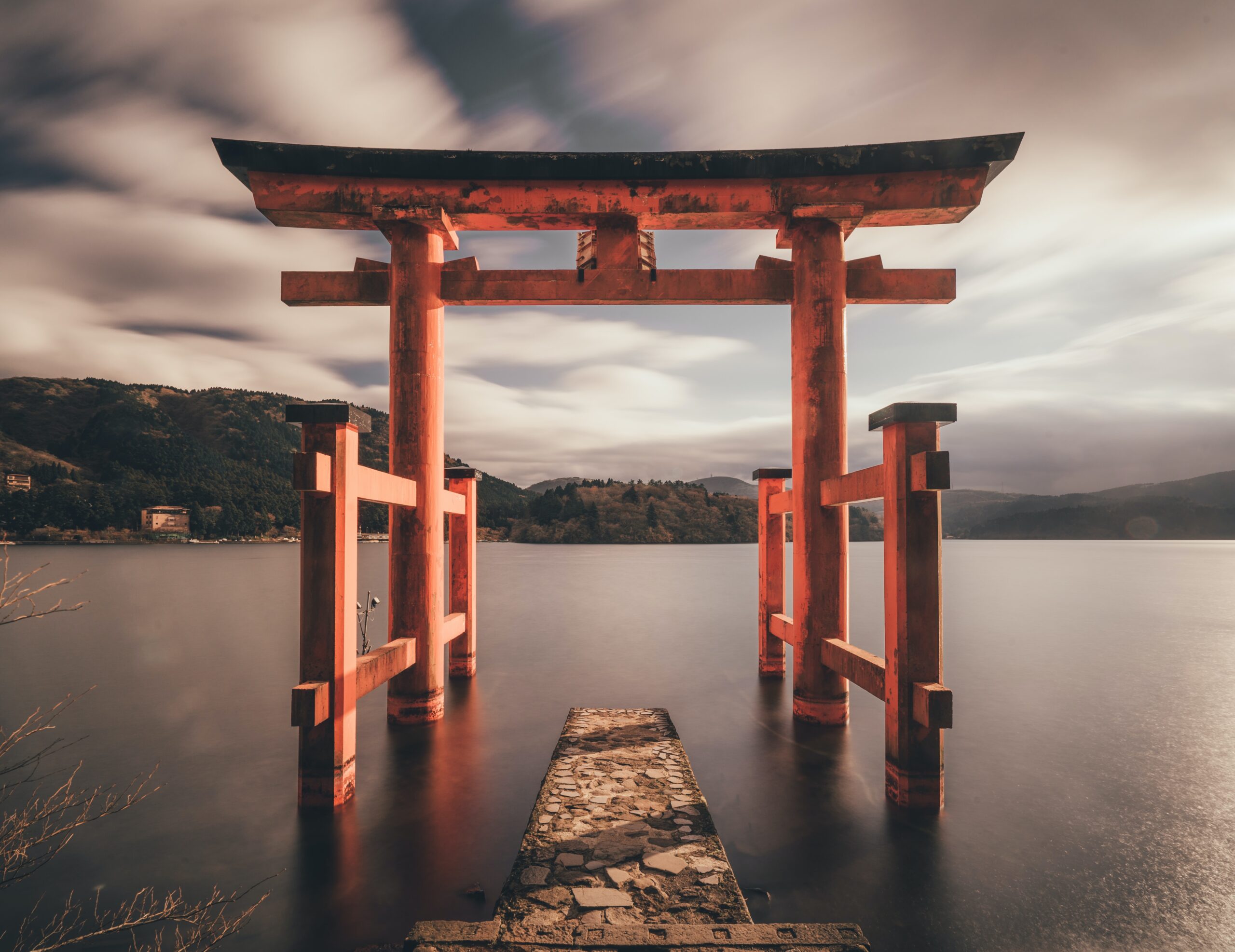
Visitors are warmly welcome at almost every Japanese shrine and temple — but a few small mistakes (shouting, walking through a torii’s exact centre, photographing worshippers) can quickly mark you as disrespectful. The rituals below take 60 seconds to learn and will let you blend in like a local.
At a Shinto shrine
Bow at the torii gate
A slight 15-degree bow before passing under marks your respect. Walk on the left or right side — never down the exact centre, which is the kami’s path.
Purify at the temizuya
Take the wooden ladle in your right hand, scoop water, rinse your left hand. Switch hands, rinse the right. Pour water into your cupped left hand and rinse your mouth (don’t drink from the ladle). Finally, tilt the ladle vertically to let remaining water rinse the handle.
Approach the worship hall
Toss a small coin (¥5 is traditional — it sounds like “go-en,” meaning “good fortune”) into the offering box. Ring the bell if there is one.
Two bows, two claps, one bow
Bow deeply twice. Clap hands twice (this gets the kami’s attention). Make your wish silently. Bow deeply once more to finish.
At a Buddhist temple
Bow before the main gate
Same as a shrine — a slight bow shows respect.
Light incense if available
At many temples there is an incense burner outside the main hall. Light a stick, place it in the sand, and waft a little smoke toward yourself — believed to purify body and mind.
Offer a coin and pray quietly
Unlike at a shrine, do not clap at a temple. Place hands together (gassho), bow your head slightly, and pray silently. That’s it.
Try wearing a kimono before your shrine visit — Asakusa kimono rental & tea ceremony combo.
Omamori, omikuji and ema explained
Charms, Fortunes & Wish Plaques — The Souvenirs of Faith
Beyond the rituals, Japanese shrines and temples are also where you’ll meet some of the country’s most charming everyday objects — small fabric charms, paper fortunes, and wooden wish plaques. These aren’t tourist trinkets; they’re genuine pieces of living religion, and Japanese people of all ages buy them constantly.
Tradition holds that omamori should be replaced once a year — usually at New Year — and the old ones returned to the shrine where they were bought, to be ritually burned. If you take one home as a souvenir, no one will mind; just don’t open the pouch, which is said to release the protection inside.
Obon, Setsubun, Hatsumode, Hinamatsuri and more
Spiritual Festivals You Can Actually Attend
Religion in Japan is rarely more visible than during seasonal festivals. Many of these are open to visitors and free to attend — you just need to know when and where to look.
JAN 1–3
FEB 3
MAR 3
AUG 13–16
NOV 15
See the full month-by-month festival calendar with dates for 2026.
Spirituality you’ll notice without anyone explaining it
What Religion in Japan Means for Daily Life

Even outside shrines, temples and festivals, religion in Japan quietly shapes how people behave. Understanding a few of these subtle markers will make your trip feel less like sightseeing and more like reading a culture in motion.
- Slippers and shoe-off culture — derived partly from Buddhist purity ideas and partly from Shinto ones; you remove shoes before entering homes, ryokan, many restaurants and some temple halls.
- Bowing as everyday greeting — its frequency and depth borrow directly from shrine etiquette.
- Sumo as ritual — every match opens with salt purification (Shinto) and stomping to drive away evil spirits.
- Saying “itadakimasu” before meals — a Buddhist-rooted expression of gratitude to everyone and everything that contributed to the food.
- Cleanliness — Japan’s famous public hygiene is rooted in Shinto’s emphasis on physical and spiritual purification.
Sakura Mobile — unlimited data SIM/eSIM with English-speaking support. Essential when navigating between shrines, temples and festival venues.
A small but visible minority
Other Religions in Japan — Christianity, Islam & More
While religion in Japan is dominated by Shinto and Buddhism, the country is home to small communities of many other faiths. Christianity accounts for roughly 1–2% of the population, mostly Catholic and Protestant, with historic strongholds in Nagasaki dating back to 16th-century Portuguese missionaries. Mosques can be found in Tokyo (Tokyo Camii), Kobe and other major cities. Synagogues, Hindu temples and Sikh gurdwaras exist on a smaller scale.
For Muslim travelers specifically, the number of halal-friendly restaurants and prayer rooms has grown significantly in the past decade. Major airports (Narita, Haneda, Kansai) all have prayer rooms, and most large train stations and shopping malls in Tokyo, Osaka and Kyoto provide them too.
Vegetarian, halal & vegan food in Japan — practical restaurant guide for religious dietary needs.
Interestingly, Christmas in Japan is widely celebrated — but as a secular, romantic and commercial event, more like Valentine’s Day than a religious holiday. KFC fried chicken on Christmas Eve has become a genuine nationwide tradition since a successful 1974 marketing campaign. The actual religious year-end celebration is the New Year period (Oshogatsu), which is both Shinto and Buddhist.
Dress, photography, timing and accessibility
Visiting Spiritual Sites — Practical Travel Tips
| Topic | What to know |
|---|---|
| Dress code | Cover shoulders and knees at major temples (Koyasan, mountain temples). Casual clothes fine at most urban shrines. |
| Photography | Outdoor shrine/temple grounds — generally fine. Inside halls — usually banned (watch for signs). Never photograph worshippers without permission. |
| Best timing | Early morning (7–9 AM) for atmosphere and minimal crowds. Avoid major shrines during Hatsumode (Jan 1–3) unless you specifically want the crowd experience. |
| Entrance fees | Most Shinto shrines are free. Major Buddhist temples charge ¥300–¥800. UNESCO sites and famous temples (Kiyomizu-dera, Kinkaku-ji) charge ¥400–¥600. |
| Tattoos | Outdoor temple/shrine grounds — fine. Onsen and some bathing areas — may be restricted; check signage. |
| Children | Welcome everywhere. Bring snacks and water but consume them outside the main grounds. |
| Wheelchair access | Improving but variable. Major shrines (Meiji Jingu, Fushimi Inari main approach) have accessible paths; mountain temples often do not. |
Want a guided tour of Tokyo’s most iconic shrines and temples with cultural context? Half-day small-group experience.
Immersive experiences for curious travelers
Going Deeper — Stay at a Temple, Try Zazen, Learn the Way
If religion in Japan fascinates you, you can do much more than visit shrines and temples — you can live the practice for a day or a night. The most popular immersive options:
Shukubo (宿坊) — temple lodging
Roughly 50 temples nationwide accept overnight guests. The most famous concentration is on Mount Koya (Koyasan), the headquarters of Shingon Buddhism, where over 50 temples offer lodging. You sleep on futons in tatami rooms, eat Buddhist vegetarian cuisine (shojin ryori), and join the morning sutra chanting and fire ritual at dawn.
Zazen — seated Zen meditation
Many Kyoto temples offer drop-in zazen sessions for foreign visitors, often in English. Sessions usually run 30–60 minutes and cost ¥500–¥2,000. Popular options include Shunko-in (Kyoto), Engaku-ji (Kamakura) and Tofuku-ji (Kyoto).
Tea ceremony — Zen in everyday form
Chado (the “way of tea”) distills Zen Buddhist aesthetics into a 60–90 minute ritual of preparing and drinking matcha. Beginner-friendly sessions in English are widely available in Kyoto and Tokyo.
Authentic Kyoto tea ceremony in a restored machiya townhouse — wear a kimono and learn the way of tea.
Quick answers travelers ask most
Frequently Asked Questions
▶ Stage 1 — Planning First Time in Japan — The Ultimate 2026 Guide for First-Time Visitors Everythin … 続きを見る ▶ Stage 3 — Experiences Japan festivals 2026: Complete Seasonal Guide to Cherry Blossoms, Matsuri &a … 続きを見る

First Time in Japan: The Ultimate 2026 Guide for First-Time Visitors
Japan festivals 2026: Complete Seasonal Guide to Cherry Blossoms, Matsuri & Koyo